
Ownership loses appeal as India’s Gen Z drives fashion resale revolution
15 May 2026, Mumbai
For decades, growth was in the Indian fashion industry was measured through expansion in manufacturing capacity, seasonal collections, and aggressive retail footprint development. The sector’s success depended largely on the velocity of production and consumption. That equation is now beginning to change. A new generation of consumers, rising inflationary pressures, digital commerce infrastructure, and mounting sustainability concerns are collectively reshaping the economics of apparel consumption. The result is the rapid emergence of India’s circular fashion economy, where resale, rental, refurbishment, and reuse are transforming garments into multi-cycle assets rather than single-use purchases.
Recent industry estimates reveal, India’s circular fashion segment is moving decisively from niche status into a mainstream growth engine, with projections suggesting the market could reach $15.8 billion by 2032.
Resale and rental become mainstream consumption models
The growth of circular fashion in India reflects a broader shift in consumer priorities. Affordability, utility, and sustainability are increasingly influencing purchase decisions, particularly among younger urban consumers who are more comfortable participating in digitally enabled resale ecosystems.
Table: India’s circular fashion projections (2025-32)
|
Market segment |
Estimated value by 2032) |
Projected CAGR |
|
Total Circular Fashion |
$15.8 bn |
18.50% |
|
Luxury Fashion Rental |
$6.7 bn |
21.50% |
|
Resale/Re-commerce |
$9.1 bn |
16.20% |
The table highlights how rental-led luxury consumption is expected to emerge as the fastest-growing category within the ecosystem. High-value occasion wear, bridal apparel, and premium designer garments are increasingly being viewed through a usage value lens rather than an ownership lens. This marks a substantial departure from traditional Indian apparel consumption patterns, where clothing ownership often carried emotional and social significance. Today, younger consumers are demonstrating a greater willingness to pay for temporary access to fashion rather than permanent possession. The resale segment, projected to cross $9.1 billion, is simultaneously benefiting from the normalization of peer-to-peer commerce and the growing acceptance of pre-owned fashion across metropolitan and Tier II markets.
India outpaces global circular fashion growth
India’s circular fashion increase is occurring at a pace that exceeds global industry averages. While mature markets in Europe and North America currently dominate overall market size, India is emerging as one of the fastest-scaling re-commerce ecosystems globally.
Table: Global vs. India circular market comparison (2026 Forecast)
|
Estimated market size |
Global market |
Indian market |
|
Market Size (Est. 2026) |
$7.04 bn |
$2.1 bn |
|
Growth Rate (CAGR) |
8.70% |
18.50% |
|
Leading Region |
Europe (35% share) |
Asia-Pacific (Fastest Growing) |
|
Primary Driver |
Regulation (e.g., EU Green Deal) |
Consumer Value & Digital Adoption |
India’s projected CAGR of 18.5 per cent is more than double the anticipated global average. Unlike Europe, where regulation is acting as the primary catalyst for circular adoption, India’s growth is largely due to consumer economics and digital convenience. This distinction is critical. European circularity has largely evolved through policy intervention, environmental legislation, and compliance frameworks such as the EU Green Deal. India’s market, by contrast, is scaling because consumers increasingly see resale and rental as financially efficient lifestyle choices.
The affordability proposition is particularly relevant in an inflation-sensitive economy where discretionary spending remains under pressure. Renting a luxury lehenga for a fraction of its purchase price or reselling premium apparel after limited usage has become economically rational behavior rather than a social compromise.
Generational shift reshaping fashion consumption
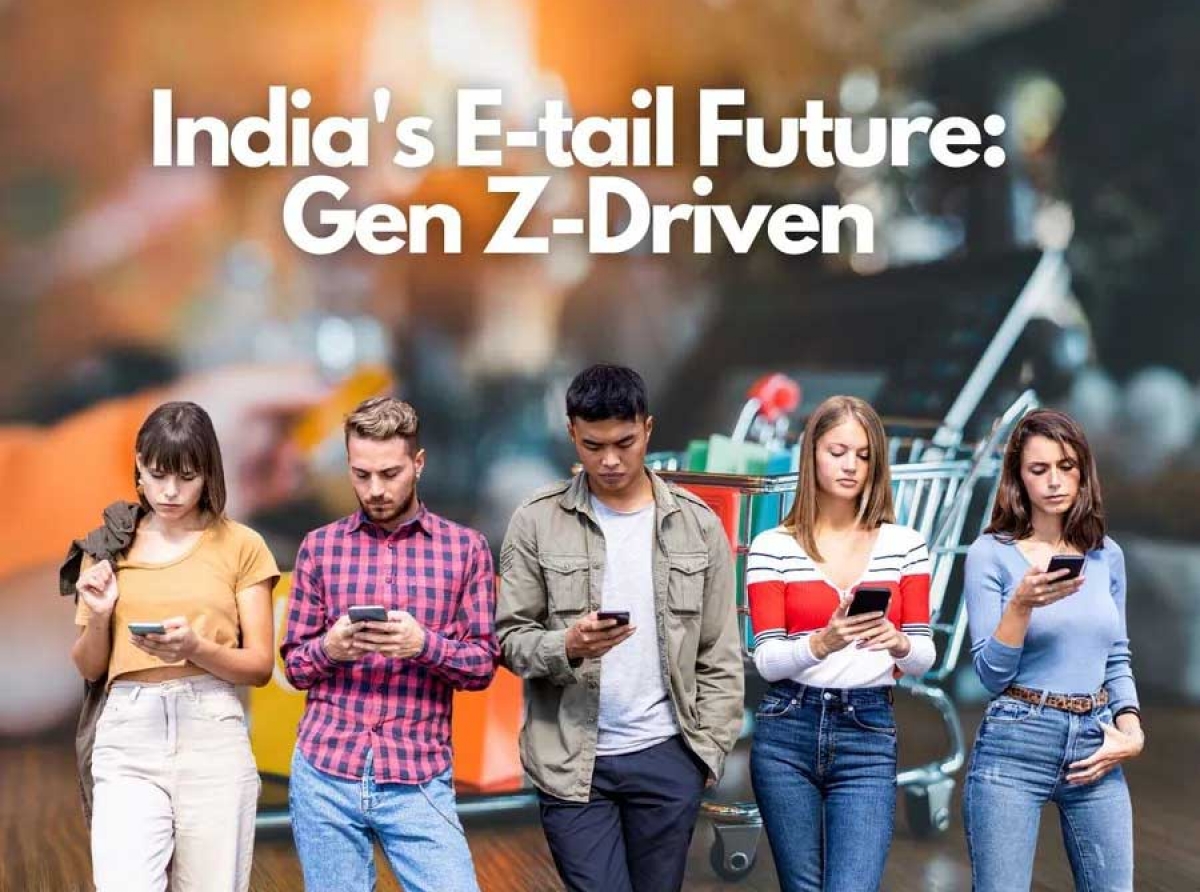
At the center of the change is India’s Gen Z and millennial consumer base. Digital-native shoppers are redefining fashion value systems by prioritizing flexibility, sustainability, and individuality over traditional ownership-driven consumption. The concept of thrift culture, once associated with necessity, is now linked to identity and conscious consumption. For younger consumers, curated second-hand fashion carries social credibility, particularly when combined with sustainability narratives and digital discoverability.
Platforms such as CoutLoot have capitalized on this shift by enabling users in non-metros to monetize dormant wardrobes and participate in decentralized resale commerce. Similarly, Flyrobe has shown the commercial viability of rental-led occasion wear, particularly in India’s wedding economy where garments are often used only once.
The psychological shift is equally important. Fashion consumption is being framed around experience rather than ownership. Consumers are placing greater emphasis on wearing aspirational brands temporarily instead of investing heavily in long-term possession.
Technology the backbone of circular commerce
The rapid scaling of India’s circular fashion would not be possible without advances in digital infrastructure and commerce technology. The widespread adoption of UPI-based payments, affordable smartphones, and expanding 5G connectivity has simplified peer-to-peer transactions and accelerated trust in resale commerce. At the same time, emerging technologies are addressing longstanding concerns around authentication, hygiene, and logistics.
Digital Product Passports are beginning to gain attention as a potential mechanism for tracking garment history across multiple ownership cycles. QR-enabled traceability systems can eventually help authenticate products, monitor fabric composition, and improve resale confidence.
Artificial intelligence is also emerging as a key operational layer in premium resale markets. AI-driven authentication tools are increasingly being deployed to detect counterfeit luxury goods, an issue that has historically constrained trust in second-hand commerce.
Parallel to this, a new logistics sub-sector is emerging around reverse supply chains. Specialized startups are focusing exclusively on garment pickup, sanitization, refurbishment, and redistribution services—functions that are becoming critical to scaling circular fashion efficiently.
Global models offer a blueprint
Global markets are giving valuable templates for India’s evolving circular economy. In France, the Anti-Waste Law has effectively forced brands to rethink excess inventory management by prohibiting the destruction of unsold apparel stock. The legislation has accelerated investment in resale, donation, and recycling infrastructure.
In the US , ThredUp has shown scalability of AI-enabled resale logistics through large-scale automated processing centers capable of handling massive apparel volumes daily. Selfridges in the UK has shown how legacy luxury retail can integrate resale into mainstream store environments through initiatives such as ‘Resellfridges’, aimed at attracting younger sustainability-focused consumers. These examples suggest that circularity is no longer an experimental sustainability initiative but an increasingly central component of modern retail economics.
Infrastructure the biggest constraint
Despite the optimism surrounding India’s circular fashion, bottlenecks remain substantial. Textile recycling infrastructure continues to lag behind projected market demand. India currently lacks large-scale automated sorting systems capable of efficiently processing blended fabrics such as polyester-cotton combinations, which dominate mass-market apparel production.
The economics of sustainable production also remain uneven. Although consumers increasingly express support for eco-conscious fashion, premium pricing continues to limit large-scale adoption of newly manufactured sustainable apparel. This pricing gap is one reason why resale is emerging as the preferred entry point into sustainable consumption.
Operational fragmentation presents another challenge. Much of India’s resale ecosystem remains informal, with inconsistent quality standards, fragmented logistics, and limited consumer protection mechanisms. For the sector to mature into a fully integrated retail category, significant investment will be required across authentication systems, textile recycling capacity, warehousing, and reverse logistics networks.
India’s apparel industry is entering a phase where future growth may depend less on producing more garments and more on maximizing the lifecycle value of existing ones. The rise of re-commerce signals a broader evolution in the relationship between consumers and fashion ownership. In an environment shaped by inflation, sustainability concerns, and digital convenience, circular fashion is increasingly emerging as both an economic and cultural movement.
For brands and retailers, the implications are clear. The future competitive advantage may not lie solely in selling new collections, but in building ecosystems that allow garments to be rented, resold, authenticated, repaired, and redistributed repeatedly. As India’s fashion economy transitions away from the linear ‘take-make-dispose’ model, the industry’s most valuable product may no longer be the newest garment on the shelf but the one already circulating in the market.










 Get in Touch!
