
Trent bets big on Westside as Tata unveils Rs 2,500 cr retail expansion
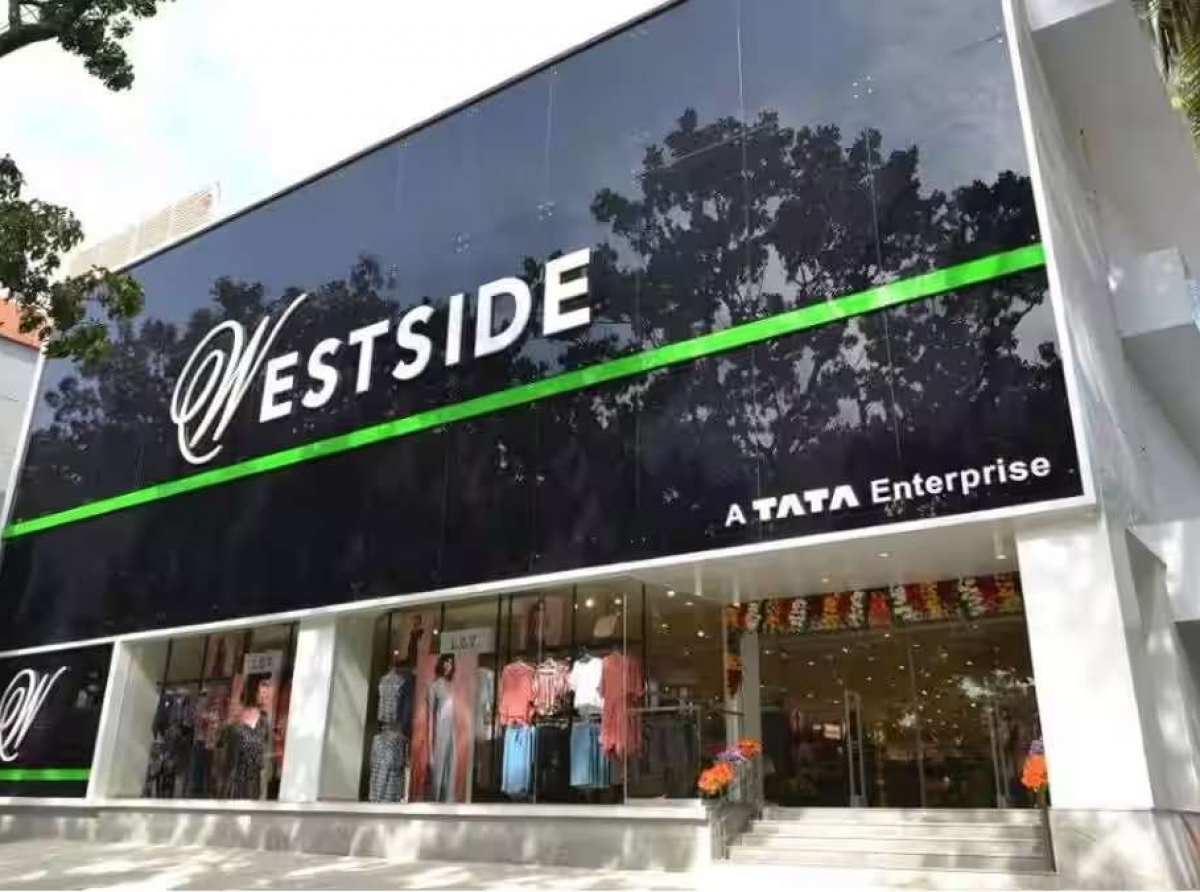
After years of building one of India's fastest-growing value fashion businesses through Zudio, Tata Group's Trent Ltd is reworking its retail strategy. The company's latest announcement to expand Westside’s retail by as many as 100 stores annually backed by a board-approved Rs 2,500 crore fund raise marks a major departure from its normal pace of adding just 10 to 15 outlets each year.
The move is not merely about increasing store count. It reflects a broader shift as Trent seeks to diversify its revenue mix, strengthen its presence in premium discretionary retail, and reduce its dependence on the value-fashion segment at a time when competition is intensifying across India's apparel market. The expansion also underlines management's confidence that India's premium and aspirational consumers continue to present a sizeable long-term opportunity despite near-term moderation in discretionary spending.
New growth balance
Trent entered FY27 with strong momentum, reporting standalone revenue of Rs 5,666 crore in the first quarter, up 19 per cent year-on-year. Its retail network has grown to over 1,300 stores, with Zudio accounting for 982 locations, making it the company's largest growth engine. However, the value-fashion market has become very crowded. New entrants and incumbent retailers, including Reliance Retail's Yousta and Aditya Birla Fashion and Retail's Style Up, are aggressively targeting Tier-II and Tier-III markets where Zudio has built a significant presence.
Unlike conventional department store chains that rely heavily on third-party concessionaire models, Westside operates entirely on a 100 per cent full private-label strategy. Managing the complete product chain from textile sourcing to final retail sale gives Westside gross margins of roughly 45 per cent to 50 per cent, compared to the 32-38 per cent margins typical for multi-brand department stores.
Table: Comparison of large-format department stores
|
Operations |
Trent (Westside) |
Shoppers Stop |
ABFRL (Pantaloons) |
|
Merchandise Mix |
100% Private Label |
15-20% Private Label |
60% Private Label |
|
Gross Margin Profile |
45-50% |
32-35% |
38-41% |
|
Pricing Architecture |
First Price, Right Price (No routine sales) |
Promotional / Seasonal Discounts |
Promotional / Discount-Driven |
|
Non-Apparel Sales Share |
>21% (Beauty, Home, Footwear) |
18% (Beauty focus) |
12% |
|
Capital Allocation Focus |
Internal cash flow & Rs 2,500 cr fund raise |
Premium store renovations |
Store optimization |
Against this backdrop, Westside is emerging as Trent's second growth pillar. Rather than competing solely on affordability, Westside caters to mid-to-premium consumers through larger department stores offering fashion, beauty, home décor and footwear under one roof. The planned expansion into underserved urban markets and newer regions, including the Northeast, enables Trent to diversify both its customer base and revenue streams.
Table: Westside vs Zudio
|
Business Format |
Westside |
Zudio |
|
Positioning |
Mid-to-premium department store |
Value fashion |
|
Annual Expansion |
Up to 100 new stores |
Continued calibrated rollout |
|
Typical Store Size |
20,000 sq ft |
Smaller, neighbourhood stores |
|
Merchandise Strategy |
100% private labels |
Affordable fashion (mostly < ₹999) |
|
Core Focus |
Fashion, beauty, footwear & home |
High-volume apparel |
|
Key Growth Driver |
Higher margins and basket values |
Rapid expansion & inventory turns |
The dual-format strategy allows Trent to participate across multiple consumer segments without diluting brand positioning.
Private labels drive profits
Unlike conventional department store operators that depend heavily on third-party brands, Westside follows a fully private-label model. Owning the product journey from design and sourcing to merchandising and retailing allows the company to capture a larger share of value across the supply chain. Industry estimates suggest Westside generates gross margins of roughly 45-50 per cent, materially higher than the approximately 32 35 per cent achieved by most multi-brand department stores and ahead of many large-format apparel chains.
Equally important is its pricing philosophy. Westside's ‘First Price, Right Price’, policy minimizes routine discounting, helping preserve margins while reinforcing price credibility with customers. Instead of relying on frequent end-of-season sales, the retailer focuses on introducing fresh merchandise throughout the year.
Another differentiator is category diversification. Beauty through Studiowest, footwear under LUNA BLU and home furnishings have steadily increased their contribution, with non-apparel categories now accounting for more than one-fifth of Westside's sales. These higher-margin categories improve average transaction values while reducing dependence on apparel alone.
Technology powers faster fashion
Growing from 10 annual store openings to nearly 100 requires far more than capital, it demands operational agility. To support this transition, Trent has redesigned its merchandise planning and sourcing processes using generative artificial intelligence and faster manufacturing cycles. Traditionally, large-format apparel retailers operated on merchandise development cycles stretching between 90 and 120 days. Trent has reduced that timeline to roughly 30 days by combining AI-assisted trend forecasting with localized manufacturing and small-batch production.
The company's AI systems analyse global fashion trends, online shopping behaviour and store-level sales patterns, enabling designers to significantly increase the number of concepts evaluated each week. Instead of committing to large production runs, Westside now introduces limited quantities of new merchandise, expanding successful collections while quickly discontinuing slower-moving products before deep markdowns become necessary.
This approach improves inventory productivity while lowering fashion risk, an important capability as consumer preferences evolve more rapidly. Westside Chief Executive Officer Shailina Parti recently said the company's backend operations and supply chain have been built to support this faster pace of expansion. Alongside physical growth, Trent is integrating store inventory with its direct-to-consumer platform and Tata Neu ecosystem, with digital sales targeted to increase from around 6 percent to 10 percent of overall revenue.
The real estate challenge
While the expansion strategy appears compelling on paper, execution will depend heavily on real estate availability. Westside stores typically occupy between 18,000 and 25,000 sq. ft, making premium retail locations essential. Such spaces remain scarce across leading malls and high-street destinations, resulting in rising occupancy costs. These larger stores also require higher upfront capital investment and longer payback periods than compact value-fashion formats like Zudio.
At the same time, urban discretionary spending has moderated in several consumer categories, requiring retailers to balance expansion ambitions with disciplined capital allocation. Trent, however, enters this phase from a position of financial strength. Supported by healthy profits, an estimated return on equity of around 26.5 per cent and limited leverage, the company has sufficient balance sheet flexibility to absorb initial store investments without placing undue pressure on operating cash flows.
The next chapter
For much of the past decade, Zudio has defined Trent's growth narrative by capturing India's fast-expanding value-fashion opportunity. The next phase looks markedly different. By investing Rs 2,500 crore and increasing Westside's rollout, Trent is betting that India's organized retail market has matured enough to support parallel growth engines, one driven by affordability and another by premium private-label retailing.
If execution matches ambition, Westside could evolve from being Trent's legacy department store brand into the company's most important profit driver, positioning Tata's retail arm to capture a larger share of India's segmented fashion market while reducing dependence on any single consumer cohort.











 Get in Touch!
