
Indian couture upsets global luxury order as domestic labels close revenue gap
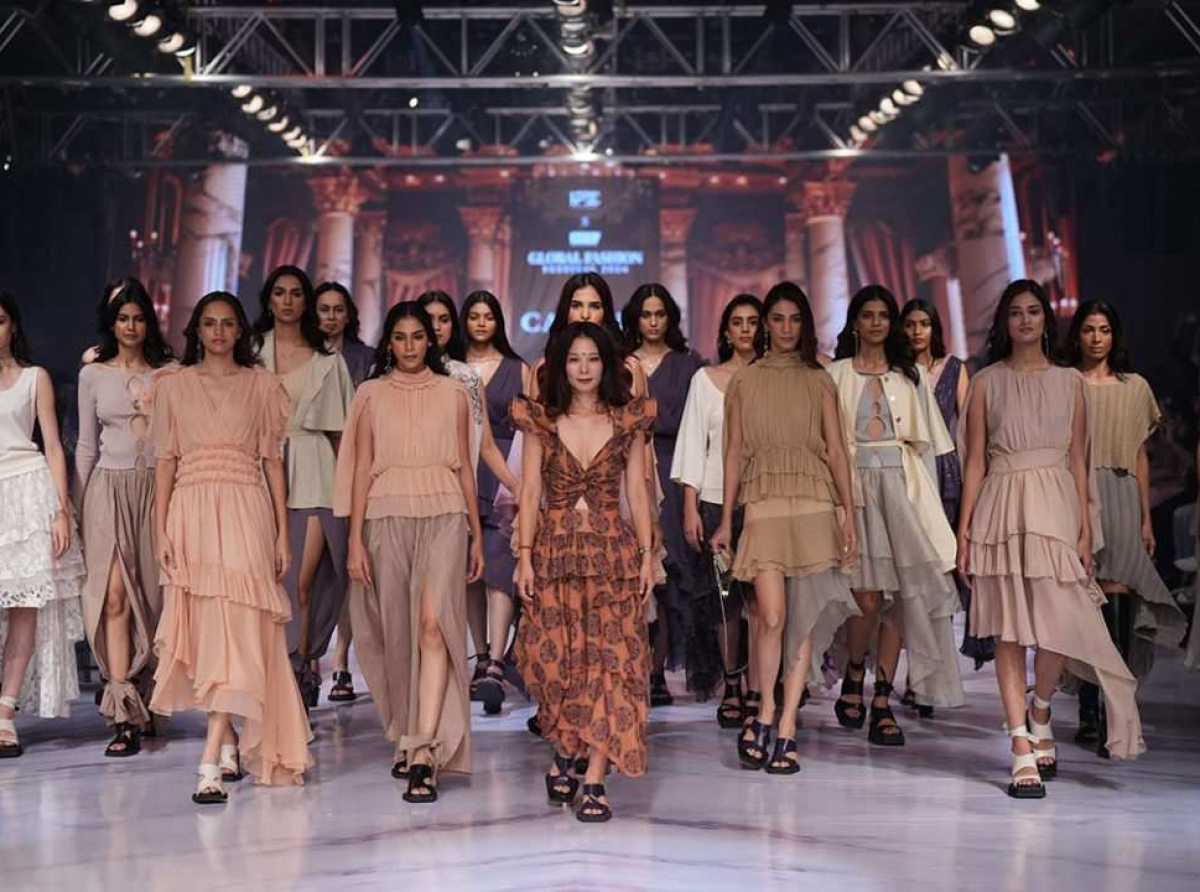
The traditional power structure of India’s luxury market is seeing a decisive inversion. Fresh corporate filings indicate that leading domestic couture houses are now operating at financial scales that rival, and in select cases exceed, established European luxury brands in India. The shift is being driven by institutional capital, category expansion beyond bridal wear, and the structural dominance of India’s wedding and festive consumption cycle.
What was once a fragmented designer system has evolved into a consolidated, investor-backed luxury segment that is steadily closing the revenue gap with global heritage houses such as Hermès India, Gucci India, Christian Dior India, and Louis Vuitton India.
Domestic labels cross into institutional scale
Sabyasachi Calcutta LLP, has reported operating income of Rs 487.31 crore in FY25, holding steady at a scale that now positions it among India’s largest luxury fashion enterprises. In comparison, Hermès India generated Rs 427.9 crore, albeit with a robust 33 per cent growth driven by ultra-high-net-worth consumption. However, several global houses lost momentum in the same period: Gucci India declined 17.3 per cent to Rs 265.4 crore, while Christian Dior India slipped 3.3 per cent to Rs 257 crore. Louis Vuitton India, despite remaining the largest international player in India, recorded a marginal 1.7 per cent decline to Rs 802.47 crore.
Crucially, no international luxury brand operating in India crossed the symbolic Rs 1,000 crore revenue threshold, underscoring the plateauing of imported luxury demand under high taxation and currency pressures. Meanwhile, Manish Malhotra MM Styles Private Limited recorded one of the sharpest growth in the segment, with 34.6 per cent year-on-year to Rs 308.3 crore, with aggressive retail expansion and experiential luxury positioning.
Table: FY25 revenue snapshot domestic vs global luxury in India
|
Brand / Entity |
FY25 revenue (Rs cr) |
YoY growth rate |
Market classification |
|
Louis Vuitton India |
802.47 |
-1.70% |
International Heritage |
|
Sabyasachi Calcutta LLP |
487.31 |
Stable Top-line |
Domestic Couture |
|
Hermès India |
427.9 |
+33.0% |
International Ultra-Luxury |
|
Manish Malhotra (MM Styles) |
308.3 |
+34.6% |
Domestic Couture |
|
Gucci India |
265.4 |
-17.30% |
International Heritage |
|
Christian Dior India |
257 |
-3.30% |
International Heritage |
Wedding economy becomes demand generator
The difference in performance is basically rooted in consumption patterns. Global luxury brands in India are largely dependent on aspirational retail handbags, accessories, and entry-level luxury goods. However, high import duties (30-40 per cent), 28 per cent GST, and sustained rupee depreciation have significantly elevated retail prices, compressing mid-tier luxury demand. In contrast, Indian couture houses are structurally embedded in the country’s wedding economy, where luxury spending is non-discretionary and culturally institutionalised. High-income families routinely allocate Rs 50 lakh-1 crore budgets for wedding wardrobes, directing demand toward domestic couture houses rather than imported ready-to-wear collections. This creates a predictable consumption cycle, insulating domestic brands from macroeconomic volatility while reinforcing recurring, high-value order books.
Capital inflow, category growth drive scale
A defining feature of the current phase is the entry of institutional capital into designer-led businesses. The acquisition of a 51 per cent stake in Aditya Birla Fashion and Retail Ltd in Sabyasachi, and Reliance Brands Ltd’s 40 per cent stake in Manish Malhotra, has fundamentally altered operational scale.
These partnerships have enabled: Professionalised supply chain management; higher retail footprint across metros and global luxury destinations along with systematic brand monetisation beyond couture garments. Sabyasachi, for instance, has aggressively diversified into high-margin categories. Jewellery alone contributes over Rs 100 crore, while accessories account for nearly Rs 60 crore. This multi-category model has reduced dependency on bridal cycles and improved revenue continuity.
Profit vs scale, the new trade-off
Despite strong topline growth, margin pressure is becoming more visible. Sabyasachi’s operating margin has moderated to 19.18 per cent, impacted by rising embroidery costs, raw material inflation, and sustained brand-building expenditure across global markets.
The transition from artisanal, low-volume craftsmanship to structured corporate-scale production introduces inherent friction. Quality control, exclusivity preservation, and supply consistency remain critical operational challenges as domestic brands target Rs 700-1,000 crore revenue over the medium term.
Manish Malhotra MM Styles offers a blueprint for commercial scaling of designer brands. Once synonymous primarily with Bollywood costume design, the label has transformed into a structured luxury enterprise. The key drivers include: 40,000 sq ft flagship atelier in Mumbai; 30,000 sq ft retail space in Delhi; high-visibility presence in destination luxury hubs such as Dubai Mall and strong celebrity-led bridal marketing ecosystem. This combination has enabled the brand to align cultural capital with commercial scalability, resulting in a 34.6 per cent revenue growth to Rs 308.3 crore.
Similarly founded in 1999, Sabyasachi Calcutta LLP has evolved into India’s most globally recognised couture label. With backing from Aditya Birla Fashion and Retail Limited, the brand operates flagship stores across Kolkata, Mumbai, Delhi, Hyderabad, and New York. Its expansion into fine jewellery and accessories has repositioned it from a bridal couture house to a diversified luxury ecosystem. With a projected revenue growth of over Rs 700 crore by FY28, Sabyasachi is positioned as India’s closest equivalent to a global heritage luxury house built on cultural storytelling, artisanal craft, and institutional retail expansion.
India’s luxury reset has begun
India’s luxury market is no longer defined by imported aspiration alone. Domestic couture houses are now competing on scale, institutional backing, and category breadth, reshaping competitive dynamics across the sector. While global brands retain dominance in certain high-ticket categories, the structural anchor of India’s luxury consumption—the wedding economy continues to tilt the balance toward homegrown designers. The result is a rare market inversion: Indian couture is no longer a niche cultural expression, but a consolidated, capital-backed industry increasingly defining the future of luxury retail in India.











 Get in Touch!
