
Apparel retail sector to growth to accelerate to 10.5% in FY27: Ind Ra

28 February 2026, Mumbai
India’s organized apparel retail sector is entering a phase of steady recovery, with revenues projected to grow 9 per cent Y-o-Y in FY26. According to the latest report from India Ratings and Research (Ind-Ra), this rebound follows a period of subdued demand and uneven consumption. The sector’s momentum is expected to accelerate further to 10.5 per cent in FY27, supported by a more favorable wedding calendar and a noticeable shift in consumer confidence.
The rise of value fashion and Tier-II Dominance
While the broader market stabilizes, the ‘value fashion’ segment is significantly outperforming premium counterparts. Brands like Zudio, Yousta, and InTune are spearheading an aggressive expansion into Bharat - India’s Tier-II and Tier-III cities -where aspiration meets price sensitivity. This segment now commands nearly 57 per cent of the total apparel market, driven by the rationalization 57 per cent of the total apparel market, of GST to a uniform 5 per cent for garments priced below Rs 2,500. Ind-Ra highlights, while store additions may moderate to 7 per cent in FY26, the average retail area is increasing by 9 per cent, as brands pivot toward larger, experience-led formats to boost transaction values.
Margin expansion and operational efficiency
Profitability is also on an upward trajectory, with operating profit margins for listed players improving to 15.6 per cent in the current nine-month period. Retailers are successfully offsetting residual inflationary pressures through rigorous cost optimization and AI-driven inventory management. McKinsey’s State of Fashion 2026 notes, ‘price discipline’ and ‘logistical agility’ have become the industry’s primary defenses against global volatility. By refining sourcing mixes and reducing promotional markdowns, Indian retailers are securing a stable credit outlook despite the capital intensive nature of their rapid physical footprint expansion.
Digital integration and the Gen-Z influence
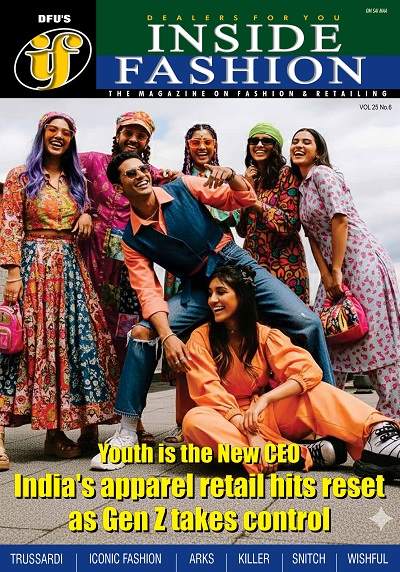
The integration of ‘Quick Commerce’ into fashion - pioneered by services like Myntra’s M-Now – is redefining consumer expectations for 2026. E-commerce is projected to grow at a 21.5 per cent CAGR, fueled by Gen-Z’s appetite for trend-led, social-media-influenced collections. This digital surge is not replacing physical stores but rather enhancing them; omnichannel strategies are now essential for maintaining market share. As per Ind-Ra, this multi-channel approach, combined with rising disposable incomes, positions India as a resilient ‘growth engine’ in an otherwise cautious global fashion landscape.
India’s apparel market is a $174 billion ecosystem transitioning toward a $350 billion valuation by 2030. Dominated by value fashion, ethnic wear, and a surging athleisure category, retailers are prioritizing Tier-II expansion and digital transformation to capture a middle-class segment projected to reach 600 million by 2026.









 Get in Touch!
