
82th NGF ends on a positive note with robust recovery anticipating 2026 Spring-Summer season

28 January 2026, Mumbai
The conclusion of the 82nd National Garment Fair (NGF) in Mumbai has provided a definitive benchmark for India’s textile and apparel sector, signaling a robust recovery for the 2026 Spring-Summer season. Spanning 7 lakh sq ft, the event recorded an unprecedented 24,000 trade visitors, a metric that reinforces the domestic market’s role as the primary engine of the industry. Industry projections now estimate apparel revenues to grow by 10.5 per cent in FY26, buoyed by a $140 billion domestic contribution within a wider $176 billion textile ecosystem.
Strategic shifts in consumer behavior and B2B integration
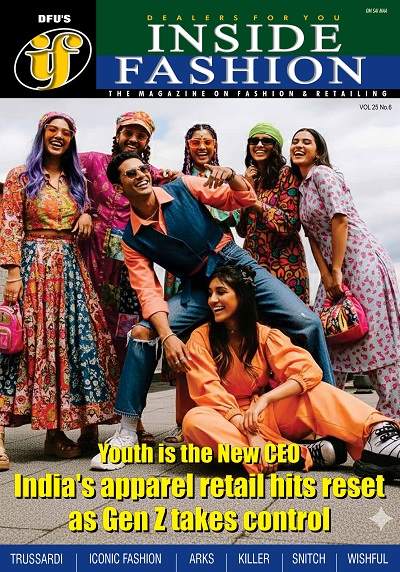
A critical takeaway from this edition is the rapid transition toward premiumization and Gen Z-centric demand. Unlike previous cycles focused on high-volume, low-margin commodities, manufacturers are now prioritizing quality-led products and innovation. The fair featured over 1,085 brands, highlighting a trend where Tier II and Tier III retailers are increasingly seeking ‘full-look’ inventory rather than standalone pieces. The impressive business traction and healthy order volumes recorded reflect inherent market confidence, stated Santosh Katariya, President, Clothing Manufacturers Association of India (CMAI). To facilitate this high-velocity sourcing, the association integrated digital tools, including a sophisticated stall-locator feature, to reduce search costs for modern e-commerce decision-makers.
Navigating cost pressures and policy realignment
While demand remains high, the sector is currently recalibrating its supply chain to mitigate fluctuating raw material costs. Government representatives at the fair emphasized that domestic textile consumption is expanding at a 7-8 per cent annual rate, yet manufacturers face the challenge of maintaining price sensitivity for a ‘quality-obsessed’ middle class. A brief analysis of Butterfly (Indore), a long-standing participant, demonstrates this shift; the brand has successfully scaled by aligning its spring collections with regional preferences while leveraging NGF’s B2B network to bypass traditional wholesale bottlenecks.
As India moves toward a developed economy, the sector is increasingly focused on phygital integration and sustainable manufacturing to satisfy both regulatory mandates and evolving urban aspirations.
An apex body representing the Indian apparel industry for over five decades, CMAI boasts membership of over 20,000 manufacturers and retailers. The association facilitates national and international trade. Its primary focus involves policy advocacy, trend forecasting, and organizing the biannual National Garment Fair. CMAI aims to propel the market toward a $646 billion valuation by 2033 through organized retail formalization and digital transformation.










 Get in Touch!
