
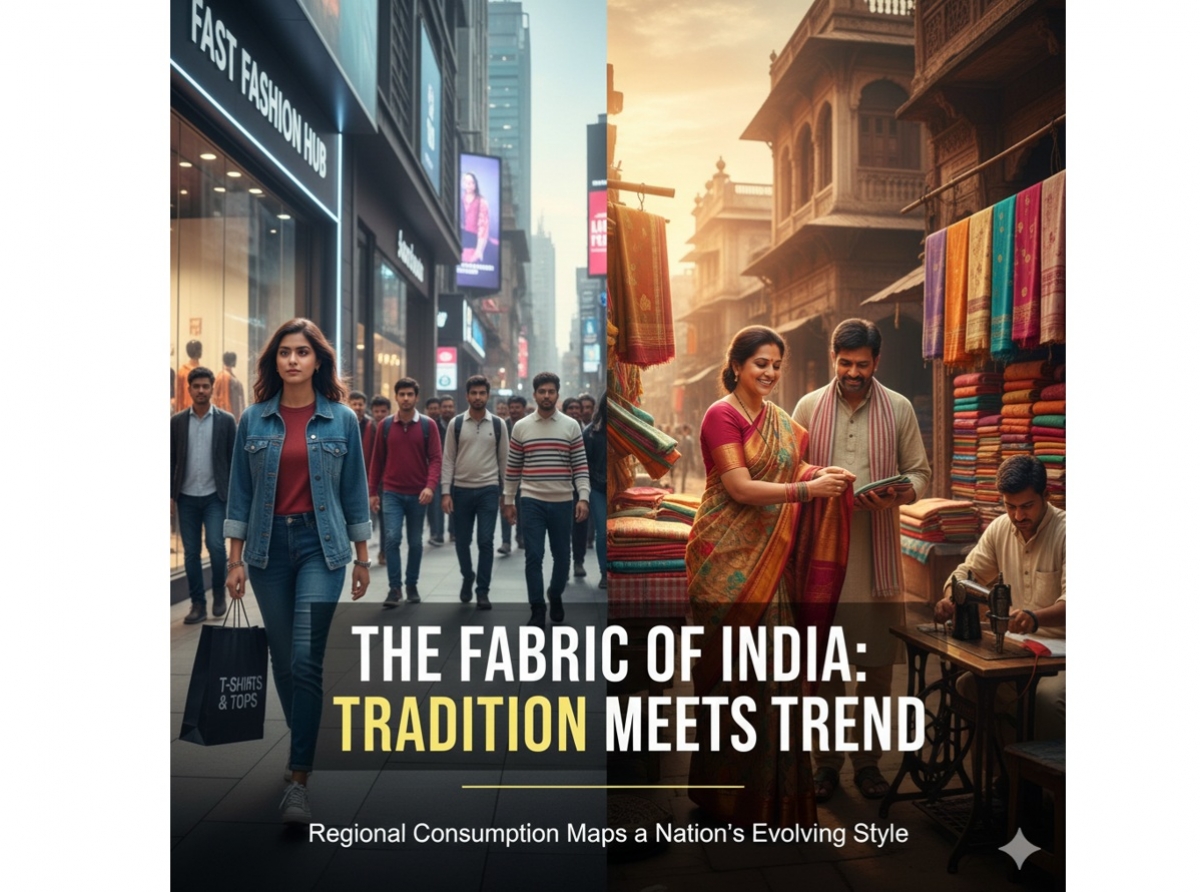
Regional consumption trends map the nation's evolving fashion landscape
16 December 2025, Mumbai
A comprehensive analysis of household clothing consumption, based on data from the National Sample Survey Office (NSSO) Household Consumption Expenditure Survey (HCES), reveals a geographically fragmented and culturally rich apparel market in India. Tracking the share of households reporting a purchase in the 365 days ( conducted in 2024) preceding the survey, the data paints a vivid picture of regional economic buoyancy, the enduring appeal of traditional wear, and the rapid adoption of modern fashion.
The Metropolitan Surge: Delhi and the North’s dominance in modern wear
The survey clearly positions North Indian states, particularly Delhi and Uttarakhand, at the forefront of the organized and contemporary fashion market. This ascendancy is characterized by high household consumption across a range of ready-to-wear, fast-fashion, and climate-specific Western apparel.
Delhi, owing to its status as a major metropolitan hub with high urbanization and disposable income, stands out as the national capital for high-volume modern garments, leading in critical categories:
● Shirts: Delhi leads with a massive 96.4% household share.
● T-shirts, polos, tops, shrugs: Delhi again tops the list at 95.1%.
● Trousers, jeans, jeggings, skirts: With 94.7%, Delhi confirms its comprehensive preference for modern bottoms.
● Pajamas, salwar, leggings, palazzo: Even in semi-traditional or casual wear, Delhi maintains the lead with 75.1%.
The contiguous states reinforce this pattern. Himachal Pradesh exhibits the highest recorded share across all categories at 98.8% for Innerwear, socks, and other hosiery items, indicating a near-universal penetration of basic essentials. Uttarakhand's high demand for specialized items—Coat, jacket, blazer, sweater, sweatshirts, windcheater (92.2%) and Headwear, belts, ties, hat, scarf, muffler, etc. (79.7%)—is driven by its colder climate and tourist economy. These figures collectively highlight the North's significant tilt towards organized, ready-to-wear clothing, often reflective of global fashion trends.
Table 1: Northern India's leadership in modern Ready-to-Wear
|
Modern Apparel Category |
Leading State |
Household Share (%) |
|
Innerwear, socks, and other hosiery items |
Himachal Pradesh |
98.8 |
|
Shirts |
Delhi |
96.4 |
|
T-shirts, polos, tops, shrugs |
Delhi |
95.1 |
|
Trousers, jeans, jeggings, skirts |
Delhi |
94.7 |
|
Coat, jacket, blazer, sweater, sweatshirts, windcheater |
Uttarakhand |
92.2 |
|
Headwear, belts, ties, hats, scarf, muffler, etc. |
Uttarakhand |
79.7 |
|
Pajamas, salwar, leggings, palazzo |
Delhi |
75.1 |
|
Cloth for coat, trousers, suit |
Rajasthan |
66 |
The Traditional Heartlands: Sustaining regional textiles and ethnic wear In powerful contrast to the modern segments, the survey data affirms the robust and enduring importance of regional states in preserving and consuming traditional Indian textiles and classic clothing staples. These consumption patterns are deeply rooted in cultural identity, climate, and time-honoured traditions.
Bihar stands out with nearly unanimous household shares for the highly regional Gamchha, towel, handkerchief (96.0%) and the timeless Saree (95.7%). This high figure is a strong testament to the saree's continued role as a primary, daily garment and the gamchha's status as an essential item of utility. Similarly, Tamil Nadu's leadership in Lungi consumption (78.3%) showcases the garment's necessity as comfortable, traditional menswear in the tropical Southern climate.
In the Northeast, Assam leads in the consumption of Blouse, dupatta/stole (93.0%), suggesting the prevalence of three-piece ensembles, often utilizing the state's unique indigenous cotton and silk textiles. The purchase rates in these states demonstrate that traditional attire is not merely ceremonial but remains essential for everyday life for a large segment of the population.
Table 2: Consumption hotspots for Traditional apparel
|
Traditional Apparel Category |
Leading State |
Household Share (%) |
|
Gamchha, towel, handkerchief |
Bihar |
96 |
|
Saree |
Bihar |
95.7 |
|
Blouse, dupatta/stole |
Assam |
93 |
|
Cloth for shirt, pyjama, kurta, salwar |
Jammu & Kashmir |
91.2 |
|
Lungi |
Tamil Nadu |
78.3 |
|
Kurta-pajama suits: females |
Uttarakhand |
60.9 |
A significant insight into the textile sector is provided by the consumption of unstitched material. In Jammu & Kashmir, the consumption of Cloth for shirt, pyjama, kurta, salwar, etc. hits a substantial 91.2%. This figure reveals a strong cultural and economic preference for purchasing fabric and utilizing local tailors for custom-stitching. This trend is vital for supporting the micro-economy of local darzis (tailors) and indicates a consumer demand for superior fit, material quality, and customization that off-the-rack garments may not fully satisfy. A similar, though lower, preference for unstitched or tailored garments is noted in Rajasthan for Cloth for coat, trousers, suit (66.0%).
The Blended Wardrobe: Co-existence as the new norm
The overarching conclusion from the survey is that the modern Indian consumer is not simply switching between traditional and Western wear, but rather blending their choices. The high penetration of the market, with all categories shown registering a household share over 50%, indicates increasing disposable incomes and accessibility across the country.
The 'Blended Wardrobe' is a pragmatic approach: modern fast-fashion is adopted for professional, casual, and social settings, while traditional garments are maintained for cultural events, religious ceremonies, and comfortable home wear. The fact that Delhi leads in both modern bottoms (jeans) and semi-traditional pajamas/leggings illustrates this dual consumption pattern.
For apparel manufacturers, the key to success lies in navigating this dual market: capitalizing on the booming, digitally-driven modern fashion consumption in metropolitan hubs while simultaneously respecting and catering to the robust, culturally-rooted demand for traditional textiles in states like Bihar, Assam, and Tamil Nadu.







 Get in Touch!
