
Wazir Advisors Analysis: Value retailers emerge as the new kings of Indian fashion
10 March 2026, Mumbai
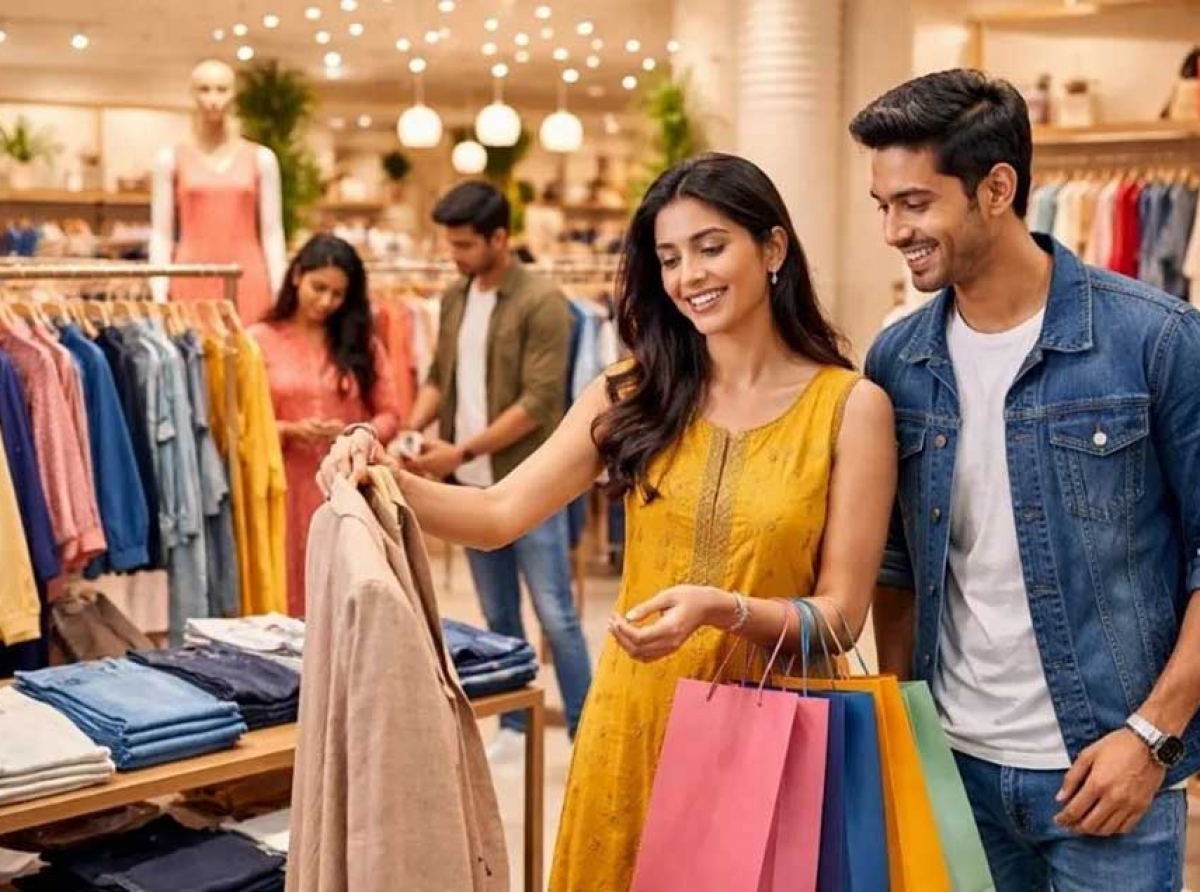
The glamour of global luxury labels and premium high-street brands may dominate fashion headlines, but a quieter and far more consequential change has been unfolding across India’s apparel market. The country’s most decisive retail winners in the post-pandemic era have not been luxury boutiques or digitally native fashion startups, but a cohort of deeply disciplined value fashion retailers that have mastered the economics of India’s price-sensitive consumer.
According to the ‘India Apparel Market Review (February 2026)’ by Wazir Advisors, the period between FY20 and FY25 has witnessed a restructuring of India’s apparel hierarchy. Inflationary pressures, evolving consumption priorities and a growing middle class in smaller cities have collectively shifted the center of gravity away from premium retail toward affordable fashion chains that combine low prices with high merchandise turnover.
In this environment, value fashion retailers have not only captured market share but have also rewritten the operational playbook of Indian apparel retail.
A market migration powered by scale
The most striking evidence of this change lies in the comparative growth rates across retail segments over the past five fiscal years. Between FY20 and FY25, value fashion retailers increased revenues at a pace that over shadowed every other organized retail cohort.
Table: Revenue growth comparison (FY20 vs FY25)
|
Cohort |
FY20 revenue (Rs cr) |
FY25 revenue (Rs cr) |
CAGR (%) |
|
Value Fashion Retailers |
12,969 |
37,838 |
24% |
|
Global Brands/Retailers |
15,214 |
22,254 |
8% |
|
Ethnic Brands |
6,366 |
11,856 |
13% |
|
Department Stores |
13,835 |
18,333 |
6% |
The numbers highlight a shift rather than a cyclical rebound. Value retailers have nearly tripled their revenues over the five-year period, from Rs 12,969 crore to Rs 37,838 crore. This translates into an annualized growth rate of roughly 24 per cent, three times faster than the growth recorded by international fashion brands operating in India.
Global retailers, long considered aspirational benchmarks for Indian consumers, grew revenues from Rs 15,214 crore to Rs 22,254 crore during the same period, posting a modest CAGR of about 8 per cent. Department stores fared even worse, expanding at roughly 6 per cent annually, while ethnic brands driven by wedding and occasion wear demand had a healthier but still moderate 13 per cent CAGR. The difference reveals a reality about post-pandemic consumption patterns: Indian shoppers are increasingly prioritizing value over brand prestige, particularly in everyday fashion categories.
The economics of affordable aspiration
The success of value fashion chains cannot be explained by price alone. Their rise has been anchored in a disciplined operational model that emphasizes efficiency over marketing theatrics. Retailers such as Trent, through its fast-expanding Zudio chain, and V Mart Retail have built businesses that resemble scaled-up versions of India’s traditional bazaar retail but powered by modern supply chain analytics and standardized store formats.
The operational advantages are reflected in profit trends. Profit after tax (PAT) margins for value retailers expanded steadily from around 3.9 per cent in FY22 to approximately 5.4 per cent by FY25, a significant improvement in an industry where margin expansion is notoriously difficult.
Three structural advantages underpin this performance.
First is inventory discipline. Value retailers operate with faster merchandise cycles and lower inventory holding periods, allowing them to react quickly to demand while minimizing unsold stock. Rapid turnover keeps working capital requirements manageable and reduces the need for end-of-season liquidation sales. Second is aspirational affordability. These retailers have focused aggressively on Tier-II and III cities where rising disposable incomes coexist with strong price sensitivity. By offering trend-driven designs at accessible price points, they enable consumers to refresh wardrobes frequently without straining household budgets.
Third is lean marketing expenditure. While fashion startups and global brands rely heavily on digital marketing and influencer campaigns, value chains allocate only a small fraction of revenue to promotional activity. According to the Wazir analysis, marketing expenditure among value retailers averages roughly 1.7 per cent of revenue, compared with 7.3 per cent for D2C startups. The savings are instead redirected toward aggressive store expansion, particularly in emerging urban centers where organized fashion retail penetration remains low.
The rise of the discount-conditioned consumer
If value fashion retailers represent the winners of the post-pandemic cycle, the broader apparel industry is grappling with a phenomenon that threatens profitability across segments: the normalization of heavy discounting.
Indian consumers, especially those shopping online, have increasingly become conditioned to expect markdowns before making a purchase. E-commerce platforms have amplified this behavior through frequent sale events and aggressive promotional campaigns.
Table: Average discounting trends on major e-com platforms
|
Year |
Average discount % |
Market context & impact |
|
2020 |
28% |
The Pandemic Pivot: Initial focus was on essential goods; discounts were moderate as demand often outstripped supply. |
|
2022 |
35% |
Revenge Shopping: A sharp rise in discounting to clear stale inventory and capture the post-lockdown spending boom. |
|
2025 |
43% |
Hyper-Competition: Deep discounting became a standard baseline due to the rise of Quick Commerce and Hyper-Value platforms. |
The escalation is stark. Average discounting across major platforms has increased from roughly 28 per cent in 2020 to about 43 per cent by 2025. In several mass categories such as men’s jeans and T-shirts or women’s dresses, between 50 and 60 per cent of listed styles are now sold at discounts exceeding 50 per cent.
This relentless promotional cycle has had a direct impact on profits for global fashion brands operating in India. Their PAT margins declined from roughly 6.7 per cent in FY22 to 4.2 per cent in FY25, reflecting the increasing cost of maintaining competitiveness in a discount-driven marketplace.
For brands positioned in the mid-premium segment, the challenge is particularly acute. High fixed costs combined with continuous price promotions erode margins while diluting brand equity a dilemma that many international retailers have yet to resolve.
Startup boom meets the profit wall
The data also highlights the contrasting fortunes of digitally native fashion startups, which initially appeared ready to disrupt traditional retail. Direct-to-consumer (D2C) brands recorded explosive revenue growth between FY20 and FY25, achieving a CAGR of approximately 41 per cent. Venture capital funding, digital marketing tools and influencer-driven branding allowed these companies to rapidly scale online visibility.
Yet profit remains elusive. According to the Wazir report, startup apparel brands collectively recorded negative PAT margins of around 5.6 per cent in FY25. The underlying challenge lies in the economics of customer acquisition and product returns. Online fashion retail in India suffers from high return rates, particularly in categories such as western wear where sizing inconsistencies are common. At the same time, heavy digital advertising expenditure often exceeding 7 per cent of revenue erodes operating margins.
Many D2C players are now shifting towards offline expansion, opening physical stores to reduce dependence on digital marketing and build stronger brand engagement with customers.
Ethnic wear’s defensive strength
While Western apparel segments struggle with discounting pressure, India’s ethnic wear brands have managed to maintain strong profitability.
Companies such as Vedant Fashions, operator of the widely recognized Manyavar label, continue to benefit from a structural advantage: occasion-based purchasing. Wedding and celebration garments occupy a unique psychological category in Indian consumption. Consumers tend to prioritize quality and brand prestige over price sensitivity when shopping for ceremonial clothing. As a result, ethnic brands recorded the highest PAT margins in the industry at approximately 10.1 per cent in FY25, making them one of the few segments relatively insulated from the relentless discount cycles affecting everyday fashion categories.
Apparel’s shrinking share of the Indian wallet
Beyond competitive dynamics within the fashion sector, a deeper macroeconomic shift is also reshaping the industry’s growth trajectory.
Although India’s overall consumer spending has increased over the past decade, apparel is capturing a smaller share of that spending. Data on Private Final Consumption Expenditure (PFCE) reveals that the clothing and footwear category has steadily lost wallet share.
In 2014, clothing and footwear accounted for roughly 7.1 per cent of PFCE. By 2024, that share had declined to 5.1 per cent.
The shift reflects broader changes in lifestyle priorities. Urban consumers are allocating more income toward mobility, connectivity and experiential spending. Expenditure on transport and communication, for instance, rose from 16.1 per cent of PFCE in 2014 to 19.9 per cent in 2024, driven by the rapid adoption of smartphones, digital services and personal mobility solutions. Meanwhile, spending on restaurants, travel and leisure services has expanded as younger consumers prioritize experiences over material purchases.
For apparel retailers, the implication is clear: the fight for market share is no longer limited to competing fashion brands. It increasingly involves competing with entirely different categories of consumer spending
The future of Indian fashion retail
The data emerging from the post-pandemic period suggests that India’s apparel market is entering a new phase defined by operational discipline and localized growth strategies. Global fashion brands face a saturation challenge in metros, while digital startups are discovering the limits of online-only expansion. In contrast, value retailers have found fertile ground in the vast network of smaller Indian cities where organized retail penetration remains low but aspirational demand is rising rapidly.
By combining rapid design cycles with tightly controlled costs, these retailers have effectively replicated the speed of online fashion while maintaining price points closer to traditional street markets.
As 2026 moves ahead, the lesson from India’s evolving apparel market appears increasingly clear. The brands most likely to dominate the next decade will not necessarily be those with the biggest marketing budgets or the most glamorous storefronts. Instead, the winners will be companies capable of delivering trend-driven fashion with the efficiency, affordability and geographic reach that resonate with the everyday Indian consumer. In the new hierarchy of Indian fashion, the crown has quietly passed to the value kings.










 Get in Touch!
