
Beyond Gen Z fashion retail discovers the power of older shoppers
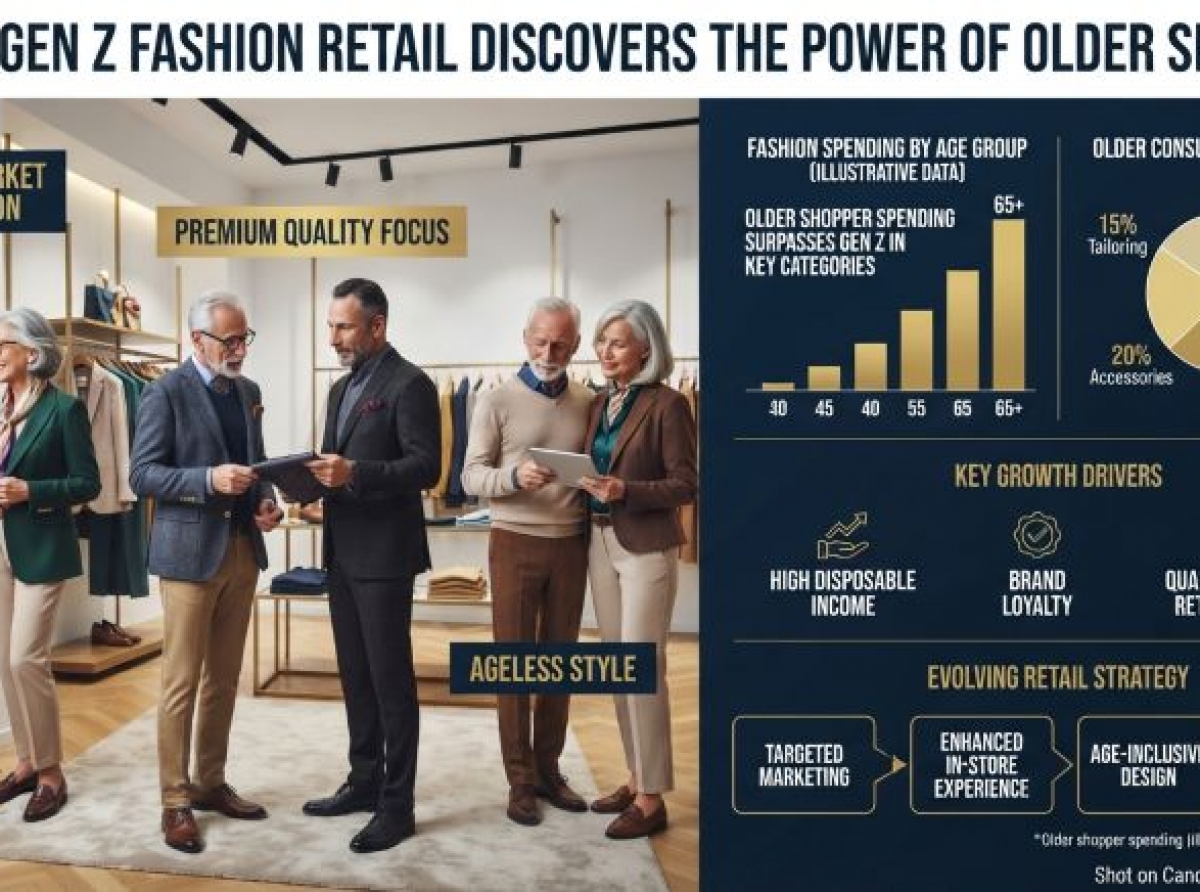
The fashion industry’s long-standing fixation on Gen Z and millennials is facing a commercial reality check. As inflation, rising customer acquisition costs and tighter discretionary budgets squeeze younger consumers, brands are beginning to recognise a more financially resilient and underserved market: shoppers aged 50 and above.
Armed with greater wealth, lower debt burdens and stronger purchasing power, older consumers represent a significant growth opportunity for fashion retailers. Yet the industry continues to direct a disproportionate share of its marketing and product development budgets towards younger demographics, overlooking a cohort that already commands a substantial share of retail expenditure.
As per BoF-McKinsey State of Fashion research, consumers aged 50 and above account for 38 per cent of global retail spending and are projected to generate 48 per cent of global spending growth. Their contribution is expected to reach 60 per cent in the US and China and 79 per cent across the EU5 economies viz. France, Germany, Italy, Spain and the UK.
The spending gap is particularly evident in the US. Consumers aged 55 and above control over 72 per cent of national wealth, while shoppers aged 59 and above account for 37 per cent of apparel retail expenditure, compared to 23 per cent for Millennials. Their per capita apparel spending is also 21 per cent higher than that of younger consumers. For fashion businesses operating under margin pressure, these numbers point to a substantial mismatch between marketing investment and actual purchasing power.
A spending power gap
The advantages of older consumers extend beyond accumulated wealth. Compared to younger shoppers, they generally carry lower debt obligations, have greater home equity and are less exposed to fluctuations in disposable income. During recent inflationary cycles, less than 20 per cent consumers aged over 50 in the US, EU5 and China actively restricted or monitored their apparel budgets. Among Gen Z shoppers, the proportion exceeded 30 per cent.
Younger consumers, meanwhile, are dealing with higher housing costs, student debt and tighter discretionary budgets. The result is a market in which fashion brands are spending increasingly heavily to acquire consumers whose ability to sustain repeat purchases is under pressure.
Table: Older shoppers, bigger spenders
|
Demographic indicator |
Consumers aged 50+ |
Gen Z and Millennials |
|
Share of global retail spending |
38% |
Lower relative share |
|
Projected share of global spending growth |
48% |
Slower growth |
|
Share of US apparel spending |
37% (aged 59+) |
23% (Millennials) |
|
Per capita apparel expenditure |
21% higher |
Baseline |
|
Inflation-related apparel budget restrictions |
Below 20% |
Above 30% |
The demographic shift is not simply about an ageing population. It reflects the growing concentration of purchasing power among consumers who have both the financial capacity and willingness to spend on quality, design and products that deliver lasting value.
Beyond the youth bias
Despite the commercial evidence, fashion companies remain heavily invested in younger audiences. Around 60 per cent of fashion retailers continue to prioritise Gen Z and Millennials in their customer acquisition strategies. Younger shoppers are reportedly twice as likely to be targeted by promotional media, even as digital advertising saturation intensifies.
The consequences are becoming apparent. Around 80 per cent of Gen Z consumers report feeling overwhelmed by the volume of digital advertising directed at them. In contrast, only 29 per cent retailers report having deliberate strategies to attract Generation X, while just 14 per cent allocate dedicated resources to Baby Boomers. This disconnect creates an opportunity for brands willing to rethink their customer segmentation.
Importantly, targeting mature consumers does not mean returning to conservative styling or creating collections built around age-specific stereotypes. Today's over-50 shopper is not necessarily looking for conventional silhouettes or functional clothing at the expense of design. Research indicates that half of women in their 50s consider themselves more style-conscious than they were in their 20s. Their preferences centre on sophisticated tailoring, premium fabrics, versatile silhouettes and garments that combine comfort with contemporary design. The business opportunity lies in delivering these attributes without compromising fashion relevance.
Style without age barriers
A growing number of fashion brands are beginning to recognise that mature consumers should be integrated into mainstream brand positioning rather than isolated through separate product categories. Contemporary labels such as Ulla Johnson and Frances Valentine, alongside multi-brand retailers such as Evereve, are building businesses around versatile wardrobes and multigenerational appeal.
Luxury houses are also challenging conventional campaign casting. Loewe, Chloé and Saint Laurent have featured established cultural personalities including Maggie Smith, Charlotte Rampling and Jane Fonda in global campaigns, demonstrating that mature faces can strengthen rather than dilute luxury positioning.
The shift reflects a broader understanding of aspiration. Fashion relevance is no longer exclusively defined by youth, social media visibility or rapidly changing trends. Experience, confidence and individual style are increasingly valuable brand attributes. For retailers, the challenge is to build collections that appeal across age groups without making age the defining feature of the product.
Physical retail makes the difference
Capturing the spending power of older consumers also requires a rethink of retail operations and customer engagement. Research indicates that consumers aged over 50 spend approximately 17 percentage points less time browsing garments aimlessly in the US and 36 percentage points less in Europe than the average shopper. Their lifestyles place greater emphasis on travel, dining and cultural activities, making convenience and purposeful shopping important purchase drivers.
This creates an advantage for physical retail, where consumers can assess fabric quality, evaluate fit and receive personalised styling assistance before making a purchase. US-based Evereve is an example of how this model can translate into commercial performance. The contemporary women's apparel retailer has built its proposition around curated wardrobes, elevated denim and accessible designer labels. Their stores located largely in suburban lifestyle centres and premium shopping destinations, combine product discovery with personalised styling. Rather than leaving customers to navigate crowded merchandise assortments, trained stylists help shoppers assemble complete outfits. The approach encourages higher-value purchases, improves conversion and reduces the uncertainty associated with online apparel buying.
The model also addresses a persistent weakness in digital fashion retail: returns arising from inconsistent sizing, inadequate product information and differences between online representation and actual garment quality.
Digital, but different
Older consumers are not disengaged from digital commerce. However, their shopping preferences often differ from the short-form video, influencer-led and gamified experiences used to attract younger audiences.
Responsive websites, detailed product descriptions, transparent fabric information, fit specifications and reliable customer service can be more effective in converting this cohort. Email marketing and personalised product recommendations also offer opportunities to build repeat engagement without relying entirely on expensive digital advertising auctions.
For retailers, this creates a potentially attractive customer economics equation. Mature shoppers who value service, product consistency and quality can generate stronger repeat-purchase relationships and higher lifetime value, reducing dependence on constant new-customer acquisition. The opportunity is therefore not simply to increase marketing expenditure towards older consumers, but to build the retail infrastructure that converts their purchasing power into sustained loyalty.
The multigenerational opportunity
The demographic case for change will strengthen over the coming decades. In the US, the over-50 population is projected to reach 42 per cent by 2050. The proportion is expected to exceed 50 per cent across China and Western Europe. India is also moving towards an older consumer profile. Its population aged over 50 is projected to increase from 20 per cent in 2020 to 34 per cent by 2050, increasing the potential market for premium apparel, quality fabrics and differentiated retail experiences.
For Indian fashion brands, is a long-term opportunity to develop products and services that address the aspirations of financially established consumers, particularly as organised retail and premiumisation grow.
The challenge is balancing this opportunity with the need to retain younger consumers who remain important to brand discovery and future growth. Fashion companies do not need to abandon youth-oriented marketing. They need to move beyond the assumption that youth represents the industry's only meaningful growth market.
As acquisition costs rise and younger consumers become more selective, the economics of fashion retail are shifting. The next competitive advantage may not come from identifying the youngest trendsetter, but from recognising the consumer with the greatest capacity to spend.










 Get in Touch!

