
Levi’s bets on bigger stores and bigger baskets to scale India business
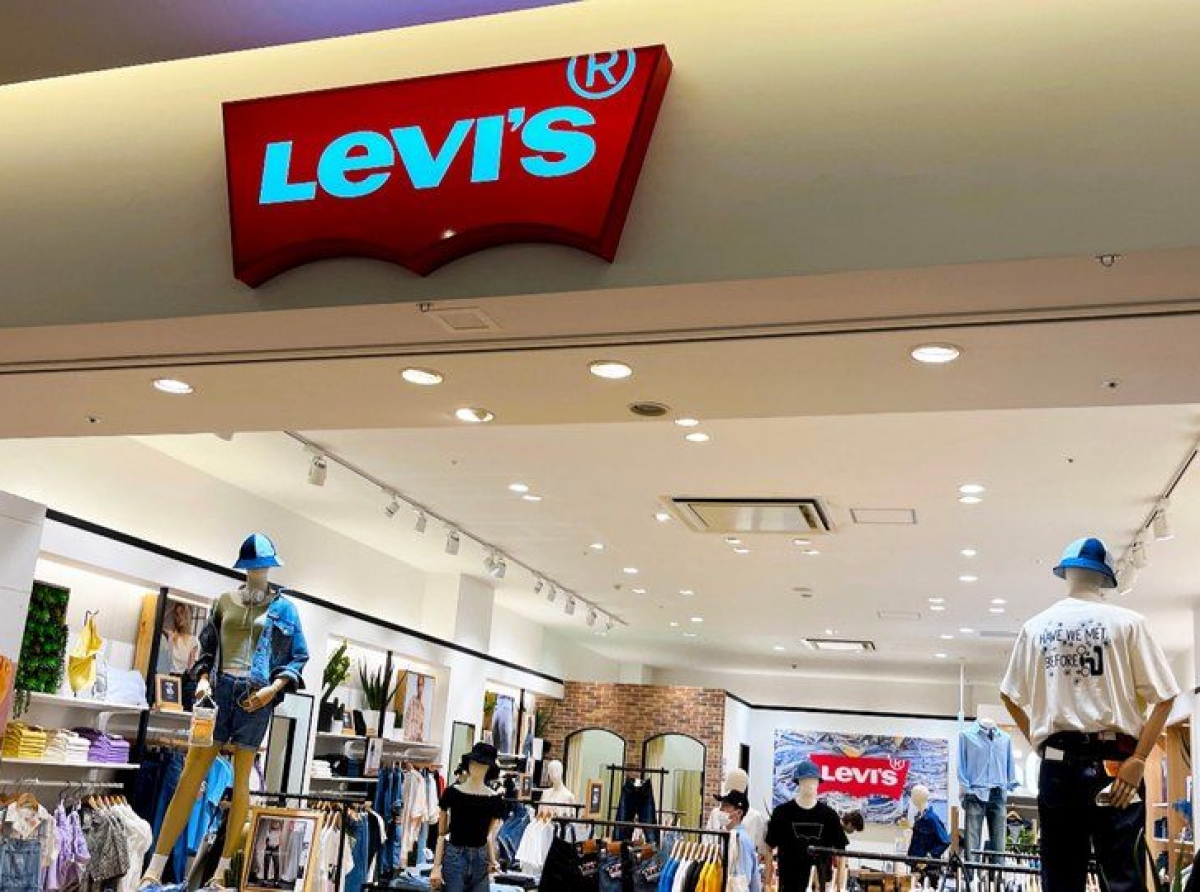
Levi Strauss & Co. is reshaping its India retail strategy around a simple commercial proposition: sell more than jeans to every customer. The San Francisco-headquartered apparel major is replacing smaller franchise-led outlets with large-format stores of 6,000 to over 9,000 sq ft in premium retail locations. The objective is to transform Levi’s from a predominantly denim-led brand into a broader lifestyle label spanning tops, non-denim bottoms, dresses, jackets, knitwear and accessories.
The strategy comes as India’s denim market matures and competition intensifies from domestic apparel chains, fast-fashion retailers and international brands. Rather than relying on volume-led denim sales and discounts, Levi’s is using larger stores to increase assortment depth, premiumisation and units per transaction.
Table: Levi’s overall performance and market preview
|
Operations |
Global Q2 performance |
India market |
|
DTC Channel Share |
51% of total consolidated sales |
Operating >400 mono-brand stores; key driver of margins |
|
Top-Line Growth |
+8% YoY to $1.56 Billion (Guidance: 7-7.5%) |
Trailing double-digit growth; top Asian revenue market |
|
Women's Category Momentum |
+11% YoY growth |
Fastest-expanding customer segment; >30% target mix |
|
Tops & Non-Denim Performance |
+5% YoY (polos, blouses, and knitwear outperforming) |
35-40% allocated floor space in NextGen stores |
|
Luxury / Premium Tier Sales |
+40% YoY ($100-200 mn+ targeted scale) |
Blue Tab / Made & Crafted commanding Rs 15,000-25,000 |
Bigger stores, broader baskets
The economics behind the format shift are visible in Levi’s global performance. In the fiscal second quarter, revenue rose 8 per cent year-on-year to $1.56 billion, while women’s apparel grew 11 per cent and tops increased 5 per cent. These categories matter because they allow Levi’s to capture spending beyond the traditional jeans purchase. A consumer entering a store for denim can be converted into a multi-category shopper through coordinated styling across shirts, knitwear, outerwear and accessories. This is particularly relevant in urban India, where casualisation of workplace dressing and rising participation of women in white-collar employment are expanding demand for versatile everyday apparel.
The company’s global direct-to-consumer transformation strengthens this strategy. DTC now accounts for 51 per cent of consolidated revenue, giving Levi’s greater control over pricing, merchandising, inventory and customer experience. India, already its largest Asian revenue market, gives a natural testing ground for this model.
Women and premiumisation
Women’s wear is emerging as one of Levi’s most important growth levers. The company is targeting over 30 per cent contribution from the category in its India expansion, using larger stores to create dedicated spaces rather than treating women’s products as a secondary assortment. At the premium end, Blue Tab and Made & Crafted collections priced at Rs 15,000-25,000 are helping Levi’s participate in India’s premium denim opportunity.
Globally, luxury denim sales increased 40 per cent during the quarter. Such products have a dual role: they generate higher margins while strengthening the brand’s premium credentials. In India, the halo effect can push consumers towards higher-priced core denim and lifestyle products.
The flagship blueprint
The 7,521-sq ft Brigade Road flagship in Bengaluru exemplifies how Levi’s is changing the role of the physical store. Nearly 40 per cent of the display area is dedicated to women’s styling, outerwear and related categories. The store also features a tailor shop offering embroidery, distressing and personalisation.
Table: Large format flagship transformation
|
Retail dimension |
Legacy franchise footprint |
NextGen flagship destination |
|
Store Size & Footprint |
1,200-2,000 sq. ft. |
6,000-9,000+ sq. ft. |
|
Merchandise Assortment |
80% Core Denim Bottoms, 20% Tees |
Head-to-Toe: Tops, Layering, Dresses, Bottoms |
|
Value-Added Engagement |
Basic off-the-rack alterations |
Dedicated Bespoke 'Tailor Shop' & Personalization |
|
Commercial Outcome |
Single-item denim replenishment |
Higher Units Per Transaction (UPT) & Basket Value |
The model is now being extended to major retail hubs. Levi’s 6,000 sq. ft. NextGen Indigo store at Nexus Mall, Koramangala, focuses on relaxed fits, cargo styles and women’s collections. Its 9,000-sq. ft. Pacific Mall destination in New Delhi is its largest global mall presence, while the 4,000 sq. ft. MG Road store in Kochi shows the strategy moving beyond the largest metros.
Scaling without losing economics
The expansion, however, is not without risks. Premium retail real estate in India’s major corridors is becoming increasingly expensive, raising both rentals and fit-out costs. Large stores therefore need substantially higher productivity per square foot to justify their capital intensity. The challenge becomes sharper in Tier-II, III markets, where consumer purchasing power and inventory velocity can differ significantly from metros. Levi’s must balance premium collections with accessible ranges such as Signature and its core denim portfolio.
Raw-material volatility is another variable. Cotton prices and petrochemical-linked synthetic inputs can pressure product margins, although regional sourcing networks across South Asia provide some insulation against global freight disruptions.
The India opportunity
Levi’s broader retail strategy ultimately represents a shift from selling denim to monetising the entire wardrobe. Its heritage remains an important competitive advantage, but the growth opportunity lies in increasing the value of each customer rather than simply adding more stores. Larger formats create room for women’s apparel, non-denim categories, premium collections and personalisation, while DTC gives the company greater control over the customer relationship.
With global revenue growth guidance at 7-7.5 per cent, Levi’s India strategy is therefore, less about rapid footprint expansion and more about improving the productivity and proposition of each retail touchpoint. For a brand built on the blue jean more than 170 years ago, the next phase of growth may depend on convincing consumers that Levi’s is not just where they buy their jeans but where they build their wardrobe.











 Get in Touch!
