
Older, wealthier, the 50-plus shopper changes India’s retail dynamics
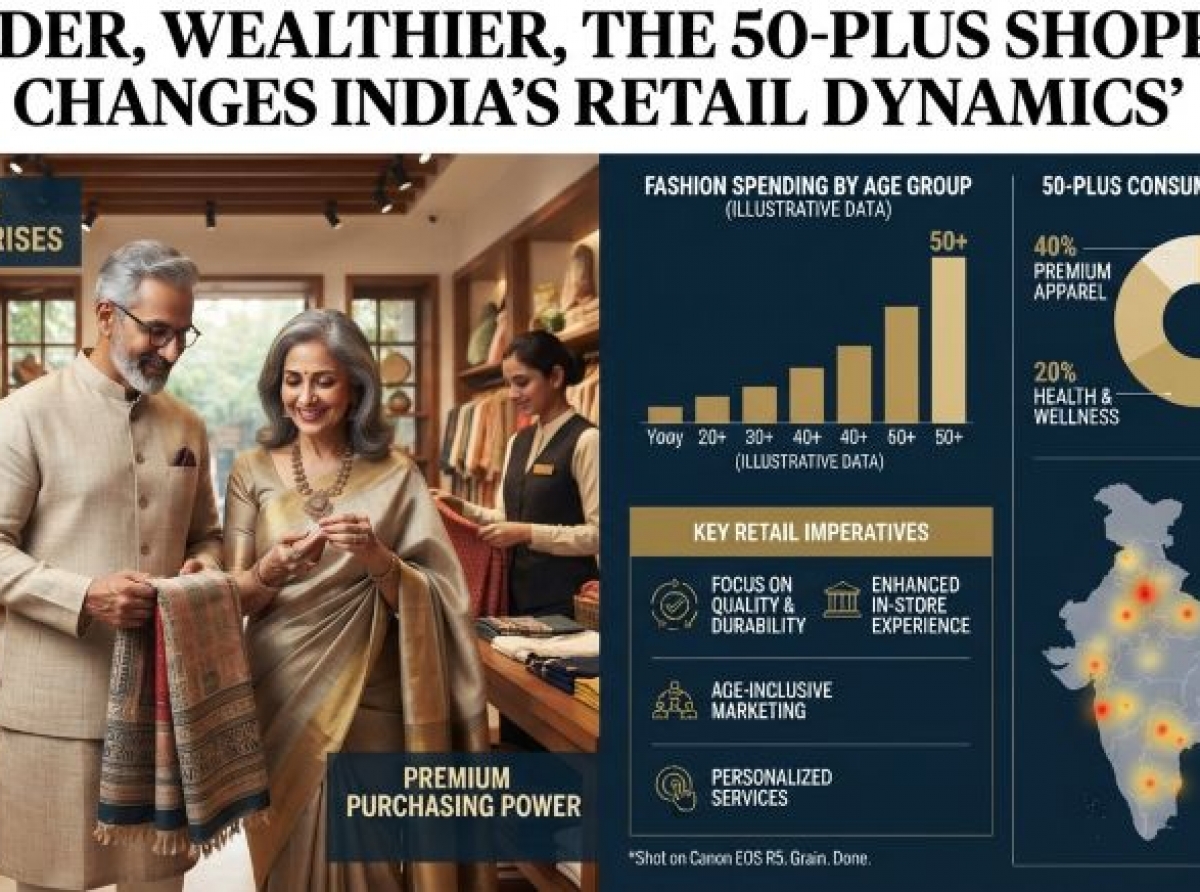
For over a decade, India’s apparel retailers have concentrated their strategies on Gen Z and millennials. Product launches, marketing budgets and store formats have revolved around younger consumers, driven by fast fashion, social media trends and price-led promotions. But this youth-centric approach overlooks a growing consumer segment with considerable spending power: those aged 50 and above.
As younger households contend with rising living costs, financial commitments and fragmented brand loyalty, mature consumers are emerging as an important opportunity for apparel retailers. They have accumulated assets, relatively stable incomes and, in many cases, fewer financial liabilities. Their spending decisions are also less dependent on short-lived fashion trends.
Research from the BoF-McKinsey State of Fashion highlights the scale of this demographic transition. While India retains a relatively young population profile, its over-50 population is growing at twice the rate of the overall population. By 2050, this cohort is projected to account for over 34 per cent of the population, compared tp 20 per cent in 2020. The population aged 60 and above is expected to reach 162.8 million, expanding towards 227 million by the mid-2030s. More significantly, consumers aged 50 and above are estimated to contribute nearly 30 per cent of incremental consumption growth.
Table: The power of the mature consumer
|
Demographic indicator |
Status and growth path |
Retail implications |
|
Population aged 50+ |
20% in 2020, projected to exceed 34% by 2050 |
Expanding consumer base, particularly in urban and southern markets |
|
Share of spending growth |
Nearly 30% of incremental consumption growth |
Increasing importance of mature consumers in discretionary spending |
|
Vibrant mature consumers |
Top 20% of spenders aged 50-70 |
Greater financial security and potential for premium purchases |
|
Apparel returns |
Reportedly lower than among consumers below 30 |
Potential reduction in reverse logistics costs and margin leakage |
Boston Consulting Group identifies a particularly attractive segment within this demographic: the top 20 per cent of consumers aged 50-70, described as 'vibrant mature consumers'. These households account for a disproportionate share of discretionary spending within their age group. Having largely addressed major financial commitments such as housing and children's education, many have greater flexibility to spend on quality, lifestyle and personal preferences.
For apparel retailers facing increased customer acquisition costs and promotional pressure, this is an opportunity to attract consumers who value product quality and consistency over constant discounts.
The new wardrobe
The opportunity is not about creating conventional clothing lines for senior citizens. India's mature consumers are now active, socially engaged and aspirational. Travel, weddings, wellness activities and extended professional or entrepreneurial engagements are shaping their wardrobe requirements.
Their preferences are also evolving. Rather than buying purely functional clothing, many are seeking contemporary designs, comfortable silhouettes and better fabric quality. Breathable cottons, linen, handloom textiles, fine silks and natural fibres have particular relevance.
The shift is especially visible among mature women, many of whom are becoming more conscious of personal style and independent fashion choices. This creates an opportunity for brands that combine traditional textile strengths with contemporary design. Fabindia, Nicobar, Raw Mango, Anokhi and Taneira have merchandise propositions that can appeal across generations without explicitly positioning themselves as brands for older consumers.
Their common advantage is the ability to combine textile authenticity, craftsmanship and modern silhouettes. A mature shopper and her adult daughter can therefore find relevant merchandise within the same retail environment.
Stores still matter
Digital discovery is important, but physical retail continues to play a significant role in converting mature shoppers. Unlike consumers who rely heavily on social media, influencer recommendations and algorithm-driven product discovery, many older customers place greater emphasis on fabric feel, fit, product demonstration and personal assistance.
This makes store experience commercially relevant. Spacious trial rooms, knowledgeable sales associates, dependable alteration services and personalised merchandise recommendations can influence purchase decisions. Retailers such as Raymond and Fabindia benefit from established store relationships and customer-facing teams capable of assisting with wardrobe selection, tailoring and alterations.
Mature shoppers are also becoming more comfortable with digital payments, UPI and WhatsApp-based communication. Their digital engagement, however, often revolves around direct brand communication, customer service and repeat purchases rather than influencer-led discovery.
Retailers that connect physical stores with WhatsApp-based customer engagement can maintain relationships beyond individual store visits. This creates opportunities for repeat business during festive, wedding and travel seasons.
The margin advantage
The commercial case extends beyond purchasing power. Mature consumers can offer retailers a more predictable buying cycle and lower product-return exposure. Online apparel returns among younger shoppers can be substantial, driven by experimentation, sizing inconsistencies and impulse purchases. The supplied industry estimates indicate that return rates for mature consumers are considerably lower, potentially falling to single digits in certain segments compared with 30–35 per cent among younger e-commerce shoppers.
Lower returns can reduce reverse logistics, handling expenses and inventory uncertainty. Combined with stronger preference for quality and repeatable wardrobe staples, this can improve the economics of customer retention.
However, these benefits are not automatic. Retailers must deliver consistent sizing, reliable product information and service standards across channels.
Designing for longevity
The biggest challenge is positioning. Marketing explicitly to senior citizens risks alienating consumers who do not identify with the label. Conversely, continuing to concentrate exclusively on younger shoppers leaves a growing spending segment underserved. The answer lies in multigenerational branding built around comfort, craftsmanship, fabric quality and fit rather than age categories.
Sizing is another opportunity. Conventional Indian apparel sizing often fails to accommodate the changing proportions and fit requirements of middle-aged and older consumers. Better pattern-making, flexible tailoring, stretch construction and breathable natural fabrics can address these gaps without compromising design.
For retailers, this is a product-development opportunity as much as a marketing one. India's demographic transition is creating a new layer of demand within the domestic apparel market. As competition intensifies around younger consumers, discounting and digital customer acquisition, the 50-plus cohort offers retailers another route to sustainable growth.
The silver economy may not generate the same social media visibility as Gen Z fashion, but its combination of purchasing power, quality orientation and potential for repeat business makes it commercially difficult to ignore.











 Get in Touch!

