
From Kolhapuris to Global Luxury: Prada controversy sparks fresh push to monetise Indian craft
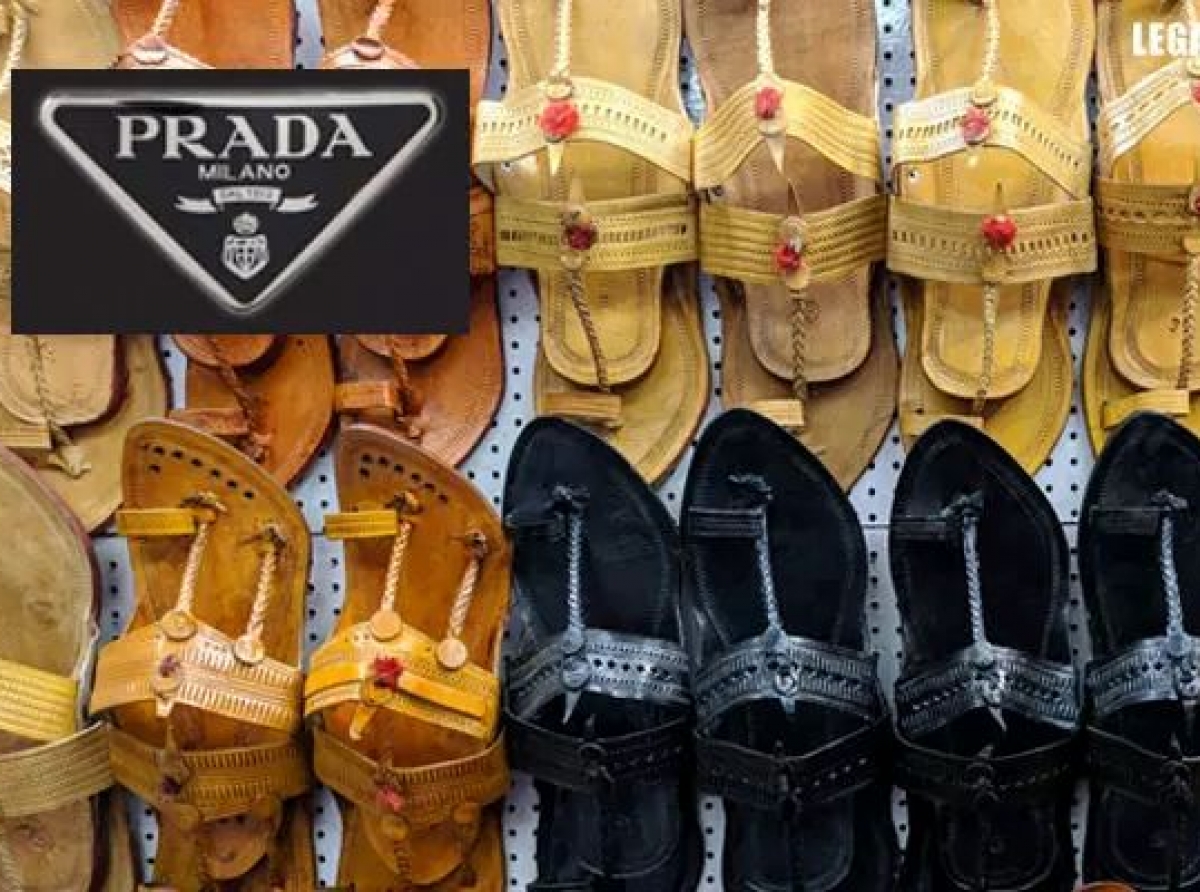
The controversy around Prada’s Spring/Summer 2026 runway in Milan, where handcrafted leather sandals closely resembled Maharashtra’s iconic Kolhapuri chappals, has triggered a larger commercial debate for India’s handicraft and fashion sectors. Beyond questions of cultural appropriation, the episode has highlighted a more consequential issue: whether global visibility for Indian crafts can translate into sustainable incomes, stronger intellectual property protection and export-led retail opportunities for artisans.
For decades, indigenous craft clusters have supplied design inspiration to global fashion without necessarily capturing the economic value created downstream. The Prada episode has sharpened the case for moving from cultural recognition to structured commercial participation, including licensing, direct sourcing, design collaborations and international distribution.
GI tag, weak economics
Kolhapuri chappals received a Geographical Indication (GI) tag in 2019, covering designated districts in Maharashtra and Karnataka. Yet formal recognition has done little to eliminate the economic vulnerabilities of artisan communities.
In clusters such as Kolhapur, Miraj and Athani, traditional tanners and cobblers continue to operate through fragmented broker networks, with many earning daily piece-rates of less than Rs 400. At the retail end, authentic and branded handcrafted footwear can command multiples of the artisan’s earnings, while factory-made synthetic replicas further dilute the value of the original craft.
The gap points to a weakness in India’s craft economy. As Jewellyn Alvares, Head of Department, School of Fashion & Costume Design, Whistling Woods International says, craftsmanship can compete with global luxury, but aesthetic recognition has limited value unless artisans also benefit commercially. The next phase therefore needs stronger contracts, design and business training, enforceable IP protection and greater participation of artisan communities in the value chain.
The commercial opportunity is particularly significant for states. For Maharashtra for example, despite being India’s largest state economy and accounting for roughly 16 per cent of national merchandise exports, its contribution to handicraft exports remains comparatively small. EPCH data puts India’s handicraft exports at Rs 33,168 crore ($3.75 billion) in FY2025-26. Much of the exports, however, remain concentrated in established northern craft and manufacturing clusters.
Table: Handicraft exports across states
|
State/cluster |
Primary craft specialization |
Export infrastructure |
National handicraft export share |
|
Uttar Pradesh |
Moradabad brassware, Saharanpur wood, Varanasi brocades |
Dedicated SEZs, inland container depots, cluster aggregation |
35-40% |
|
Rajasthan |
Jodhpur wooden furniture, Jaipur block prints, blue pottery |
Mature buyer networks, integrated craft export zones |
25-30% |
|
Gujarat |
Kutch embroidery, Patola textiles, brass handicrafts |
Strong coastal logistics, high enterprise formalisation |
10-12% |
|
Maharashtra |
Kolhapuri footwear, Paithani silk, Warli art, Sawantwadi woodwork |
JNPA, Mumbai air cargo, domestic capital, design ecosystem |
Under 5% |
In Maharashtra’s case it has several advantages that could support a larger export footprint. Its proximity to Jawaharlal Nehru Port Authority (JNPA), Mumbai’s air-cargo infrastructure and access to the country’s largest fashion and design ecosystem provide a natural platform for taking craft products directly to international consumers. The missing link is commercialisation. Instead of exporting craft primarily as raw or semi-finished products, clusters need to develop branded, market-ready lifestyle products with consistent quality, packaging, certification and international fulfilment.
E-commerce opens the door
Cross-border e-commerce could help in the transition. Outbound e-commerce facilitation under India’s Foreign Trade Policy, along with postal and logistics integration, is reducing entry barriers for small producers seeking international customers. India’s cross-border D2C shipments are growing at over 20 per cent annually, creating an alternative route around traditional wholesale and department-store structures.
The opportunity is also being supported by a change in consumer priorities. Nelson Jaffery, Head of Design at Liva, points to growing scrutiny of material provenance, environmental impact and artisan compensation across markets such as North America, Europe and Japan.
That trend potentially favours Indian crafts. Handcrafted production already carries attributes increasingly associated with premium consumption traceability, longevity, low-volume production and human craftsmanship. The challenge is to communicate these attributes through credible certification, storytelling and transparent pricing.
Designers as commercial bridges
The domestic market will also determine whether Indian craft can make the transition from heritage product to contemporary fashion category. Fashion designer Ranjit Rodricks argues that products such as Kolhapuris need to move beyond their traditional positioning as festive or occasional footwear. Their integration into everyday wardrobes could create a larger and more consistent market for artisan production.
Designers can play a critical role by becoming commercial bridges between craft clusters and organised retail. Direct contracting with artisan groups, longer-term sourcing arrangements, living-wage structures and co-ownership models could help shift the relationship from one-off procurement to sustained partnerships. This is also where Indian luxury and premium fashion brands have an opportunity to build differentiated propositions around indigenous techniques rather than simply borrowing their visual language.
The opportunity now lies in moving beyond the traditional emporium model. Digital storefronts, global marketplace partnerships and decentralised fulfilment could allow artisan groups to reach overseas customers while reducing layers between producer and consumer. The Prada controversy could therefore become more than a cultural flashpoint. It offers a commercial blueprint: protect provenance, formalise artisan participation, build brands around authentic craft and use digital distribution to capture global demand.
The larger prize is not simply recognition from international fashion houses. It is ensuring that when Indian craftsmanship becomes globally desirable, a greater share of the resulting economic value returns to the communities that created it.











 Get in Touch!
