All Stories

India’s mall giants are going smaller to win everyday shoppers

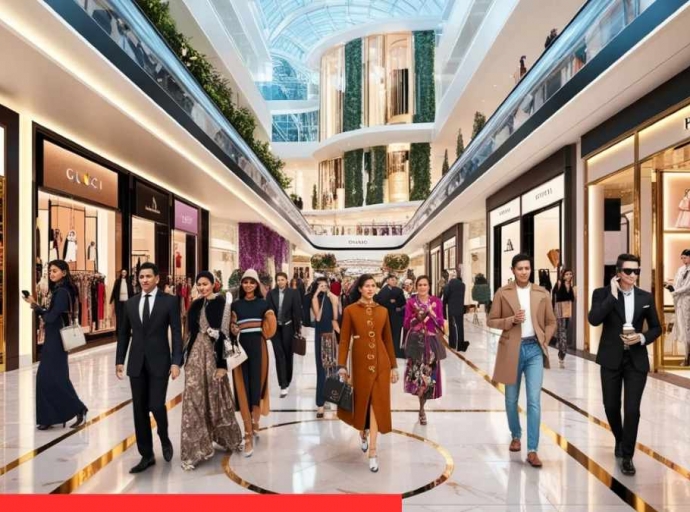
India’s retail real estate market is looking at a format reset. As urban congestion, digital discovery and quick commerce reshape shopping behaviour, developers are moving beyond the traditional million-square-foot destination mall to smaller, high-density lifestyle plazas embedded within residential catchments. The objective is not simply to generate footfall but to increase shopping frequency. By positioning apparel, dining, wellness and lifestyle services within a five-to-10-km radius, these assets seek to capture the weekday discretionary wallet that destination malls typically access only during planned visits.

DLF Retail’s recent expansion shows the strategy. Its 2.8-lakh-sq. ft. DLF Midtown Plaza in Moti Nagar, West Delhi, serves a catchment of about 2.5 million residents. The property opened with over 90 per cent operational occupancy and 95 per cent leased space, housing around 150 brands. This was followed by the 4.5 lakh  sq. ft. DLF Summit Plaza in DLF5, Gurugram, planned for approximately 215 brands. As Pushpa Bector, Group Executive Director and Business Head, DLF Retail puts it, the proposition is to make customers visit a plaza twice a week rather than make an occasional trip to a destination mall.

Smaller stores, higher density

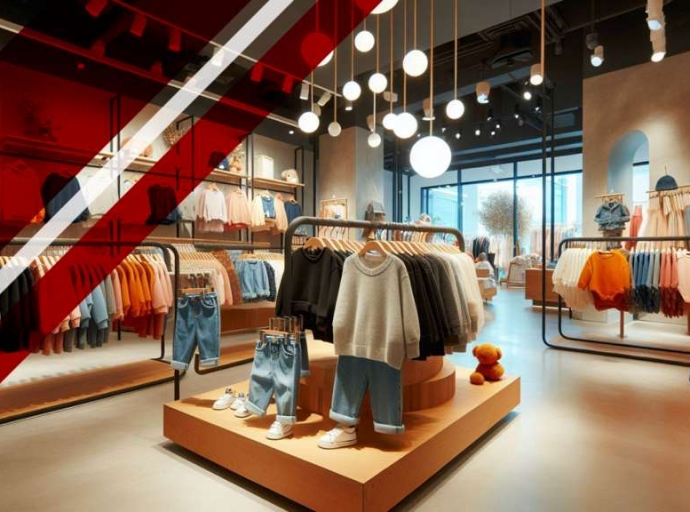
The economics of these properties are also changing the tenant equation. Traditional shopping centres often accommodate fashion stores of 2,500-3,000 sq. ft, while neighbourhood plazas can work with modular 250-500 sq. ft. units. That smaller footprint reduces fit-out requirements and lowers the entry barrier for emerging fashion labels and digital-first brands. For landlords, it creates greater tenant density and a more diversified rental base.

The shift is happening alongside strong leasing momentum. CBRE data shows retail leasing across major Indian cities increased 20 per cent year-on-year to 3.9 million sq. ft. in the first half of 2026, with Delhi-NCR accounting for 35 per cent of absorption. Fashion and apparel remained the largest demand category, contributing roughly 40-48 per cent of leased volume.

The composition of demand is equally significant. Homegrown and direct-to-consumer brands represented 28 per cent of retail leasing in early 2026, compared with 23 per cent a year earlier. Within digital-native brands, apparel and lifestyle products accounted for nearly 69 per cent of new space commitments.

D2C brands go physical

For online-first fashion companies, the neighbourhood store is becoming more than a sales outlet. It functions as a physical touchpoint for brand discovery, product trials, returns, styling and local fulfilment. Brands such as Suta and The Bear House exemplify this shift. Instead of committing capital to expensive high-street flagships, smaller stores can give a physical presence in affluent residential clusters while maintaining inventory centrally.

The model can improve sales productivity because the store does not need to carry the breadth of stock associated with a conventional flagship. Digital replenishment allows a compact unit to operate as a styling and fulfilment node, connecting online demand with offline conversion. This is particularly relevant as digital customer acquisition becomes more expensive. A physical store can reduce dependence on paid online discovery while improving consumer confidence and potentially lowering return rates.

Experience replaces commodity

The tenant mix is also revealing where developers expect future retail margins to emerge. The proliferation of quick commerce is reducing the importance of large commodity-led grocery formats, encouraging developers to favour boutique supermarkets, premium activewear, wellness services, restaurants and entertainment. The result is a more curated neighbourhood proposition. Instead of competing directly with quick-commerce platforms on speed, these plazas compete on immediacy combined with experience.

This distinction matters for fashion. Consumers may order basic products online within minutes, but apparel remains an experiential category where touch, fit, authenticity and styling can influence purchase decisions.

Spending beats footfall

The stronger argument for the format comes from consumer economics rather than visitor numbers alone. Across DLF’s retail portfolio, tenant sales have grown 11-12 per cent annually, while operational retail consumption rose 13.5-14 per cent year-on-year in the first quarter of FY27. The difference between footfall and spending is particularly important. While traffic increased about 5 per cent, tenant billing across core properties grew at a double-digit pace. This suggests that retailers are monetising fewer but more purposeful visits more effectively. Gen Z and millennials are central to this change. Their shopping journeys begin online, with consumers researching products, prices and reviews before entering a physical store. The store therefore becomes the final stage of a digitally initiated purchase journey rather than the starting point.

Two formats, one strategy

The rise of neighbourhood plazas does not signal the death of destination malls. Instead, India’s retail real estate market appears to be moving towards a dual-format model. Developers are continuing to invest in large regional assets for high-value shopping, entertainment and weekend consumption while deploying smaller community properties to capture frequent local spending.

More than Rs 30,000 crore is expected to be deployed across Indian retail assets over the coming years, underlining institutional confidence in the sector. DLF, for instance, is developing the 2 million sq. ft. Mall of India in Gurugram alongside neighbourhood properties. Its planned 7 lakh sq. ft. DLF Promenade in Panjim further expands the portfolio. The company expects its new retail additions to lift total retail revenue by 20-22 per cent.

The message is clear: India’s next retail growth phase may not be defined by bigger malls, but by a denser network of smaller ones. As digital commerce takes care of convenience and quick commerce compresses delivery times, physical retail must increasingly win on frequency, proximity and experience. The neighbourhood plaza is emerging as the format designed to do exactly that.

India’s mall giants are going smaller to win everyday shoppers

Festive campaign backlash forces brands into defensive retreats

Modern retail marketing strategies in India are increasingly caught in a volatile crossfire between progressive creative positioning and intense digital moral policing. The recent withdrawal of a high-profile Raksha Bandhan promotional campaign by silver jewelry major GIVA, featuring brand ambassador Kriti Sanon, underscores the fragile nature of festive storytelling. The campaign faced immediate social media backlash over the actor's contemporary Indo-Western attire and an unconventional framing that extended sibling rituals to pets. Industry observers note,  consumer-facing lifestyle brands are finding it exceptionally difficult to balance modern lifestyle aspirations with rigid traditional aesthetic codes without triggering organized digital boycotts.

DFU Profile

Corporate risk and commercial vulnerability

This episode reflects a broader commercial vulnerability facing major apparel and lifestyle labels attempting to modernize traditional narratives. Previous high-profile controversies - such as Tanishq’s interfaith baby shower campaign and Manyavar’s reinterpretation of the traditional kanyadaan ritual featuring Alia Bhatt - demonstrate that cultural experimentation frequently results in immediate corporate capitulation. Marketing specialists indicate that aggressive online outrage directly threatens retail footfalls, franchise security, and brand equity. Consequently, corporate boards routinely choose risk mitigation and campaign withdrawal over defending progressive creative messaging, signaling a cautious phase for festive advertising budgets across the retail sector.

Refer

Focusing on accessible luxury and financial performance

Founded in 2019, GIVA is a prominent Indian direct-to-consumer fine silver and lightweight jewelry brand. Operating primarily in urban and semi-urban markets, the company offers contemporary silver, gold, and lab-grown diamond collections. Driven by aggressive omnichannel expansion and celebrity partnerships, GIVA targets high-growth segments in modern retail, focusing on accessible luxury and strong financial performance ahead of planned public listings.

SUSTAINABILITY

Festive campaign backlash forces brands into defensive retreats

Luxury retail consolidation: Purple Style Labs sets terms for landmark IPO

The parent organization steering the luxury fashion powerhouse Pernia's Pop-Up Shop, Purple Style Labs has formally established its share price band between Rs 546 and Rs 575 to secure Rs 680 crore through its upcoming IPO. The primary issue features entirely fresh equity shares without any secondary promoter dilution, signaling aggressive capitalization for future physical and digital footprints. Industry analysts note that approximately Rs 371 crore of the net proceeds will directly service retail lease obligations and scale experience centers through its subsidiary, PSL Retail. The capital infusion arrives precisely as India’s luxury and high-end wedding apparel segments experience unprecedented structural expansion, remarks Maneesh Sharma, Senior Retail Strategist, Apex Financial. Institutional investors are increasingly backing organized omnichannel plays that bridge premier designer labels with affluent consumer demographics.

SUSTAINABILITY

Navigating operational scaling and omnichannel demands

As consumer preferences transition toward curated multi-brand luxury experiences, the enterprise faces the intricate operational challenge of balancing high real estate overheads with rapid inventory turnover. To mitigate structural risks, the management is deploying advanced supply chain analytics across its flagship experiential studios in metropolitan hubs. A prominent case study in this omnichannel execution is their recent rollout of integrated digital-physical styling appointments, which successfully elevated average transaction values by 22 per cent over the previous fiscal cycle. Company executives emphasize, maintaining stringent cost controls while scaling premium retail storefronts remains central to achieving long-term operating profitability. Sector observers indicate, successful deployment of these IPO proceeds could establish a definitive benchmark for high-end fashion capitalization across the broader South Asian retail ecosystem.

DFU Profile

Eyeing sustained margin improvements with capital market debut

Purple Style Labs operates as an omnichannel luxury fashion aggregator centering on high-end designer apparel and accessories. Targeting affluent domestic and international markets, the firm focuses on aggressive experiential retail scaling and digital integration. Backed by strong historical growth following its acquisition of Pernia's Pop-Up Shop, the company targets sustained margin improvements alongside its capital market debut.

Luxury retail consolidation: Purple Style Labs sets terms for landmark IPO

British fashion retailer Next enters Mumbai market with flagship store opening

British fashion major Next has marked its retail debut in Mumbai by launching a sprawling, 12,000-sq-ft flagship outlet at Infiniti Mall in Malad. Developed in strategic partnership with Myntra Jabong India and licensed franchise operators, the new location houses approximately 1,000 distinct styles spanning women's, men's, and children's apparel categories. The launch underscores an accelerating trend of international labels establishing physical footprints in India's top-tier urban clusters, targeting cosmopolitan consumers seeking contemporary, design-led everyday wear.

MUCH MORE

Mumbai represents an essential fashion market, and introducing our first store in the city reflects our ongoing growth trajectory across India, states Venu Nair, Chief-Strategic Partnerships and Omnichannel, Myntra. Industry analysts observe, foreign apparel brands are increasingly utilizing localized omnichannel models to optimize inventory turnover, pairing immersive brick-and-mortar retail experiences with robust digital distribution to capture rising discretionary spending.

Refer

Expanding footprint in high-potential urban areas

Next operates as a prominent British fashion and home products retailer offering apparel, footwear, and accessories. Serving international markets through franchise networks and digital platforms, the brand focuses on scaling its physical footprint in high-potential urban economies while maintaining solid financial performance, anchored by its foundational launch in the United Kingdom in 1982.

SUSTAINABILITY

British fashion retailer Next enters Mumbai market with flagship store opening

Retail expansion meets boundless creativity with new The House of Rare campaign

The House of Rare has officially launched its highly anticipated Autumn/Winter 2026 campaign, titled Walk 7.0: ‘No Room Is Big Enough,’ Shifting away from the expansive natural vistas that characterized previous chapters, this campaign takes viewers into a structured, single-room set featuring multiple doors. The enclosed architectural design serves as a physical metaphor for limitless creative evolution, explains Manish Poddar, Founder and Creative Director. The visual storytelling utilizes a striking red-and-white color palette to underscore the tension between disciplined framework and expressive design.

MUCH MORE

Diversification through new sub-brands

Alongside the core presentation, the retail enterprise is scaling its commercial footprint by introducing Guild, an elevated premium range. This fresh tier integrates seamlessly with flagship lines Rare Rabbit, Rareism, and Rare'Z to target evolving consumer preferences across menswear and womenswear. Akshika Poddar, Co-founder notes,  the latest iteration bridges individual label identities into a unified cultural ecosystem. Industry analysts observe that this strategic portfolio expansion arrives as the company builds on robust financial scale, having registered Rs 818 crore in revenue for FY25, positioning the brand to capture higher-margin market segments despite intensified competition in premium Indian retail.

Refer

Disciplined product diversification and immersive experiential marketing

Operating under parent entity Radhamani Textiles, The House of Rare was established in 2015 by Manish and Akshika Poddar. The company designs and retails contemporary apparel, footwear, and accessories across dominant urban markets via flagship brands Rare Rabbit and Rareism. Backed by institutional investor A91 Partners, the firm continues to scale its brick-and-mortar and digital retail presence rapidly, maintaining strong multi-fold growth trajectories through disciplined product diversification and immersive experiential marketing.

SUSTAINABILITY

Retail expansion meets boundless creativity with new The House of Rare campaign

Amazon Global Selling intensifies focus on regional clusters as apparel grows by 37%

Amazon Global Selling is intensifying its strategic focus on India’s core manufacturing clusters, aiming to harness localized production strengths to fulfill rising international demand. Recent performance data indicates, key lifestyle categories are expanding rapidly across global marketplaces, with the apparel segment growing by 37 per cent. According to company executives, this reflects a broader structural evolution, as domestic enterprises transition from traditional wholesale models to direct-to-consumer international brand building. By targeting specialized production hubs across states like Rajasthan, Uttar Pradesh, and Tamil Nadu, the digital export initiative provides micro, small, and medium enterprises with streamlined logistics, automated customs clearance, and direct access to hundreds of millions of overseas consumers.

MUCH MORE

Scaling brand equity and global reach

The strategic initiative is heavily supported by digital enablement tools, including automated inventory management and data analytics playbooks that assist exporters in aligning product catalogs with shifting North American and European consumer preferences. Industry participants are increasingly leveraging these platforms to establish proprietary label recognition rather than competing solely on unbranded volume. For instance, home textile ventures originating from regional clusters have scaled international revenues exponentially by marketing sustainable cotton bedsheets and handcrafted decor directly through foreign digital storefronts. The objective is centered on empowering Indian manufacturers to transition from contract suppliers into recognized global brands, states Srinidhi Kalvapudi, Business Head, Amazon Global Selling India. Despite lingering macroeconomic headwinds, the program continues to expand its seller base significantly, maintaining a steady trajectory toward its cumulative export target of $80 billion by 2030.

SUSTAINABILITY

Initiative operational overview

Amazon Global Selling is an international e-commerce export program that enables domestic enterprises of all sizes to list and sell products directly to consumers across more than 18 global marketplaces. The initiative provides comprehensive logistics, digital payment solutions, and brand registry infrastructure to facilitate cross-border trade.

Latest Issue

Amazon Global Selling intensifies focus on regional clusters as apparel grows by 37%

Eddie Bauer partners Outdoor Goats to foray into the Indian retail marke

American outdoor lifestyle brand Eddie Bauer has officially entered the Indian apparel market through a strategic partnership with Outdoor Goats, utilizing Wild Country as its exclusive licensee. The brand launch addresses expanding domestic interest in the mid-premium outdoor and activewear segments, which are currently recording a robust 35 per cent Y-o-Y growth trajectory. Focusing primarily on metropolitan and emerging urban centers, the initial product rollout targets consumers aged 25 to 40 seeking versatile utility wear. Henry Stupp, President, EMEA-India, Authentic Brands Group, notes, the brand's century-old heritage aligns naturally with the evolving preferences of Indian consumers who demand high-performance apparel suited for multiple environments.

MUCH MORE

Digital-first introduction and upcoming omnichannel expansion

The initial collection features specialized technical apparel including UPF 50 sun-protected items, active cooling garments, and four-way stretch materials, with price points ranging from Rs 2,299 for basic essentials up to Rs 20,000 for heavy insulated outerwear. Merchandise is currently accessible via the brand's dedicated Indian e-commerce platform and Myntra, with broader digital marketplace integration scheduled before the close of 2026. Following the digital-first introduction, the enterprise is preparing for an extensive physical retail rollout starting in 2027, featuring dedicated standalone boutiques and shop-in-shop formats across key commercial real estate corridors.

VIEW

Outfitting major international expeditions

Eddie Bauer is an iconic American outdoor lifestyle brand founded in Seattle in 1920. Operating across 41 countries, it specializes in high-performance apparel, down jackets, and travel gear. Targeting long-term global expansion, the brand maintains strong financial performance, anchored by its century-old legacy of outfitting major international expeditions.

SUSTAINABILITY

Eddie Bauer partners Outdoor Goats to foray into the Indian retail marke

DLF Avenue and ARKS By Ranbir Kapoor host a 10 km community in New Delhi

DLF Avenue recently partnered with contemporary fashion label ARKS By Ranbir Kapoor to host a high-visibility 10K community run in New Delhi, merging high-performance fitness with experiential retail. By serving as the official merchandise partner, ARKS bypassed traditional brick-and-mortar constraints to position its apparel directly within an active lifestyle environment. Over several hundred participants gathered for the event, receiving exclusive branded gear before embarking on the city circuit. Retail analysts note. experiential marketing campaigns yield a 34 per cent higher consumer brand recall than conventional advertising, illustrating why upscale shopping centers increasingly substitute static displays with physical wellness initiatives.

SUSTAINABILITY

Bridging lifestyle retail and performance apparel

The strategic alliance underscores a broader shift among Indian commercial real estate destinations toward community-centric curation. Rather than relying solely on traditional tenant leases, urban shopping centers like DLF Avenue continuously integrate wellness, entertainment, and fashion to drive foot traffic. Modern consumers demand authentic brand interactions that align with their personal health values, remarks Ananya Sen, Retail Leasing Consultant, Cushman & Wakefield India. Collaborations connecting fashion labels directly with fitness communities create powerful emotional connections that translate into long-term customer loyalty and repeat retail engagement, she adds.

MUCH MORE

Targeting urban millennial across metropolitan markets

Created in collaboration with Bollywood actor Ranbir Kapoor, ARKS is a contemporary Indian fashion and lifestyle brand specializing in modern apparel and casual wear. The label targets urban millennial across major metropolitan markets with plans to expand physical retail footprints. Financially backed by robust early consumer reception, the brand traces its origins to recent celebrity-led direct-to-consumer lifestyle ventures in South Asia.

DFU Profile

DLF Avenue and ARKS By Ranbir Kapoor host a 10 km community in New Delhi

Myntra unveils AI and hyperlocal fulfillment frameworks at Tech Threads 2026

Leading fashion and lifestyle marketplace Myntra hosted its annual brand conclave, Tech Threads 2026, centering on the theme 'Where Velocity Meets Voice' to showcase an advanced suite of artificial intelligence integrations and rapid logistics infrastructure. Held in Mumbai, the flagship event convened top industry executives, international brand directors, and retail leaders to evaluate how personalized shopping frameworks and creator-driven distribution channels are reshaping digital commerce. The platform highlighted innovations designed to streamline apparel discovery and accelerate brand scaling, addressing rising consumer expectations for immediate fulfillment and intuitive style curation across urban markets.

MUCH MORE

Optimizing brand operations and discovery

The showcase emphasized the rollout of comprehensive technology stacks designed to compress traditional design and cataloguing lifecycles while maximizing supply chain efficiency. Initiatives such as the AI-powered brand stack and enhanced partner tools act as operational strategists for vendors navigating shifting market trends. "Myntra Tech Threads was a great opportunity to hear from our brand partners on how our tech-led innovations are propelling their journey on the platform to build for evolving customer needs," stated Sharon Pais, Head of Myntra. Concurrently, consumer-facing propositions like the Glamstream feature blend shopper communities with influencer content, driving deeper engagement and measurable conversion metrics across the digital ecosystem.

SUSTAINABILITY

Expanding digitally with speed-led delivery models

Founded in 2007, Myntra is a premier Indian e-commerce platform specializing in apparel, beauty, and lifestyle products. Operating primarily within domestic urban and emerging tier-two markets, the company focuses on digital expansion through speed-led delivery models, such as M-Express and M-Now, backed by consistent marketplace growth.

Latest Issue

Myntra unveils AI and hyperlocal fulfillment frameworks at Tech Threads 2026

Peachmode to balance online storefronts with new physical outlets

Modern ethnic womenswear brand Peachmode is seeking to balance its online storefronts with new immersive physical outlets. The brand recently inaugurated a specialized outlet at Aparna Neo Mall in the Nallagandla micro-market of Hyderabad. This strategic addition brings the brand's expansive portfolio of traditional and contemporary apparel closer to urban consumer clusters in Telangana, capitalizing on robust foot traffic within suburban retail complexes. The new store showcases a curated selection of festive wear, everyday kurtis, intricate sarees, and statement occasion-led ensembles designed to cater to evolving demographic preferences.

SUSTAINABILITY

Bridging traditional craftsmanship with retail convenience

Industry analysts note, establishing brick-and-mortar locations in high-density shopping destinations effectively mitigates customer acquisition volatility while fostering direct brand loyalty. Bringing the brand’s collections into physical retail environments allows consumers to experience the craftsmanship and fabric quality firsthand, which remains vital for ethnic and occasion wear categories, remarks Senior Head-Retail Operations. Demonstrating the broader impact of this strategy, the brand's nationwide footprint has surpassed 50 operational stores across multiple states, reinforcing a scalable business model that bridges traditional craftsmanship with modern retail convenience.

MUCH MORE

Eyeing aggressive omnichannel expansion with mall partnerships

Peachmode is an established Indian modern ethnic womenswear brand specializing in sarees, salwar suits, and festive apparel. Operating across key urban and tier-one markets, the company targets aggressive omnichannel expansion through strategic mall partnerships, supported by steady financial performance and a strong historical foundation in digital commerce.

Latest Issue

Peachmode to balance online storefronts with new physical outlets

Latest Publications

Image

Join Our Group

Join Our Group