For over a decade, India’s apparel industry pursued the youth market with relentless intensity. Fast fashion cycles, influencer-led discovery, and price-sensitive consumption patterns became the dominant growth playbook for brands seeking scale. But as margin pressures deepen and return rates continue to erode profit, retailers are beginning to relook towards a consumer group once considered commercially secondary: women aged 50 and above.
Globally, the ‘Silver Economy’ is now emerging as one of the most stable and profitable retail segments. By 2026, consumers above 50 are projected to control a dominant share of household wealth and account for a substantial portion of discretionary spending in developed markets. The implications are increasingly visible in India, where rising life expectancy, urban affluence, and post-retirement financial security are reshaping apparel consumption patterns.
For Indian retailers facing slowing discretionary demand and rising sourcing costs, the mature shopper is no longer a niche demographic. She is becoming a high-value customer with significantly stronger lifetime value potential than younger fashion consumers.
Stability over volume
The shift reflects a widening divide between trend-driven and value-driven consumption models. While Gen Z and Gen Alpha shoppers continue to lead high-volume fashion purchases, they also generate elevated operational costs through aggressive discount-seeking behavior and unusually high online return rates. In contrast, older consumers exhibit a more investment-oriented purchasing approach, prioritising durability, fit, fabric integrity, and brand trust over rapid trend turnover.
Industry estimates suggest that online return rates among mature consumers remain far below those of younger demographics, offering retailers stronger inventory efficiency and healthier margins. For brands operating in India’s increasingly competitive e-commerce environment, this reduction in reverse logistics costs is becoming strategically important.
The contrast is especially significant at a time when Indian fashion retailers are struggling to balance expansion with profitability. Younger shoppers may generate traffic, but mature consumers are proving more valuable in sustaining earnings consistency.
The rise of ‘ease with intention’
The aesthetic shift accompanying the silver economy is equally transformative. Fashion consumption among older affluent consumers is moving away from logo-heavy excess toward what industry strategists describe as ‘ease with intention’, understated premium apparel that combines comfort, craftsmanship, and longevity.
This trend is beginning to influence Indian premium and bridge-to-luxury retailers, particularly in metropolitan markets such as Mumbai, Bengaluru, Delhi, and Hyderabad. Demand is rising for breathable natural fabrics, refined tailoring, softer silhouettes, and versatile wardrobe investments rather than occasion-specific trend pieces.
The emphasis on provenance is also increasing. Globally, high-value consumers are demanding transparency around sourcing, sustainability, and manufacturing ethics. Digital Product Passports (DPPs), which allow customers to trace the origin and lifecycle of garments, are rapidly becoming a premium differentiator.
For Indian textile and apparel exporters, this is both a challenge and an opportunity. Manufacturers with strong traceability systems, organic certification capabilities, and transparent supply chains are likely to gain an advantage as global brands shift toward accountability-led merchandising.
India’s large base of cotton, silk, handloom, and artisanal production could become a strategic strength in this transition, particularly if retailers successfully position craftsmanship as a value proposition rather than a heritage narrative alone.
Mid-market retailers move upward
One of the most important developments in global retail has been the ‘prestige-value’ shift among mid-market brands. Retailers that once competed primarily on affordability are increasingly moving into accessible luxury territory by introducing better fabrics, refined store experiences, and elevated basics. The same shift is becoming visible in India.
Large domestic players are gradually experimenting with premium sub-labels, limited capsule collections, and higher-quality fabric programs aimed at affluent older consumers who seek sophistication without ultra-luxury price tags. This demographic often includes financially secure professionals, entrepreneurs, and retired executives who remain highly active socially and digitally.
Unlike younger shoppers chasing rapid seasonal rotation, these consumers are more willing to invest in fewer but better garments. Their purchasing decisions are also strongly influenced by tactile in-store experiences.
Industry surveys indicate that a majority of mature consumers engage in ‘webrooming’ researching products online before completing purchases in physical stores. This behaviour is reinforcing the importance of experiential flagship retail, where quality validation and personalised service play a decisive role.
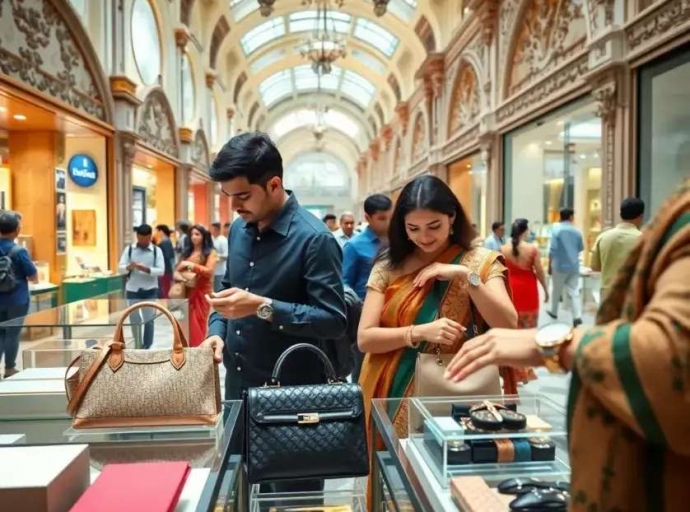
For Indian malls and department stores facing declining discretionary footfalls, this could reshape merchandising priorities. Retail environments designed around comfort, spaciousness, fabric interaction, and curated service may become more commercially effective than high-density promotional formats built for youth traffic.
Asia’s silver surge
The broader regional outlook further strengthens the case for India’s pivot toward mature consumers. Asia-Pacific is expected to dominate silver fashion retail growth over the next decade, led by aging yet increasingly affluent populations in China, Japan, and parts of Southeast Asia. India remains demographically younger than many Asian peers, but its absolute population scale means even a modest increase in affluent 50-plus consumers represents a massive commercial opportunity.
The country’s evolving social structure is also playing a role. Older Indian consumers are remaining professionally active longer, travelling more frequently, and participating in lifestyle spending categories that were previously youth-dominated. Fashion, wellness, beauty, and experiential retail are increasingly intersecting around this segment. For apparel companies, the opportunity lies not merely in designing “age-appropriate” clothing but in reframing maturity as aspirational consumption.
A reset for Indian fashion
The silver economy is ultimately forcing a rethink across fashion retail. For years, the industry optimised itself around speed, trend velocity, and perpetual markdown cycles. But rising operational costs and growing consumer fatigue with disposable fashion are challenging that model.
In India, where organised retail penetration continues to deepen and premiumisation remains a long-term growth driver, mature consumers may offer something increasingly rare in fashion: predictability. As retailers search for margin resilience in an unstable demand environment, the future of profitable growth may depend less on viral fashion moments and more on timeless value, material integrity, and lasting consumer trust.















 Get in Touch!
