
Bharat’s Value Wardrobe: The scientific ascent of India’s $170 bn ‘Value Frontier’
1_large.jpg)
27 December 2025, Mumbai
As the curtains draw on 2025, the Indian fashion landscape has undergone a tectonic shift that few predicted a decade ago.
While the luxury corridors of Mumbai and Delhi continue to hum with the sound of premiumization, the real economic thunder is echoing from the high streets of Jhansi, Tumakuru, and Siliguri.
This is the era of "Bharat’s Wardrobe," a phenomenon where value retail has transitioned from a fragmented, unorganized necessity into a $170 billion strategic juggernaut.
Heading into 2026, the industry is no longer just selling clothes; it is engineering a massive demographic migration from the local tailor to the branded rack, fueled by a 15% CAGR that is comfortably outstripping the broader retail sector.
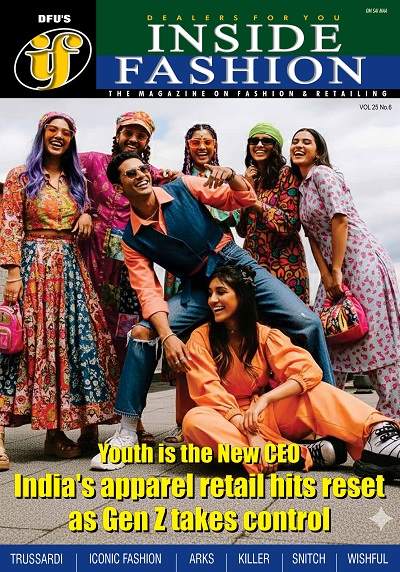
Read our latest issue
The year 2025 served as a definitive proof of concept for the "Affordability as a Science" model. For years, value retail was misconstrued as the art of the discount—a race to the bottom where quality was the first casualty.
However, the champions of this year, most notably Zudio and V2 Retail, have dismantled that myth. They have proven that value is not about a markdown; it is about a lean, mean, and hyper-efficient supply chain that treats every square foot of retail space and every gram of fabric as a data point.
Mastering the ‘High-Volume’ velocity
Zudio, the fast-fashion behemoth from the House of Tata, ended 2025 with an estimated 842 stores across 235 cities, essentially rewriting the rulebook on inventory turnover.
By refreshing collections every 15 days and maintaining a strict price ceiling—often under ₹999—they have turned fashion into an FMCG product.
Their financial performance has been a masterclass in volume-led profitability. While the industry average for retail space revenue hovers between ₹8,000 and ₹12,000 per square foot, Zudio has been clocking nearly ₹16,300 to ₹18,000 per square foot.
The strategy is a "habit" rather than a "purchase," driven by the realization that Bharat’s consumers don't want cheap clothes; they want the look of global trends at a price that respects their monthly household ledger.
Zudio’s "zero-marketing" spend policy—relying instead on high-footfall locations and word-of-mouth—saves an estimated 8–10% of revenue that competitors typically lose to digital acquisition costs.
Kumar Rajagopalan, CEO of the Retailers Association of India, notes that the sector is entering 2026 with steady momentum, where "retailers that combine affordability, relevance, and disciplined execution will be best placed to grow sustainably."
Vertical control and regional dominance
V2 Retail has followed a similarly aggressive trajectory, focusing on the deep-rooted aspirational needs of Tier II and III markets. In FY25, the brand witnessed a staggering 62% revenue growth, reaching approximately ₹1,884 crore with a 159% surge in Profit After Tax (PAT).
Their success lies in a "low markup, high volume" strategy supported by "V2 Smart Manufacturing."
By integrating manufacturing, V2 controls costs at the source, allowing them to maintain gross margins of around 32% even while pricing products for the mass market.
In 2025, they reduced the time to identify slow-moving inventory from three months to just three weeks.
This surgical precision in stock management ensured that 88% of their sales were at full MRP, a testimony of higher acceptance that moves away from the "discount-led" stigma of the past. As V-Mart MD Lalit Agarwal observed, 2025 was a year where value retailers performed well despite broader challenges, and 2026 should see even higher consumption in apparel and fashion.
Market Dynamics: The Value Retail Ascension (2023-2026P)
|
Metric |
FY 2023 (Actual) |
FY 2025 (Estimated) |
FY 2026 (Projected) |
Sector CAGR |
|
Value Retail Market Size (Non-F&G) |
$111 Billion |
$148 Billion |
$170 Billion |
15% |
|
Overall Retail Market |
$920 Billion |
$1,100 Billion |
$1,219 Billion |
10% |
|
Organized Share in Value Segment |
21% |
24% |
27% |
N/A |
|
Gen Z Spending Power |
$190 Billion |
$250 Billion |
$290 Billion |
16% |
One Nation, One Retail License: The regulatory unlock
As we move into 2026, the most significant tailwind is the structural reform of the "One Nation, One Retail License" policy. Historically, expanding into Bharat meant navigating a fragmented regulatory minefield. A typical retailer required over 25 individual licenses—spanning trade, signage, health, fire safety, and labor—per state. Under the new unified framework, this is being condensed into a single digital application via the National Single Window System (NSWS).
The impact on per-store EBITDA is not merely administrative; it is transformational. For value players operating on razor-thin margins, the cost of compliance and the "time-to-market" drag were silent profit killers. By 2026, the policy is projected to drive a 180-250 basis point expansion in per-store EBITDA. Pre-operational costs are expected to fall as the elimination of localized consultants reduces store setup Capex by approximately 12%.
Furthermore, accelerated "Launch-to-Live" timelines—shrinking from an 18-day compliance lag to just 4 days—allows for an additional two weeks of trading revenue in the critical first month.
Driving efficiency through the algorithm
The leadership mandate for 2026 is clear: Efficiency is the only sustainable competitive advantage. In the C-suite, the conversation has moved from "where do we open next" to "how do we shorten the design-to-shelf cycle to under 10 days?"
CEOs are increasingly looking at AI-driven demand forecasting to eliminate "dead stock." In a high-volume, thin-margin game, a 2% error in trend prediction can be the difference between a profitable quarter and a liquidity crisis.
Strategic leadership in 2026 will also be defined by "Phygital" integration. While the value consumer is price-sensitive, they are also the most digitally fluent demographic in history. The 2026 strategy for market leaders involves using social commerce not just for marketing, but as a primary feedback loop.
By analyzing Instagram and local platform trends in real-time, value retailers are now "manufacturing for the algorithm." The store is becoming a fulfillment center and a brand experience hub, while the "discovery" happens on a five-inch smartphone screen.
Editor's Conclusion: The formalization of aspiration
As we conclude our 2025 wrap-up, it is evident that the value segment is the new volume engine of Indian fashion.
The narrative has shifted from the survival of the cheapest to the triumph of the smartest. By treating affordability as a science, brands have unlocked the hearts—and wallets—of a billion people who were previously underserved by organized retail.
The 2026 outlook is one of unprecedented scale. With the regulatory tailwinds of "One Nation, One Retail License" and a Gen Z demographic that prioritizes trend-velocity over brand-legacy, the path to the $170 billion frontier is wide open.
For the B2B ecosystem, from textile manufacturers to tech providers, the message is clear: Bharat is ready to dress up, and the scale of this opportunity is limited only by the speed of your supply chain.










 Get in Touch!
