
05 March 2026, Mumbai
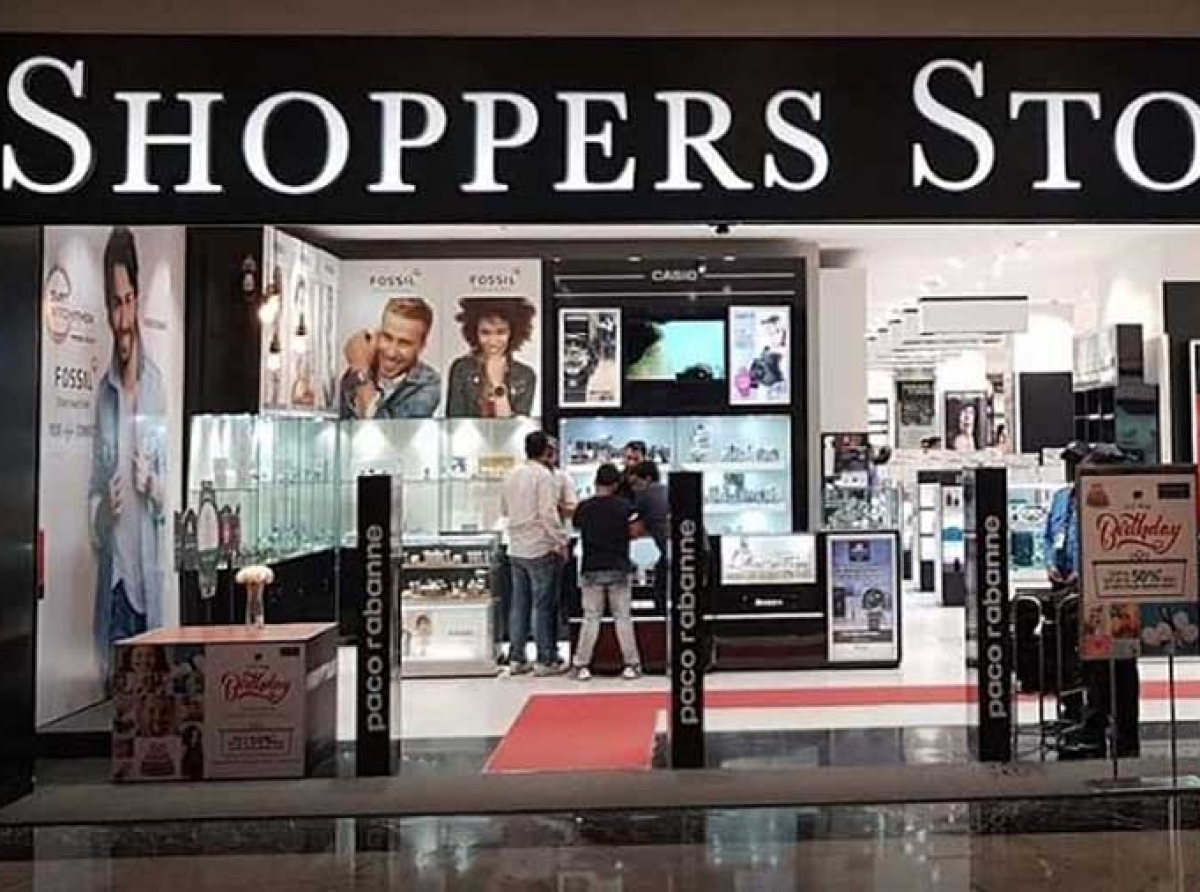
India’s department store business has changed from what was once a scale game built on assortment and footfall to a margin game built on experience, curation and wallet share. In this new calculus, square footage is less about volume and more about value density. Against this backdrop, Shoppers Stop’s relaunch of Juhu flagship in Mumbai marks more than a routine store refresh; it is a deliberate shift towards luxury-led retail economics designed to extract higher spending from fewer but wealthier customers.
Located in the affluent catchment around Juhu, the store has been redesigned as a ‘super premium laboratory’ where merchandising, design, and data converge. The timing aligns with the debut of the Spring/Summer ’26 collections, whose fluid silhouettes, muted palettes and matte-finish satins reflect a clear move away from mass fashion toward global luxury codes. The objective is straightforward: increase perception, extend dwell time, and lift Average Transaction Value rather than chase incremental traffic.
From department store to destination space
The reimagined outlet treats the store itself as a product. Instead of relying purely on shelf density, the space focuses on immersive design to stimulate conversion. Multi-sensory installations such as ‘Echoes of Fragrance’ and kinetic art inspired by the seashore environment create pauses that slow shoppers down and encourage exploration. This phygital blend converts browsing into measurable loyalty interactions.
This design philosophy is underpinned by a portfolio shift that has been quietly reshaping the company’s revenue mix. Premium brands now account for the majority of sales, indicating that the business is consciously moving away from the middle-market battleground where discounts erode margins. The Juhu store is effectively a prototype that tests whether premiumization can consistently deliver superior conversion and profitability per square foot, metrics that matter more than topline growth in a high-rent market like Mumbai.
Is the strategy working?
The company’s third-quarter operating indicators illustrate how the strategy is translating into measurable outcomes. Premium brands contribute 69 per cent of total sales, a decisive tilt toward higher-margin categories. The First Citizen loyalty ecosystem accounts for 84 per cent of revenue, revealing that repeat customers, not walk-ins are now the backbone of the business model. Beauty segment sales reached Rs 395 crore, growing 14 per cent year on year, while Average Transaction Value increased 7 per cent, evidence that shoppers are spending more per visit. Meanwhile, the loyalty base has increased to 13.3 million members, creating one of the largest first-party consumer datasets in Indian fashion retail.
Viewed together, these numbers suggest Shoppers Stop is not merely selling more goods; it is monetizing relationships. Higher ATV and loyalty-driven revenue imply stickier customers, lower acquisition costs, and better inventory planning. In a sector where promotions often compress margins, these metrics provide insulation against volatility.
Resilience in a K-shaped consumption cycle
The broader retail environment remains uneven. India’s post-pandemic consumption has shown a K-shaped recovery: affluent households continue to spend freely while price-sensitive segments trade down. Shoppers Stop’s core business sales of Rs 1,516 crore in the December 2025 quarter, despite muted mass demand, show that a premium-focused strategy can outperform during such bifurcation.
The rise in enrollments for its top-tier Black Card, up 39 per cent underscores this resilience. These customers typically show lower price elasticity and higher basket sizes, making them critical to sustaining profitability. By concentrating on this demographic, the retailer is effectively insulating itself from the discount-led churn that plagues mid-market peers.
Beauty as the high-margin engine
Perhaps the clearest expression of the new strategy lies in beauty and fragrance. Globally, beauty is prized for its repeat purchase cycles and superior gross margins, and Shoppers Stop is treating the category as a growth flywheel rather than an adjunct.
Within the Juhu flagship, exclusive shop-in-shop boutiques for labels such as NARS Cosmetics and Estée Lauder create an environment closer to standalone luxury counters than traditional department store aisles. This format lowers overhead for brands while delivering the high-touch consultation experience premium consumers expect. The result is evident in the segment’s 14 per cent year-on-year growth to Rs 395 crore, comfortably outpacing broader discretionary categories.
Industry forecasts place India’s beauty and personal care market at roughly $33 billion within the next few years, making it one of the fastest-scaling lifestyle segments. Capturing even incremental share through exclusive partnerships could materially lift overall margins.
Maximising revenue per square foot
High-street real estate in Mumbai is unforgiving. Rental costs demand that every square foot justify itself. Shoppers Stop’s answer is to concentrate high-ticket categories viz watches, designer apparel, premium cosmetics and fragrance that generate superior throughput. Instead of expanding footprint indiscriminately, the retailer is squeezing more revenue from existing locations.
The ‘department store as destination’ model therefore, becomes both a defensive and offensive play. Defensively, it protects against e-commerce commoditization by offering tactile discovery that online cannot replicate. Offensively, it positions stores as brand theatres that attract luxury partners seeking curated offline exposure.
A template for national rollout
The Juhu outlet is unlikely to remain an isolated experiment. Management’s stated ambition to deliver 10 per cent revenue CAGR through 2027 implies replication of the super-premium blueprint across other metros. With more than 110 department stores and specialty formats such as SS Beauty and Intune, the company already has the network; the task now is upgrading quality rather than adding quantity.
Founded in 1991, Shoppers Stop helped define organized department store retail in India. Three decades later, it is reinventing itself again, this time as a bridge-to-luxury curator leveraging data, design, and loyalty rather than discounting. If the Juhu prototype succeeds, it may offer a roadmap for legacy retailers navigating the same existential question: how to stay relevant when scale alone is no longer enough. In that sense, the flagship is less a store and more a statement, proof that in modern Indian retail, experience is not embellishment but strategy, and premiumization is not branding rhetoric but the core engine of growth.











 Get in Touch!
