
Trent brings Caffè Nero into Westside, Zudio to drive store business
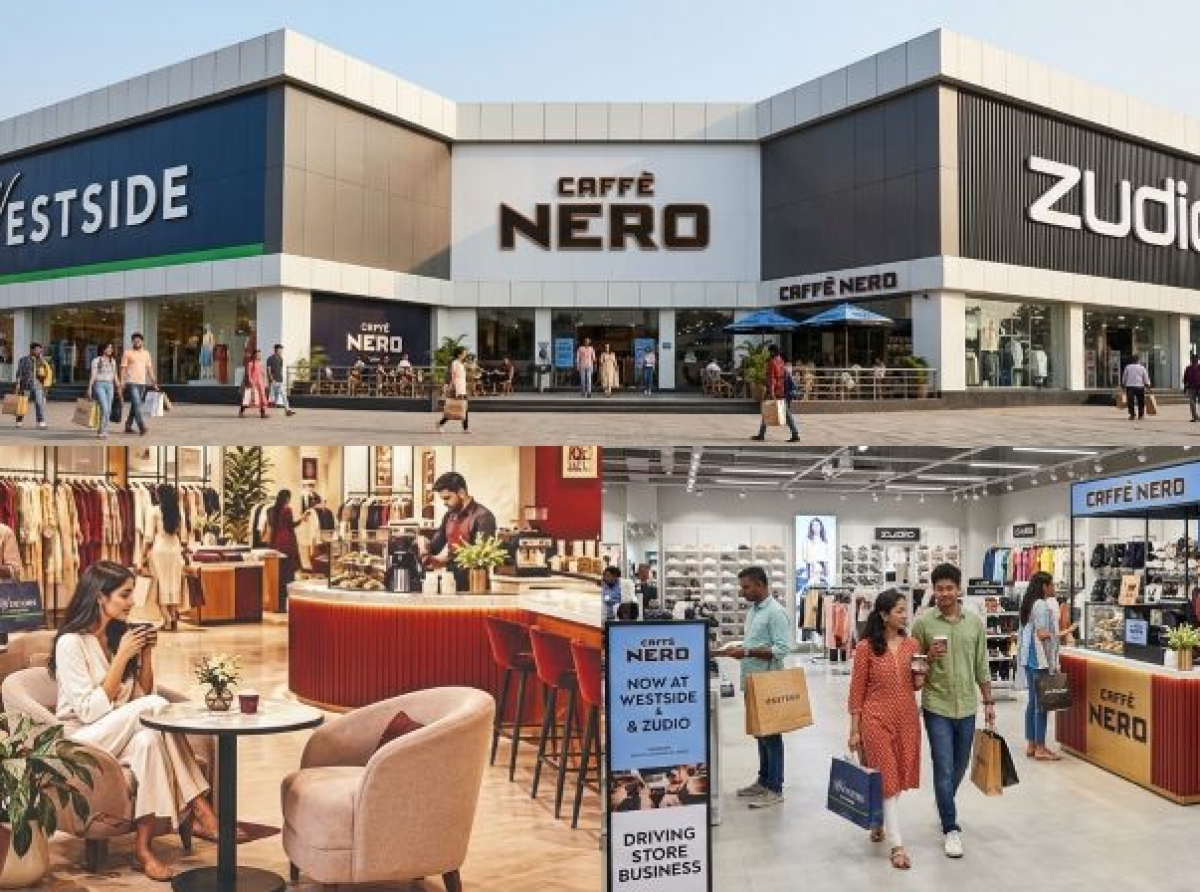
Tata Group’s retail arm Trent is turning to specialty coffee to extract more value from its fashion retail footprint, signing an exclusive master licensing agreement with British coffee chain Caffè Nero for integration across its Westside and Zudio stores. The partnership signals a growing shift in Indian fashion retail, where retailers are looking beyond merchandise density and store expansion to improve customer engagement, increase dwell time and generate additional revenue from existing floor space.
The move also follows unsuccessful negotiations with Tata Starbucks, the 50:50 joint venture between Tata Consumer Products and Starbucks Coffee Company, over integrating cafes into Trent's retail formats. Differences over storefront visibility, entrance-facing space and store layout reportedly prevented an agreement. Starbucks sought prominent street-facing locations, while Trent wanted to retain prime entrance space for apparel merchandising and customer conversion.
The subsequent departure of Tata veteran Harish Bhat from Trent's board addressed potential governance conflicts, clearing the way for an independent licensing arrangement with Caffè Nero.
Space before sales
The disagreement highlights a difference between standalone coffee retail and integrated fashion retail. Coffee chains depend on visibility, convenient access and high transaction frequency. Fashion retailers, meanwhile, need prime entrance space for product displays, new collections and promotional merchandising.
Allocating valuable frontage to an external cafe can compromise apparel sales productivity. Trent's licensing model allows it to retain control over store layouts, cafe positioning and merchandise allocation, while bringing hospitality into the shopping experience.
Table: Brewing retail engagement standalone vs. integrated café models
|
Operating parameter |
Standalone café model |
Integrated café model |
|
Storefront allocation |
Dedicated street-facing frontage |
Interior corners, mezzanines or checkout areas |
|
Layout control |
Beverage operator-led |
Retailer-led |
|
Footfall objective |
Quick beverage transactions |
Longer shopping visits |
|
Target dwell time |
10–25 minutes |
45–75 minutes |
|
Revenue opportunity |
Beverage sales |
Beverage sales and apparel basket growth |
The distinction is important as commercial rentals rise and retailers face increasing pressure to improve revenue per square foot. Rather than treating every additional square foot as merchandise space, retailers are increasingly viewing stores as destinations where shopping, food, leisure and social interaction can coexist.
Monetising dwell time
Indian consumers use cafes as social meeting points and informal workspaces, extending visits beyond conventional takeaway transactions. Integrating coffee counters into fashion stores gives shoppers another reason to enter, stay longer and explore merchandise. Estimates cited in the underlying data suggest that extending shopping visits beyond 35 minutes can increase basket sizes by 20-28 per cent. While the actual sales impact will depend on store format, customer profile and cafe placement, the commercial proposition is straightforward: longer visits create more opportunities for product discovery and conversion.
The model also introduces an additional consumption category into fashion retail. Coffee purchases can generate more frequent transactions than apparel, which typically involves longer purchase cycles. For Trent, the opportunity lies in combining beverage revenue with incremental apparel sales without allowing hospitality to displace core merchandise.
Two formats, two strategies
The deployment is expected to reflect the different economics of Westside and Zudio. Westside's larger department stores offer scope for sit-down cafes that complement premium fashion, home and lifestyle merchandise. Zudio's smaller, high-throughput stores require compact formats that minimise disruption to merchandise circulation and billing.
|
Retail format |
Indicative store size |
Proposed café format |
Commercial objective |
|
Westside |
18,000-24,000 sq ft |
600-1,000 sq ft sit-down café |
Extend visits and support premium basket building |
|
Zudio |
6,000-10,000 sq ft |
150-300 sq ft coffee kiosk |
Capture impulse purchases and checkout traffic |
At Westside, cafes can potentially anchor lifestyle and home sections, encouraging shoppers to spend more time exploring full-price collections. At Zudio, smaller coffee counters can serve customers during peak shopping periods without compromising the retailer's high-volume operating model.
The licensing structure also allows Trent to introduce an established international coffee brand without developing a hospitality business independently. It retains control over the retail environment while leveraging Caffè Nero's brand, beverage expertise and operating proposition.
In fact, the fashion-hospitality combination is well established internationally. Ralph Lauren's Ralph's Coffee has created a lifestyle extension of its fashion brand, while Prada's acquisition of historic Milanese pastry business Marchesi 1824 brought hospitality into its luxury ecosystem. Dior and Louis Vuitton have also incorporated distinctive dining experiences into flagship locations.
At more accessible price points, H&M Group's Arket operates Nordic-inspired cafes within its stores, while Primark has introduced food and beverage partnerships across selected flagship locations.
These initiatives demonstrate how hospitality can extend brand engagement beyond conventional shopping. Cafes also offer retailers a way to make physical stores more distinctive as online platforms compete on convenience, assortment and delivery speed.
The next retail battleground
For Indian fashion retailers, the economics of physical stores are becoming increasingly complex. Higher rentals, digital competition and pressure on operating margins are making productivity improvements as important as network expansion.
Trent's scale gives an opportunity to test the model across different consumer segments. With Westside targeting mid-market and premium shoppers and Zudio serving value-conscious consumers, the Caffè Nero partnership could extend branded coffee experiences across diverse urban and regional markets.
The opportunity is particularly relevant in Tier II, III cities where organised specialty coffee option remain less developed than in major metros. However, success will depend on cafe throughput, operating costs, space allocation and the ability to generate measurable incremental apparel sales.
Trent operates Westside, Zudio, Samoh and Star Bazaar, with more than 1,000 stores across its fashion formats in over 160 cities. Its strategy has been built around private labels, differentiated merchandise and high store productivity. The Caffè Nero agreement adds another dimension to that model. The objective is not simply to sell coffee alongside clothes, but to make physical retail more productive by converting shopping floors into longer-duration consumer destinations.






 Get in Touch!

