
Luxury brands integrate specialized Indian crafts into festive collections
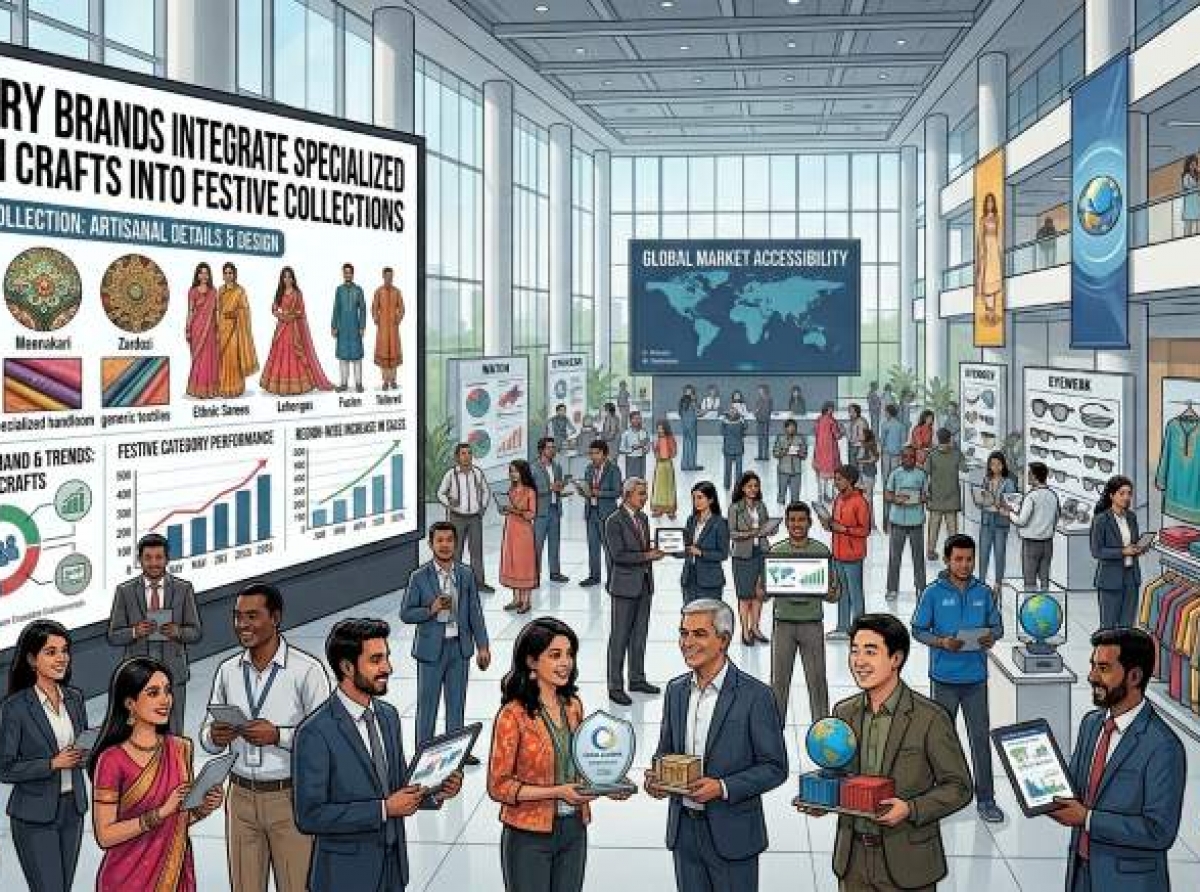
Global fashion houses are shifting from passive festive marketing to deep structural localization across their textile and apparel lines. Rather than relying solely on imported off-the-rack inventories, luxury labels like Hermès, Chanel, and Christian Louboutin are actively commissioning specialized Indian textile crafts - integrating Zardosi embroidery, raw silks, and heritage weaves directly into their global festive apparel capsules.
Capitalizing on high-net-worth demand
Projected to expand rapidly alongside a growing base of high-net-worth individuals, India’s luxury market has transformed festive demand into a core revenue driver. With apparel leading the seasonal growth, international brands are aligning product development cycles with traditional cultural calendars. Festive dressing in India represents a sophisticated blend of heritage and modern couture, notes Sunita Mehta, Retail Analyst. Foreign houses that integrate regional textiles and bespoke tailoring into their festive drops are seeing immediate commercial returns, she adds
Navigating supply chains and scale
Despite robust consumer appetite, scaling luxury apparel production while maintaining artisanal integrity poses structural challenges. Brands must reconcile slow hand-crafting cycles with strict seasonal retail deadlines. However, strategic partnerships between European design teams and Indian weaving clusters are mitigating these bottlenecks—exemplified by limited-edition silk apparel capsules selling out within days of their release across flagships in Delhi and Mumbai.
Sustained demand across metros and Tier I cities
India's luxury goods market is experiencing sustained expansion across major metro hubs and Tier-I cities. Centered around premium festive couture, fine jewelry, and artisanal leather goods, the sector is driven by rising domestic wealth. International houses are aggressively expanding footprint networks to capture double-digit annual sales growth through localized collections.










 Get in Touch!

