
Trent bets on scale over pricing to outrun India’s retail slowdown
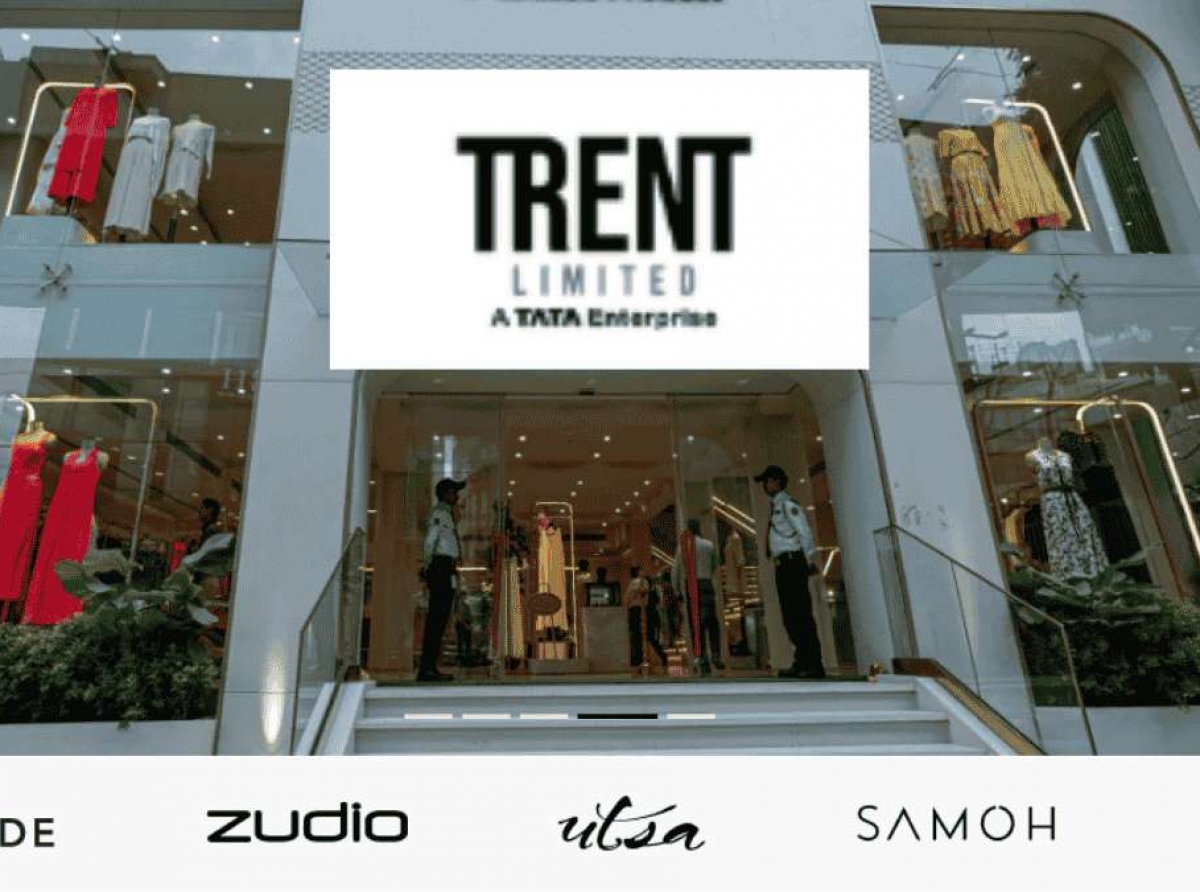
India’s organized retail sector continues to deal with uneven demand, cautious discretionary spending, and mounting margin pressure. But within this broader slowdown, Trent has emerged as one of the few large retailers sustaining aggressive expansion without compromising profits. The Tata Group retailer closed FY26 with consolidated revenue from operations of Rs 20,074.21 crore, a 17.1 per cent rise over previous year’s Rs 17,134.61 crore. The performance was accompanied by a major operational milestone as the company increased its network to 1,164 large-format lifestyle stores spread across 274 cities.
The scale-up reflects a sharp difference from prevailing sector trends. While many apparel retailers are prioritizing inventory optimization, rationalizing store additions, and conserving capital amid weaker discretionary demand, Trent continued to expand aggressively. During the final quarter of FY26 alone, the retailer added 48 new Zudio outlets and 17 Westside stores, reinforcing its commitment to a volume-led retail model.
Scale over price hikes
The backbone of Trent’s growth strategy remains Zudio, the company’s value-fashion format that has rapidly gained traction across Tier-II, III markets. Instead of depending on price increases to drive topline growth, the retailer has focused on increasing customer volumes through affordable merchandise and rapid store proliferation. Zudio’s pricing has proven particularly effective in smaller cities where consumers remain highly price-sensitive but increasingly aspirational. With average transaction values typically below Rs 500, the brand competes directly with local unorganized apparel markets while offering a modern retail environment.
The strategy has enabled Trent to deepen penetration in emerging commercial clusters rather than relying solely on metro consumption recovery. Cities such as Surat, Bhatinda, and Chandausi have become critical growth markets as organized value fashion gains share from fragmented local retailers.
Table: Trent’s FY26 performance
|
Financial Metric |
FY25 |
FY26 |
|
Consolidated Revenue from Operations |
Rs 17,134.61 cr |
Rs 20,074.21 cr |
|
Consolidated Net Profit (PAT) |
Rs 1,534.41 cr |
Rs 1,721.33 cr |
|
Fashion Store Network |
Below 1,000 stores |
1,164 stores |
Despite operating in the highly competitive value-fashion segment, Trent managed to improve profit during the fiscal. Consolidated net profit rose to Rs 1,721.33 crore in FY26 from Rs 1,534.41 crore a year earlier. The margin resilience is closely tied to the company’s private-label structure. Trent operates with an almost entirely in-house merchandise mix across its major formats, allowing it to avoid third-party brand markups and maintain tighter control over sourcing, pricing, and inventory management.
The company’s backend operating model has also emerged as a critical differentiator. Unlike traditional apparel retailers that function on long seasonal cycles, Trent follows a rapid-response sourcing approach. Initial production runs are intentionally kept small, with manufacturing scaled only after real-time sales data confirms consumer demand.
This system reduces exposure to unsold inventory and minimizes heavy end-of-season discounting, which continues to pressure margins across the broader fashion retail industry. Analysts say the retailer’s focus on inventory velocity rather than aggressive vendor negotiations is helping preserve profitability even as logistics and sourcing costs rise.
Zudio’s capital-light expansion model
By the end of FY26, Zudio’s store network had expanded to 854 outlets, making it one of the fastest-growing value-fashion chains in the country.
A major factor behind this rapid rollout is the brand’s standardized and capital-efficient operating structure. Unlike premium fashion chains that depend heavily on high-street locations and expensive mall real estate, Zudio targets hyperlocal commercial hubs where occupancy costs remain significantly lower.
The company has also streamlined store development. Standardized layouts and fit-out templates allow new outlets to become operational within weeks of lease acquisition, compressing rollout timelines and reducing upfront capital expenditure.
|
Operating lever |
Strategic impact |
|
Hyperlocal locations in emerging markets |
Lower rental costs and faster market penetration |
|
Average ticket size below Rs 500 |
Higher volume-driven customer acquisition |
|
Standardized store layouts |
Faster rollout and lower setup costs |
|
Rapid inventory replenishment |
Reduced markdown and warehousing risk |
This model has improved store-level cash generation and reduced dependence on external borrowing for expansion. Industry observers note that several new Zudio stores achieve operational breakeven faster than traditional apparel retail benchmarks, creating a self-sustaining expansion cycle.
Growth brings new pressures
Even as Trent continues to outperform much of the sector, the pace of expansion is beginning to create new operational complexities.
The retailer’s total expenditure rose sharply to Rs 4,520.95 crore during the final quarter of FY26 as investments increased in logistics infrastructure, fulfillment capabilities, and regional supply-chain operations. Profit margins also witnessed mild sequential pressure due to gestation costs linked to expansion initiatives and international pilots.
The company has already started testing overseas opportunities through four Zudio stores in the United Arab Emirates, indicating that the retailer may eventually explore a broader international value-fashion play. At the same time, India’s apparel retail market is evolving rapidly. Quick-commerce delivery models, omni-channel fulfillment, and digitally integrated shopping experiences are reshaping consumer expectations across value and premium segments alike.
To prepare for the next growth phase, Trent’s board has approved plans enabling the company to raise up to Rs 2,500 crore in fresh capital while also recommending a 1:2 bonus share issue for investors. The capital buffer is expected to support backend technology investments, strengthen supply-chain systems, and help the retailer defend market share as competition intensifies in India’s value-fashion segment.
Originally established in 1998 following the divestment of the Lakmé business, Trent has evolved into one of the Tata Group’s most strategically important retail companies. With formats spanning Westside, Zudio, and Star Bazaar, the retailer’s growth trajectory increasingly reflects a broader shift underway in Indian retail — where scale, speed, and operational efficiency are becoming more critical than premium positioning alone.











 Get in Touch!
