All Stories

Flipkart and Meta partner to drive apparel sales via creator commerce

Flipkart Group, alongside its dedicated fashion marketplace Myntra, has partnered with Meta India to scale affiliate-based social shopping across Facebook and Instagram. Under the integration, content creators can directly tag apparel and lifestyle products within posts and Reels, routing consumers seamlessly to checkout on Myntra or Flipkart. The initiative targets GenZ consumers, who account for 40 per cent to 45 per cent of India’s e-retail shoppers and drive nearly half of incremental fashion orders, according to the Flipkart and Bain & Company 2026 report. Discovery has shifted from search bars to social feeds, making creators the new storefront, noted Ravi Iyer, Chief Financial Officer, Flipkart Group.

Monetization models shift power to micro-influencers and apparel brands

By allowing participating sellers to set custom commission structures, the partnership opens direct monetization avenues for micro and nano creators while giving fashion labels lower customer acquisition costs. In an early implementation, direct product tagging on short-form video content yielded higher conversion rates for mid-tier ethnic wear and western apparel brands compared to traditional digital ad placements. However, managing return-rate overheads inherent to social impulse purchases remains an operational hurdle. "Bringing together Meta's discovery platforms and Flipkart's infrastructure creates a direct path from inspiration to income," stated Arun Srinivas, Managing Director, Meta India.

E-commerce infrastructure and retail footprint

Founded in 2007 as an online bookstore, Walmart-owned Flipkart Group operates leading Indian e-commerce platforms, including Myntra, across apparel, electronics, and consumer goods. The company targets double-digit growth by expanding creator infrastructure like Creatorhood. Backed by solid GMV growth, Flipkart maintains market dominance in fashion and retail.

Flipkart and Meta partner to drive apparel sales via creator commerce

Retail majors double down on stores as offline expansion gains momentum

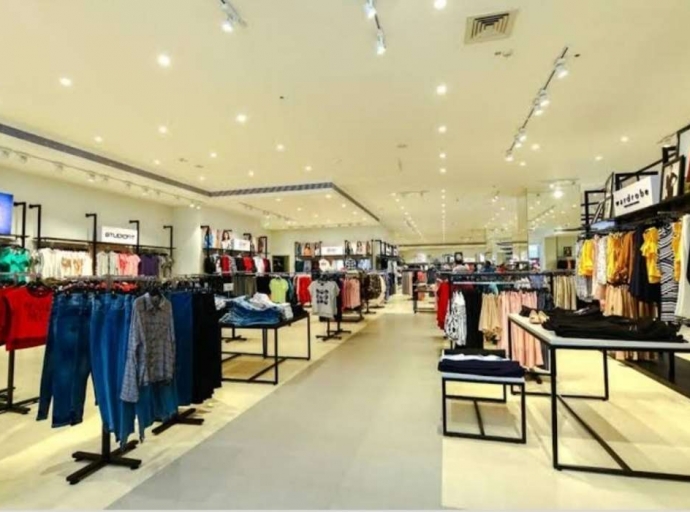
India's leading retailers are making their strongest commitment to physical retail in years, signalling that brick-and-mortar has once again become central to long-term growth strategies. After several years of optimizing store portfolios and strengthening balance sheets, companies are now raising fresh capital and increasing capital expenditure to accelerate expansion across metros as well as Tier-II and Tier-III markets.

The country's largest listed retailers including Reliance Retail, Avenue Supermarts (DMart), Trent, Shoppers Stop and Arvind Fashions collectively added 2,182 net stores in FY26, a 25 per cent increase over the 1,745 outlets added in FY25. The expansion has pushed their combined network beyond 31,000 stores, reflecting renewed confidence in India's consumption story.

Table: Capital deployment & expansion strategies

Company

Capital deployment

Expansion strategy

Trent

Up to Rs 2,500 crore fundraising approved

100 new Westside stores annually + rapid Zudio expansion

Reliance Retail

Rs 22,521 crore non-current borrowings

Expansion of physical stores and 700+ dark store network

Avenue Supermarts (DMart)

Rs 1,000 crore NCD issuance

Multi-state store expansion

More Retail

Rs 500 crore via HSBC-backed NCDs

Omnichannel and hypermarket expansion

Shoppers Stop

Rs 114 crore FY26 capex

Added 27 stores including INTUNE brand expansion

Arvind Fashions

Internal accruals

150,000 sq. ft. of net retail area planned in FY27

Economics shift in favour of stores

The latest expansion cycle reflects a change in retail economics rather than a reversal of digital strategies. Customer acquisition through online channels has become expensive, prompting retailers to view stores as both sales destinations and long-term customer acquisition assets. A well-located outlet not only drives footfalls but also improves brand visibility and lowers regional customer acquisition costs.

At the same time, India's retail infrastructure has matured significantly. Premium malls and organized high streets are rapidly emerging beyond the largest metros, particularly in cities such as Jaipur, Lucknow, Indore and Visakhapatnam. The availability of Grade-A retail space has enabled domestic brands to enter markets that previously lacked modern retail spaces.

Demand has also improved. Higher disposable incomes, tax relief measures and resilient consumer spending have encouraged discretionary purchases, particularly in apparel, lifestyle and beauty categories. Consumers in smaller cities increasingly prefer immediate product availability and in-store experiences alongside digital convenience. Industry leasing data underscores this trend, with Grade-A retail leasing crossing 8.9 million sq ft, led by fashion, personal care and food service brands.

Value retail drives expansion

Much of the investment is concentrated in value fashion formats, where affordability and rapid inventory turnover offer attractive economics. Trent continues to scale both Westside and Zudio, targeting around 100 Westside store additions annually while rapidly expanding its value-fashion business. The company's standardized store formats, merchandising and operating processes have reduced rollout timelines and improved capital efficiency. In Q1 FY27, Trent reported standalone revenue of Rs 5,666 crore, up 19 per cent year-on-year, largely due to new store additions.

Shoppers Stop is pursuing a dual-format strategy. While investing in premium department stores, it is simultaneously expanding its value-fashion chain INTUNE, which recorded 46 per cent revenue growth during FY26. The retailer added 27 stores during the year, including 14 INTUNE outlets, while generating Rs 301 crore in operating cash flows and reducing debt, allowing it to fund expansion without materially stretching its balance sheet. Arvind Fashions is also maintaining its expansion momentum, targeting 150,000 sq. ft. of net retail additions in FY27, exceeding the 140,000 sq. ft. added in FY26 across its portfolio of premium international brands.

Meanwhile, value retailer V-Mart Retail reported a 22.8 per cent increase in quarterly profit, supported by improving footfalls across Tier-II and Tier-III markets, reinforcing the industry's growing confidence in regional consumption.

Stores become fulfilment hubs

Rather than competing with e-commerce, physical stores are now becoming integral components of omnichannel retail. Retailers are redesigning store networks to function as localized fulfilment centres that support faster deliveries, better inventory utilization and lower logistics costs.

Reliance Retail exemplifies this hybrid approach. The company increased non-current borrowings to Rs 22,521 crore in FY26 from Rs 14,809 crore a year earlier while continuing to increase both its physical store network and its portfolio of more than 700 dark stores that support hyperlocal delivery. Similarly, More Retail secured over Rs 500 crore through privately placed non-convertible debentures to strengthen both store expansion and omnichannel fulfilment capabilities.

The mixing of physical retail and digital commerce is allowing retailers to place inventory closer to consumers, shorten delivery timelines and improve inventory productivity while maintaining a unified customer experience.

Expansion enters a new phase

The current investment cycle differs markedly from the post-pandemic years, when retailers focused on cost optimization and portfolio rationalization. Today, healthier balance sheets, improved cash generation and greater access to capital are enabling companies to pursue expansion from a position of financial strength rather than necessity.

More importantly, retailers are no longer evaluating stores solely on direct sales. Physical outlets are increasingly expected to support customer acquisition, brand building, fulfilment and omnichannel engagement simultaneously.

As organized retail penetrates deeper into India's smaller cities and modern retail infrastructure continues to grow, the latest wave of store openings suggests that physical retail is entering a new growth cycle one where stores are becoming strategic assets that complement, rather than compete with, digital commerce.

Retail majors double down on stores as offline expansion gains momentum

Integrated digital platforms bridge physical and online apparel sourcing

High-street fashion retailers across urban India are increasingly deploying proprietary mobile applications to eliminate conversion friction between e-commerce browsing and brick-and-mortar storefronts. Vero Moda India launched its native mobile application across iOS and Android, introducing features like live barcode scanning and real-time local store stock checking. In-app tools allow shoppers to verify item availability across 56 exclusive brand outlets and 312 shop-in-shops nationwide prior to store visits, or order out-of-stock sizes directly from physical aisles. Industry tracking shows integrated retail applications boost store visit conversion rates by 15% while reducing fit-related returns, helping brands monetize digital engagement across physical store networks.

Digital loyalty strategies target Tier-1 metro footfalls

To drive early user adoption and secure direct-to-consumer data assets, retail brands are tying app deployment with targeted promotional incentives and localized inventory mapping. Connecting digital discovery directly with physical store inventory creates an efficient, unified shopping route for time-sensitive urban consumers, observes Vineet Gautam, Country Head, Bestseller India. The app roll-out addresses rising customer acquisition costs on third-party marketplace platforms while reinforcing customer retention across Tier-1 and Tier-2 apparel hubs.

 European high-street fashion retail expansion

Launched in 1987 as Bestseller’s flagship womenswear label, Vero Moda entered India in 2010, offering western wear collections. Operating 56 standalone outlets and over 312 shop-in-shops, the brand targets double-digit retail growth by scaling its digital ecosystem alongside physical store expansion across key metropolitan markets.

Integrated digital platforms bridge physical and online apparel sourcing

Forcas Studio adopts digital distribution with FTX launch on Flipkart Minutes

Fast-fashion apparel company Forcas Studio has entered ultra-fast digital distribution by launching its flagship menswear brand, FTX, on Flipkart Minutes. Effective July 29, 2026, the partnership enables urban consumers to receive select clothing items in as little as 20 minutes.

The deployment highlights a broader strategy among Indian fashion retailers to tap into quick-commerce channels, moving beyond traditional daily essentials to capture high-margin, instant-gratification lifestyle purchases.

Scaling omnichannel footprint amid hyperlocal expansion

Integrating apparel into rapid delivery networks introduces operational complexities, particularly around localized inventory forecasting and managing fit-related return logistics across dark store hubs. However, the channel offers significant commercial potential by addressing last-minute dress requirements and urgent wardrobe needs. Consumer expectations are evolving rapidly, with speed and convenience becoming key drivers of purchasing decisions, states Sailesh Agarwal, Managing Director, Forcas Studio. To support high-frequency order dispatch, Forcas Studio leverages a 60,000-square-foot centralized hub in Kolkata to feed hyperlocal node networks across major metropolitan markets.

Asset-light engine driving affordable menswear expansion

Founded in 2010, Kolkata-headquartered Forcas Studio Limited specializes in affordable menswear through brands like FTX and Tribe, utilizing an asset-light, technology-driven sourcing model. Serving over 21,000 pin codes via 18,000 retailers and 15 online marketplaces, the NSE-listed firm delivered FY26 total income of Rs 1,980 million and net profit of Rs 136.4 million.

Forcas Studio adopts digital distribution with FTX launch on Flipkart Minutes

Desigual explores e-commerce route to expand operations in India

Global fashion brands are increasingly bypassing traditional capital-intensive physical store rollouts by leveraging established digital marketplaces to test consumer demand in emerging retail corridors. Barcelona-headquartered brand Desigual has expanded its strategic alliance with Indian e-commerce platform Myntra to introduce a comprehensive apparel collection comprising ninety distinct styles across dresses, denim, and outerwear. Following the successful initial rollout of accessories and handbags, this digital integration enables the European label to tap into a vast consumer base without incurring immediate brick-and-mortar leasing overheads, effectively mitigating complex import tariffs and localized inventory distribution hurdles.

Capturing aspirational demand across emerging urban markets

With India’s digital fashion commerce expanding rapidly, online platforms offer foreign labels immediate access to millions of active shoppers, where emerging urban centers account for a substantial share of cross-border brand consumption. Navigating diverse regional sizing preferences, managing cross-border supply chain lead times, and maintaining strict pricing integrity remain core operational considerations for international entrants. The encouraging response to Desigual's initial accessories range on the platform demonstrates the Indian consumer's growing appetite for design-led international fashion, notes Venu Nair, Chief - Strategic Partnerships and Omnichannel, Myntra. The collaboration illustrates how digital distribution infrastructure allows European apparel houses to establish scalable market traction and capture rising discretionary spending.

Designing vibrant and artistic apparel

Founded in Barcelona in 1984, Desigual designs vibrant, artistic apparel and accessories marketed across nearly ninety countries. Focusing on accessible luxury for younger demographics, the brand targets international expansion through digital platforms and selective partnerships, maintaining steady commercial performance by leveraging agile inventory management and global e-commerce channels.

Desigual explores e-commerce route to expand operations  in India

Four Indian enterprises enter final round of 8th R|Elan Circular Design Challenge

Organized by Reliance Industries in partnership with the United Nations in India and Lakmé Fashion Week, the eighth edition of the R|Elan Circular Design Challenge,has selected four Indian enterprises as global finalists: Botto Labs, Saloni Jhaveri, Duja, and Margn. Selected from over 220 international applicants across four global regions, these innovators focus on replacing petro-chemical outputs through bio-based alternatives and closed-loop textile upcycling. In a prominent material innovation case study, Botto Labs engineered micro-algae bio-sequins to replace non-biodegradable PVC plastic embellishments in luxury apparel, addressing a significant waste vector in high-fashion garment manufacturing.

Commercial viability and global retail integration take priority

As global apparel brands adapt to stricter European Union eco-design regulations and supply chain transparency mandates, circular design platforms are emphasizing commercial scalability alongside environmental impact. The seven international finalists will present their commercial prototypes before a Grand Jury at the United Nations House in New Delhi, followed by a finale showcase at the Embassy of France in India during Lakmé Fashion Week. It is encouraging to witness emerging talent creating solutions that are not only creatively compelling but also commercially relevant, states Jaspreet Chandok, Group Vice President, Reliance Brands.

R|Elan next-generation fabric platform

Launched in 2018 by Reliance Industries' Petrochemicals division, R|Elan produces engineered circular fabrics using recycled post-consumer PET bottles and advanced eco-fibers. Supplying major domestic and international garment exporters, the platform drives sustainable material integration across commercial apparel lines, maintaining strong double-digit growth within Reliance’s specialty polyester business.

Four Indian enterprises enter final round of 8th R|Elan Circular Design Challenge

Tata’s retail powerhouse strengthens mass-market fashion dominance

Trent Limited reported a 19 per cent Y-o-Y increase in Q1 FY27 standalone operational revenue to ₹5,666 crore, driven primarily by the footprint expansion of its value-fashion division, Zudio.By June 2026, Zudio expanded its network to 982 outlets spanning 330 cities, successfully capturing price-conscious demographics across Tier-II and Tier-III hubs where discretionary spending remains steady.The retailer added 22 new Zudio stores during the quarter, consolidating its position within India’s expanding affordable apparel segment.

Scaling high-velocity inventory in value retail

Zudio’s commercial momentum reflects an execution model focused on delivering high-velocity fast fashion at accessible price points while keeping operating costs lean, noted a senior retail strategy executive. Utilizing an asset-light franchisee-cum-ownership structure, Zudio maintains inventory turnover cycles under 15 days, minimizing markdowns. While rising real estate costs in secondary markets and store density saturation present potential margin headwinds, Trent’s consolidated quarterly net profit rose 22 per cent Y-o-Y to Rs 532 crore, demonstrating strong operational resilience compared to traditional multi-brand department chains.

Value-retail engine of the Tata portfolio

Incorporated in 1998, Trent Limited operates flagship retail chains Westside, Zudio, and Star Bazaar across India and international markets, including the UAE. Focused on fast fashion, lifestyle, and home goods, the retail enterprise maintains a long-term target of scaling Zudio toward 5,000 locations, supported by FY26 revenues surpassing Rs 20,000 crore.

Tata’s retail powerhouse strengthens mass-market fashion dominance

Independent retailers mitigate supply chain delays with B2B trade shows in India

Preparing for the upcoming peak festive sales cycle, independent retailers and multi-brand outlets (MBOs) are increasingly relying on localized B2B trade shows to lock in inventory and mitigate regional supply chain delays. Apparel Manufacturers of India (AMI) will host its three-day trade platform, ADVAIT 8.0, at the RK Convention Centre in Chennai from August 5 to 7, 2026. Spanning a 100,000-square-foot exhibition area, the event features more than 220 apparel brands from manufacturing hubs including Mumbai, Indore, and Surat. The exhibition connects garment makers directly with over 3,000 trade visitors across South India, a regional market underpinning the national apparel sector’s projected expansion toward $117 billion by 2034.

Value fashion footprint expands across Tier-II and Tier-III districts

South India’s retail landscape is undergoing rapid physical store expansion by value fashion chains and large-format department stores, driving heightened wholesale demand for structured ethnic wear, casuals, and kidswear lines. South India’s evolving retail footprint presents exceptional growth opportunities for domestic apparel manufacturers seeking structured market access ahead of the festive buying rush, states Dharmesh Nandu, Founder, Apparel Manufacturers of India. Addressing working capital constraints for non-integrated garment producers and managing regional logistics costs remain primary operational considerations across the supply chain.

Pioneer in regional apparel trade networks

Founded in 2018 by Dharmesh Nandu, Apparel Manufacturers of India organizes regional and zonal trade fairs bridging garment manufacturers, MBOs, and distributors across South India. Having executed over 50 regional exhibitions, AMI supports ethnic, casual, and kidswear brands targeting double-digit trade volume growth through verified B2B buyer networks.

Independent retailers mitigate supply chain delays with B2B trade shows in India

Eastern value retailers accelerate Tier-III expansion as regional apparel demand increases

Value fashion operator Baazar Style Retail is expanding its physical presence in India’s Northeast, targeting underserved consumer segments in Tier-II and Tier-III towns. The opening of its Silapathar store in Assam’s Dhemaji district elevates its operational network past 225 outlets across nine eastern states. Regional demand for organized family apparel is climbing, driven by rising disposable incomes and shifting consumer habits. Silapathar serves as a case study in how secondary geographic markets generate strong unit economics, supported by the company’s 7 per cent same-store sales growth in Q1 FY27.

Private labels drive store-level profitability

To offset supply chain logistics costs in eastern distribution corridors, value chains are leaning heavily on higher-margin private brands. Baazar Style Retail’s private label revenues grew by 62 per cent Y-o-Y to Rs 9,770 million, contributing 53 per cent of total sales. Physical density in secondary towns reduces customer acquisition costs far below digital retail channels, notes Rajesh Verma, Retail Analyst. Backed by institutional capital, the company targets 450 to 500 stores over the next three years to capture underpenetrated retail markets.

Enterprise profile and growth trajectory

Founded in 2009 in Kolkata, Baazar Style Retail operates over 260 value fashion stores across Eastern India, supplying affordable apparel and lifestyle products for families. The company posted FY26 operational revenue of Rs 18,409 million - up 37 per cent Y-o-Y - and plans to expand its retail footprint to 500 outlets.

Eastern value retailers accelerate Tier-III expansion as regional apparel demand increases

Inaugural RAI Connected Commerce Conclave 2020 addresses AI-fluid shopping convergence

Hosted by the Retailers Association of India (RAI) in Bengaluru, the inaugural Connected Commerce Conclave 2026  addressed the convergence of artificial intelligence, real-time analytics, and fluid shopping journeys. Market analysts estimate, this unified digital and physical ecosystem represents a staggering $3.5 trillion commercial prospect for the country. However, transforming this vast potential into tangible revenue requires merchants to reconcile backend complexity with frictionless consumer expectations. According to Sumit Ghosh, Senior Director -Retail and Omnichannel, Fossil India, the core challenge facing modern merchants lies in closing the operational gap behind the scenes so that the front-end brand experience remains entirely effortless for the consumer.

Redefining the consumer journey

Apparel and retail leaders emphasized that contemporary shoppers arrive at physical stores or digital touchpoints with pre-formed purchase decisions derived from extensive preliminary research. Manohar Chatlani, Managing Director, Soch Apparels, notes, modern retail no longer revolves around hard selling, but rather around confirming consumer choices and validating their prior digital research through elevated in-store execution. To capture these discerning buyers, brands are rapidly deploying advanced enterprise technologies, including real-time inventory tracking, AI-driven demand forecasting, and localized omnichannel fulfillment. This strategic shift is particularly acute within the fashion sector, where inventory obsolescence risks are high and inventory turnover must match accelerated trend cycles.

Infrastructure and financial scaling

Realizing the full promise of connected commerce demands robust institutional backing and streamlined regulatory frameworks. Ramaswami Lakshman, Director - Emerging Markets FBA, Amazon, highlights,  the retail ecosystem must overcome critical barriers concerning digital literacy, compliance simplification, and capital access. Underscoring long-term confidence in the domestic market, Amazon has outlined plans to invest $48 billion in India by 2030 following high-level dialogues with government leadership. By digitizing over 12 million small enterprises to date, technology giants and industry associations are actively laying the groundwork to transition local manufacturers into global market participants, ensuring sustainable sector-wide expansion through the end of the decade.

Premier national retail representative

The Retailers Association of India serves as the premier national representative body for the nation's multi-channel retail sector, encompassing physical storefronts, e-commerce platforms, and emerging quick-commerce enterprises. Operating primarily across India, RAI collaborates closely with regulatory authorities and commercial stakeholders to champion policy advocacy, structured research, and workforce development. Dedicated to cultivating an innovation-friendly retail climate, the association empowers industry participants to scale operations sustainably and generate widespread employment across domestic markets.

Inaugural RAI Connected Commerce Conclave 2020 addresses AI-fluid shopping convergence

Suburban retail penetration accelerates across North India value apparel sector

Suburban household demand is pushing organized apparel retailers to establish modern storefronts outside traditional metropolitan commercial centers. Value fashion player Max Fashion's third outlet in Faridabad and 91st across North India - exemplifies how apparel brands are targeting high-density residential catchments. Supported by parent entity Lifestyle International, which generated Rs 11,766 crore in FY25 operations revenue, this expansion aligns with broader national retail strategies prioritizing suburban volume.


Storefront visibility and operational real estate strategy

Positioning retail assets within emerging residential belts enables apparel chains to capture rising family spending on modern wardrobe essentials. Featuring a three-side glass façade designed for enhanced visual merchandising, the Faridabad facility bolsters a national footprint exceeding 510 locations across 200 cities. Skyrocketing commercial rentals in core high-street zones pose persistent cost pressures, prompting apparel brands to secure prime floor space in expanding suburban corridors instead.


Locating physical storefronts directly within expanding suburban clusters allows value fashion retailers to capture hyper-local family expenditure while optimizing real estate overheads, notes Rajiv Sharma, Senior Retail Strategist.


Commercial scale and retail network baseline

Founded in India in 2006 by UAE-based Landmark Group, Max Fashion markets accessible clothing, footwear, and lifestyle accessories for women, men, and children. Serving over 35 million shoppers through 510 stores, the brand plans continued network expansion across Tier-II and suburban markets, backed by Lifestyle International's sustained profitability.

Suburban retail penetration accelerates across North India value apparel sector

Latest Publications

Image

Join Our Group

Join Our Group