All Stories

Shoppers Stop leverages premiumization and beauty sourcing to drive operational recovery

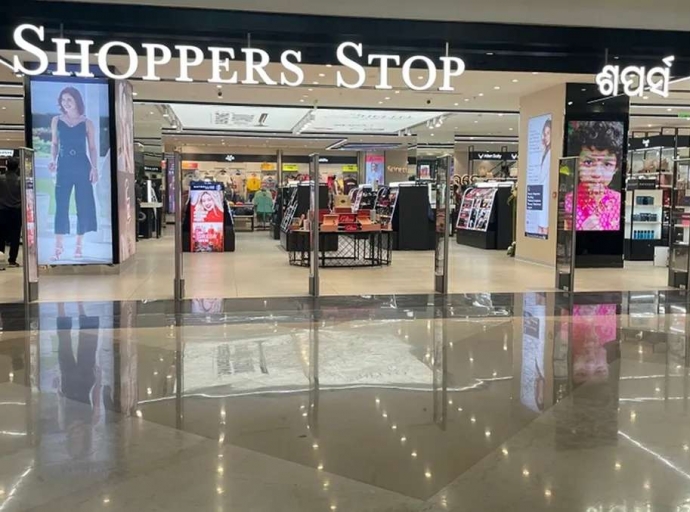
Indian department store giant Shoppers Stop achieved a sharp financial turnaround in Q2 FY27, reporting a consolidated net profit after tax of Rs 6 crore compared to a loss of 7 crore in the prior year period. Non-GAAP consolidated revenue climbed 7% year-on-year to reach ₹1,618 crore, powered by strong demand for high-margin apparel and beauty categories. Despite a calendar shift moving peak festive buying into the third quarter, the retailer’s core department store format delivered Rs 1,302 crore in sales with a 7 per cent festive-adjusted like-for-like growth trajectory.

MUCH MORE

Category expansion and capital efficiency

Strategic focus on premium merchandise mixes and value fashion formats continues to enhance retail margins. The company’s beauty segment expanded 18 per cent Y=o-Y to Rs 367 crore, led by a 35 per cent increase in fragrance sales, while its beauty distribution arm rose by 59 per cent to Rs 168 crore. Concurrently, its value apparel chain, Intune, generated Rs 72 crore while reducing operating drag. Capital expenditures reached Rs 39 crore for the quarter across seven new store openings. Managing higher store expansion overheads and inventory velocity remain ongoing operational priorities as debt levels decreased by Rs 82 crore. Prudent capital allocation and expanding premium product portfolios across apparel and beauty remain central to sustained profitable scale, notes Kavindra Mishra, Customer Care Associate, Managing Director and CEO.

EASITEX

Eyeing debt-free status by Q3,FY27

Founded in 1991, Shoppers Stop operates 289 department, beauty, and value fashion stores across 75 Indian cities. Serving over 14 million First Citizen loyalty members across premium apparel and beauty categories, the retailer aims to become fully debt-free by Q3 FY27 through disciplined store rollouts.

Easitex-Textiles Sustainability

Shoppers Stop leverages premiumization and beauty sourcing to drive operational recovery

Aditya Birla-backed luxury houses scale menswear footprint via occasionwear formats

Luxury designer houses are expanding structural investments across premium menswear, leveraging high-profile runway platforms to capture India’s growing $\$15$ billion ethnic wedding and occasionwear sector. During Lakme Fashion Week 2026, designer Tarun Tahiliani unveiled his latest menswear range for Tasva  - his joint venture with Aditya Birla Fashion and Retail Limited (ABFRL) - featuring actor Ali Fazal as showstopper. Retail strategists note that corporate backing from groups like ABFRL allows couturiers to scale beyond bespoke couture into high-margin, organized ready-to-wear formats, addressing expanding consumer demand across Tier-I and Tier-II metros.

MUCH MORE

Industrializing couture techniques for retail scale

To support nationwide store rollouts while protecting brand equity, luxury labels are modernizing supply chains and atelier workflows. Tahiliani’s latest collection integrates traditional Aari and Zardozi embroidery into lightweight, cfontemporary silhouettes, driving modern wedding wardrobe versatility. Brand executives confirm, combining structured tailoring with standardized manufacturing processes enables scaled retail rollouts without compromising artisanal precision. Industry projections indicate that establishing specialized menswear footprints will prove critical as luxury groups target Rs 600–Rs 700 crore revenue milestones over coming operational cycles.

EASITEX

Planning scaled retail growth across India and abroad

Founded in 1995 by Tarun Tahiliani, the couture house specializes in bridalwear, bespoke tailoring, and luxury accessories.Majority-owned by Aditya Birla Fashion and Retail (51 per cent stake), the brand targets scaled retail growth across India and international markets, backed by expanding ready-to-wear operations and premium menswear footprint extensions.

Easitex-Textiles Sustainability

Aditya Birla-backed luxury houses scale menswear footprint via occasionwear formats

Kiko Milano accelerates domestic retail presence with new store in Mumbai

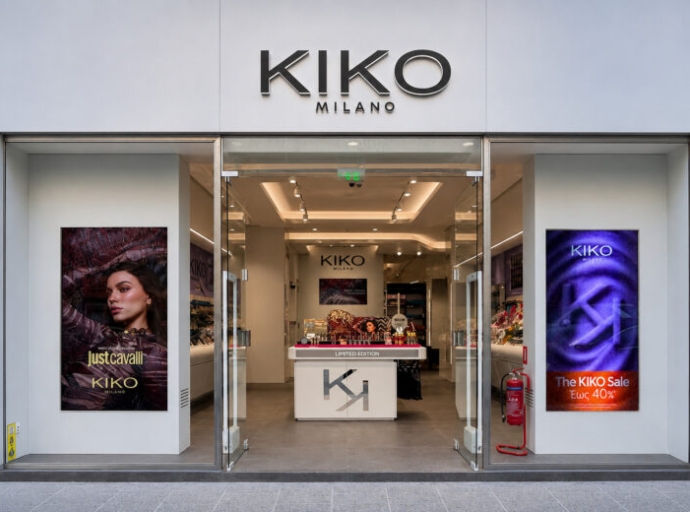
Italian cosmetics major Kiko Milano has accelerated its domestic retail expansion by launching a high-profile flagship store at Jio World Drive within Mumbai's Bandra Kurla Complex. The strategic launch targets a growing segment of urban consumers demanding accessible luxury beauty products, capitalising on a 30% surge in premium mall footfall across metropolitan regions. Operated through a strategic joint venture with Reliance Beauty & Personal Care Limited, the new experiential outlet features advanced digital try-on kiosks and localized makeup collections tailored to regional skin tones. Metropolitan consumers demand immersive retail environments that seamlessly merge physical artistry with digital convenience, notes Rohan Mehta, Retail Analyst.

MUCH MORE

Market scaling and sector dynamics

The new establishment reinforces a broader commercial push to double the brand's physical footprint across the country, addressing rising competition in the premium cosmetics sector. Industry data indicates that specialty beauty retail in India is expanding at an annual clip of 22 per cent CAGR  driven by increasing disposable incomes and a preference for cruelty-free formulations. Independent beauty boutiques incorporating similar interactive touchpoints report a 20 per cent increase in average transaction values. By securing prime real estate in high-density commercial hubs, the brand strengthens its positioning against rival global players entering the South Asian market.

VIEW

Expanding across emerging Asian economies

Kiko Milano is a premier global cosmetics brand specializing in professional makeup, advanced skincare lines, and precision beauty tools. Operating across 75 international markets with over 1,400 stores, the brand targets aggressive expansion in emerging Asian economies. Backed by robust financial performance, it was founded in Milan in 1997.

SUSTAINABILITY

Kiko Milano accelerates domestic retail presence with new store in Mumbai

Fabindia accelerates ESG leadership and Tier-II expansion with new appointment

Ethical lifestyle retailer Fabindia has appointed Isha Chatterjee as Manager of PR, Corporate Communications, and Public Policy to streamline its strategic messaging framework across emerging growth markets. The executive leadership shift aligns with the brand's commercial strategy to deepen footprint across Tier-II and Tier-III urban clusters, where sustainable retail demand is surging at over 18 per cent annually. Managing a network of over 50,000 rural artisans, the company is positioning public policy and communications as a core strategic lever to protect brand equity, manage supply chain compliance, and reinforce consumer trust across both digital platforms and physical store formats.

Strategic policy alignment drives omnichannel scalability

This corporate realigning comes as heritage craft brands navigate tightening regulatory standards around ESG metrics and origin disclosures in eco-conscious fashion. Chatterjee brings a decade-long background across corporate communications, fintech, and public relations to lead integrated earned, owned, and policy communications. Communications functions must operate as strategic commercial drivers that align multi-stakeholder reputation with long-term retail growth, notes Chatterjee. By connecting policy advocacy directly with artisan supply chains, Fabindia aims to strengthen its premium market position while expanding its experiential retail presence nationwide.

Focusing on sustainable omnichannel expansion

Fabindia is an ethical lifestyle brand offering hand-crafted apparel, home furnishings, and personal care products. Sourcing from thousands of traditional rural artisans across India, it operates nationwide retail stores and international outlets. The retailer focuses on sustainable omnichannel expansion, driving steady revenue growth while maintaining a heritage established in 1960.

Fabindia accelerates ESG leadership and Tier-II expansion with new appointment

From Kolhapuris to Global Luxury: Prada controversy sparks fresh push to monetise Indian craft

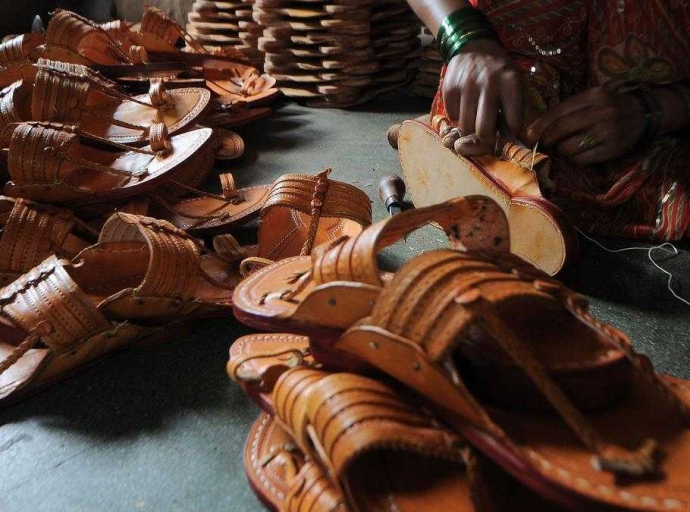
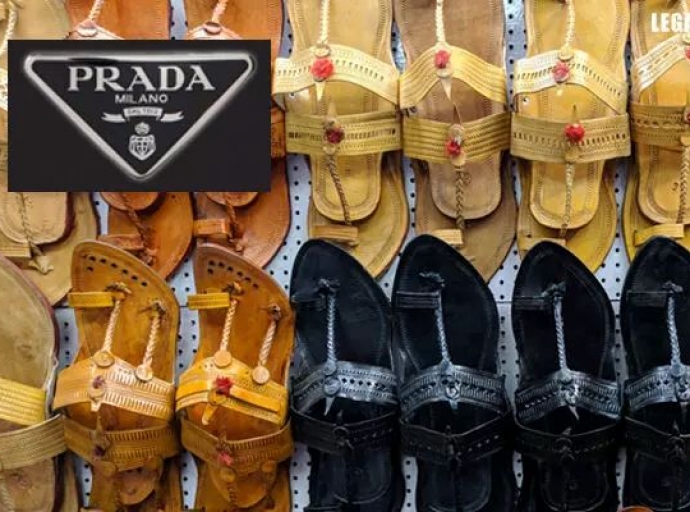
The controversy around Prada’s Spring/Summer 2026 runway in Milan, where handcrafted leather sandals closely resembled Maharashtra’s iconic Kolhapuri chappals, has triggered a larger commercial debate for India’s handicraft and fashion sectors. Beyond questions of cultural appropriation, the episode has highlighted a more consequential issue: whether global visibility for Indian crafts can translate into sustainable incomes, stronger intellectual property protection and export-led retail opportunities for artisans.

For decades, indigenous craft clusters have supplied design inspiration to global fashion without necessarily capturing the economic value created downstream. The Prada episode has sharpened the case for moving from cultural recognition to structured commercial participation, including licensing, direct sourcing, design collaborations and international distribution.

MUCH MORE

GI tag, weak economics

Kolhapuri chappals received a Geographical Indication (GI) tag in 2019, covering designated districts in Maharashtra and Karnataka. Yet formal recognition has done little to eliminate the economic vulnerabilities of artisan communities.

In clusters such as Kolhapur, Miraj and Athani, traditional tanners and cobblers continue to operate through fragmented broker networks, with many earning daily piece-rates of less than Rs 400. At the retail end, authentic and branded handcrafted footwear can command multiples of the artisan’s earnings, while factory-made synthetic replicas further dilute the value of the original craft.

The gap points to a weakness in India’s craft economy. As Jewellyn Alvares, Head of Department, School of Fashion & Costume Design, Whistling Woods International says, craftsmanship can compete with global luxury, but aesthetic recognition has limited value unless artisans also benefit commercially. The next phase therefore needs stronger contracts, design and business training, enforceable IP protection and greater participation of artisan communities in the value chain.

The commercial opportunity is particularly significant for states. For Maharashtra for example, despite being India’s largest state economy and accounting for roughly 16 per cent of national merchandise exports, its contribution to handicraft exports remains comparatively small. EPCH data puts India’s handicraft exports at Rs 33,168 crore ($3.75 billion) in FY2025-26. Much of the exports, however, remain concentrated in established northern craft and manufacturing clusters.

VIEW

Table: Handicraft exports across states

State/cluster

Primary craft specialization

Export infrastructure

National handicraft export share

Uttar Pradesh

Moradabad brassware, Saharanpur wood, Varanasi brocades

Dedicated SEZs, inland container depots, cluster aggregation

35-40%

Rajasthan

Jodhpur wooden furniture, Jaipur block prints, blue pottery

Mature buyer networks, integrated craft export zones

25-30%

Gujarat

Kutch embroidery, Patola textiles, brass handicrafts

Strong coastal logistics, high enterprise formalisation

10-12%

Maharashtra

Kolhapuri footwear, Paithani silk, Warli art, Sawantwadi woodwork

JNPA, Mumbai air cargo, domestic capital, design ecosystem

Under 5%

In Maharashtra’s case it has several advantages that could support a larger export footprint. Its proximity to Jawaharlal Nehru Port Authority (JNPA), Mumbai’s air-cargo infrastructure and access to the country’s largest fashion and design ecosystem provide a natural platform for taking craft products directly to international consumers. The missing link is commercialisation. Instead of exporting craft primarily as raw or semi-finished products, clusters need to develop branded, market-ready lifestyle products with consistent quality, packaging, certification and international fulfilment.

EASITEX

E-commerce opens the door

Cross-border e-commerce could help in the transition. Outbound e-commerce facilitation under India’s Foreign Trade Policy, along with postal and logistics integration, is reducing entry barriers for small producers seeking international customers. India’s cross-border D2C shipments are growing at over 20 per cent annually, creating an alternative route around traditional wholesale and department-store structures.

The opportunity is also being supported by a change in consumer priorities. Nelson Jaffery, Head of Design at Liva, points to growing scrutiny of material provenance, environmental impact and artisan compensation across markets such as North America, Europe and Japan.

That trend potentially favours Indian crafts. Handcrafted production already carries attributes increasingly associated with premium consumption traceability, longevity, low-volume production and human craftsmanship. The challenge is to communicate these attributes through credible certification, storytelling and transparent pricing.

ChatBot

Designers as commercial bridges

The domestic market will also determine whether Indian craft can make the transition from heritage product to contemporary fashion category. Fashion designer Ranjit Rodricks argues that products such as Kolhapuris need to move beyond their traditional positioning as festive or occasional footwear. Their integration into everyday wardrobes could create a larger and more consistent market for artisan production.

Designers can play a critical role by becoming commercial bridges between craft clusters and organised retail. Direct contracting with artisan groups, longer-term sourcing arrangements, living-wage structures and co-ownership models could help shift the relationship from one-off procurement to sustained partnerships. This is also where Indian luxury and premium fashion brands have an opportunity to build differentiated propositions around indigenous techniques rather than simply borrowing their visual language.

The opportunity now lies in moving beyond the traditional emporium model. Digital storefronts, global marketplace partnerships and decentralised fulfilment could allow artisan groups to reach overseas customers while reducing layers between producer and consumer. The Prada controversy could therefore become more than a cultural flashpoint. It offers a commercial blueprint: protect provenance, formalise artisan participation, build brands around authentic craft and use digital distribution to capture global demand.

The larger prize is not simply recognition from international fashion houses. It is ensuring that when Indian craftsmanship becomes globally desirable, a greater share of the resulting economic value returns to the communities that created it.

SUSTAINABILITY

From Kolhapuris to Global Luxury: Prada controversy sparks fresh push to monetise Indian craft

Elie Saab harnesses India's high-net-worth boom with landmark Delhi boutique

Lebanese couture house Elie Saab has officially anchored its brick-and-mortar retail strategy in India with the opening of its first standalone boutique at DLF Emporio in New Delhi. The store launch aligns with an unprecedented surge in domestic appetite for international luxury apparel and bespoke eveningwear, driven by expanding affluent demographics across metro regions.

MUCH MORE

Strategic retail integration and portfolio footprint

The new Delhi store houses Elie Saab’s ready-to-wear collections, bridal apparel, accessories, and fragrance lines, bringing runway couture directly to high-net-worth Indian consumers. The store launch follows the brand's multi-tier expansion strategy in India, which also includes a Rs 3,500 crore branded residential real estate partnership in the National Capital Region.

Establishing physical luxury flagships in key capitals allows international couture houses to directly capture the booming Indian celebration-wear market while ensuring localized client relationship management, noted a senior luxury retail consultant. Industry estimates project Indian luxury market spending to maintain double-digit growth through 2030, encouraging global legacy houses to establish dedicated storefronts rather than relying on multi-brand wholesale channels.

Refer

Targeting revenue expansion across emerging markets

Founded in 1982 in Beirut, Elie Saab is an international haute couture and luxury lifestyle brand operating across Europe, the Middle East, Asia, and the Americas. Known for red-carpet gowns, ready-to-wear, bridal fashion, and home design, the luxury house continues to target sustained revenue expansion across high-growth emerging consumer markets.

Easitex-Textiles Sustainability

Elie Saab harnesses India's high-net-worth boom with landmark Delhi boutique

Uniqlo taps star power to drive seasonal fleece demand across Indian retail markets

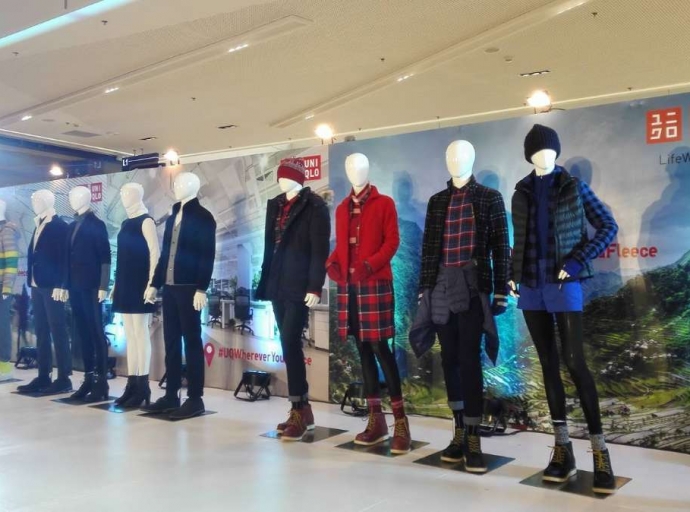
Global apparel powerhouse Uniqlo is intensifying its retail market penetration in India by launching its latest seasonal campaign starring actor Kriti Sanon and international cricketer Jasprit Bumrah. Designed to reinforce the brand's core LifeWear philosophy, the marketing initiative spotlights an expansive color palette spanning olive, navy, dark brown, and wine across versatile silhouettes such as the Fluffy Yarn Fleece Jacket and the Windproof Fleece Reversible Full-Zip Hoodie. By aligning functional winter garments with prominent cultural icons, the brand aims to capture growing consumer preference for functional apparel that bridges relaxed home comfort with active daily mobility.

MUCH MORE

Scaling omnichannel presence and retail footprint

The brand aims to evolve a key wardrobe essential that seamlessly pairs warmth with modern utility for diverse consumer routines, states Nidhi Rastogi, Marketing Director, Uniqlo India. Supported by a multi-channel media deployment spanning digital platforms, outdoor installations, and immersive in-store merchandising, the retail strategy responds to rising domestic demand for lightweight yet thermally efficient garments. Industry observers note, as international fast-fashion brands aggressively expand brick-and-mortar storefronts across Tier-I and Tier-II Indian urban centers, targeted lifestyle storytelling remains critical for driving same-store sales growth and customer acquisition.

VIEW

Timeless design innovation and supply chain efficiency

Operated by parent enterprise Fast Retailing, Uniqlo specializes in high-quality, functional everyday casual wear. With a global network exceeding 2,500 stores, the brand targets key international markets across Asia, Europe, and North America. Backed by strong financial performance, the company continues aggressive retail expansion plans in South Asia, anchoring its long-term strategy on timeless design innovation and scalable supply chain efficiency.

SUSTAINABILITY

Uniqlo taps star power to drive seasonal fleece demand across Indian retail markets

Active Clothing expands with appointment of CEO-New Business Initiatives

Active Clothing Co has strengthened its corporate governance framework by appointing Shivanee Shanker Dutt as Chief Executive Officer (CEO) for New Business Initiatives, operating from the corporate headquarters in Gurugram. This strategic leadership appointment addresses a growing market demand for agile brand diversification, premium retail positioning, and optimized supply-chain execution. Industry projections indicate, this structural expansion could generate approximately Rs 100 crore in supplementary revenue over the next three to four years, contingent upon robust retail scaling and dynamic market conditions.

MUCH MORE

Leveraging deep industry expertise for strategic partnerships

The integration of veteran retail talent comes at a crucial juncture for domestic apparel manufacturers navigating shifting consumer preferences toward value-driven fashion and technical wear. Dutt brings over two decades of specialized expertise across global retail, e-commerce, and multi-market brand operations spanning India, the US, Europe, and the Asia-Pacific region. Working alongside senior directors including Kalika Mehra, Avinisha Gupta, and Renu Mehra, the leadership team aims to bridge high-performance manufacturing with high-margin brand collaborations.

The modern apparel landscape demands an agile synthesis of consumer insight and manufacturing agility, notes a senior corporate strategist tracking the sector. Securing seasoned leadership allows established producers to transition smoothly from traditional vendor models into high-value brand stewardship, he adds.

VIEW

Strengthening retail ecosystems and future outlook

The initiative underscores Active Clothing’s broader vision to diversify its commercial portfolio beyond core manufacturing into proprietary brand incubations and strategic retail alliances. By aligning long-standing professional relationships cultivated over two decades with cutting-edge retail analytics, the firm is well-positioned to capitalize on rising domestic discretionary spending and lucrative export corridors across Western markets.

Active Clothing Co. Ltd. is an integrated design-to-retail apparel manufacturing enterprise specializing in high-fashion knitwear, outerwear, and circular knits. Operating primarily across India with robust international export channels, the company delivers comprehensive design, prototyping, and production services for global premium brands. Backed by strong financial performance and expanding manufacturing capabilities, the firm targets sustained multi-year revenue growth through strategic diversification into new product categories and advanced retail partnerships.

SUSTAINABILITY

Active Clothing expands with appointment of CEO-New Business Initiatives

Victoria’s Secret reaches retail milestone with debut Jaipur store

Global intimates and specialty retail giant Victoria’s Secret has officially inaugurated its maiden storefront in Jaipur, pushing its domestic retail network to an aggregate of 20 exclusive outlets across India. Established through a strategic franchise partnership with Apparel Group India, the newly minted brick-and-mortar location introduces local consumers to the brand’s diversified merchandise matrix, spanning signature lingerie, beauty formulations, and lifestyle accessories. The expansion reflects a calculated push toward high-growth regional hubs, capitalizing on rising disposable incomes and surging demand for international luxury labels outside traditional metropolitan centers.

Experiential commerce and global collection rollouts

Operating within a modern experiential retail format, the Jaipur boutique features the brand's latest global store design framework, integrating immersive merchandising with personalized client servicing. Synchronized with the store launch, the location debuts the international 2026 Fashion Show Collection, bridging global runway debuts with immediate domestic retail availability. Industry analysts note that this localized deployment model successfully bridges digital discovery with physical touchpoints, driving higher average basket sizes and fostering long-term brand loyalty among emerging demographic segments in Rajasthan.

Blending experiential boutique with digital commerce

Victoria’s Secret operates as a premier global intimates, beauty, and specialty apparel brand renowned worldwide for its lingerie collections, prestige fragrances, and body care ranges. In the Indian market, the brand is scaled through an exclusive operational partnership with Apparel Group India, targeting key metro domains and emerging luxury tier-one hubs. The enterprise pursues an aggressive omnichannel growth trajectory, blending physical experiential boutiques with robust digital commerce. Backed by solid financial momentum and expanding retail footprints, the brand continues to consolidate its market share within the premium lifestyle segment across the subcontinent.

Victoria’s Secret reaches retail milestone with debut Jaipur store

Uniqlo's Rs 60 cr store model challenges India's scale-first fashion retail

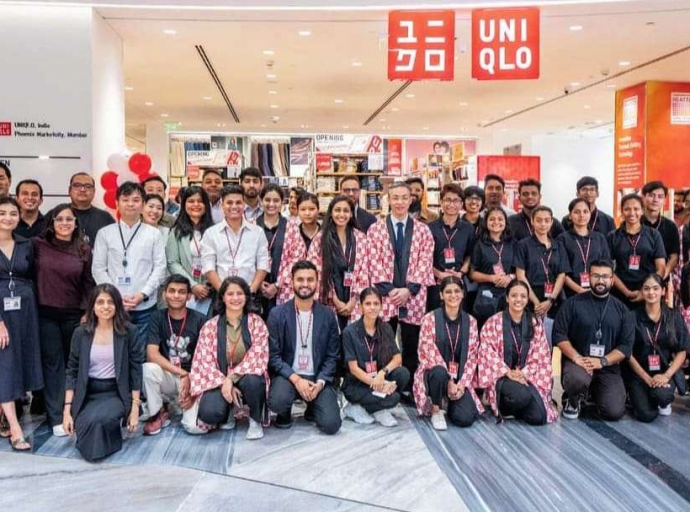
India’s apparel retail market has entered a phase where store productivity has emerged as an equally important growth factor as physical expansion. FY25 financial disclosures of global fashion retailers show very different approaches to scaling in India: Uniqlo generated nearly Rs 1,193 crore from 20 stores, H&M recorded about Rs 3,595 crore from 60 outlets, while Inditex-owned Zara posted Rs 2,782 crore from roughly 23 stores.

The numbers underline a growing difference in retail models. Uniqlo’s approximately Rs 59.6 crore annual revenue per store, achieved while boosting revenue by around 45 per cent, highlights how functional products, higher basket values and disciplined expansion can deliver scale without a sprawling store network.

Productivity takes centre stage

The comparison also shows that store productivity cannot be viewed through revenue alone. Zara continues to generate significantly higher estimated revenue per outlet, reflecting its premium positioning and concentration in large flagship locations. Its India revenue remained broadly stable in FY25, but net profit rose 23 per cent to Rs 299.47 crore, pointing to the importance of price realization, markdown discipline and operating efficiency. H&M has a broader-volume model, using a substantially larger store network and frequent fashion rotations to reach consumers across established and emerging urban markets. Uniqlo works between these approaches, using relatively fewer stores while concentrating on high-volume wardrobe essentials.

Table: Brands annual India revenue and value proposition

Brand

Parent company

FY25 India revenue (Rs cr)

YoY top-line growth

Store count

Est. annual revenue per store (Rs cr)

Value proposition

Uniqlo

Fast Retailing

1,193

45%

20

59.6

Utilitarian daily wear, technical fabrics

H&M

H&M Group

3,595

9%

60

59.9

Trend-led, high-volume fast fashion

Zara

Inditex (ITRIPL JV)

2,782

0.5%

23

120.9

High-fashion runway adaptation, premium pricing

Three routes to scale

H&M's model depends on breadth, rapid product rotation and a large physical footprint. Its expansion across Tier-I, II cities gives the brand access to a wider youth-fashion consumer base, while promotional activity helps maintain inventory velocity. Zara follows a more concentrated strategy. Its flagship stores are largely located in premium shopping destinations, where the brand can support higher price points through fashion differentiation and rapid adaptation of global runway trends.

Uniqlo's proposition is fundamentally different. Its ‘LifeWear’ model is built around everyday products and proprietary fabric technologies such as AIRism, HeatTech and Ultra Light Down. The merchandise is designed to remain relevant across seasons rather than depend on short-lived fashion cycles. That difference has implications for working capital. Core products can remain on shelves for longer periods, reducing dependence on aggressive end-of-season discounting and making demand forecasting more predictable.

The ‘LifeWear’ strategy

Uniqlo's model is particularly relevant as Indian consumers trade up from unbranded apparel towards quality and functionality. Core T-shirts, trousers and seasonal cooling or thermal layers can be replenished across multiple quarters. Neutral colours and repeat purchases also support larger baskets, while the reduced dependence on rapidly changing styles can limit markdown exposure. This approach is reflected in Uniqlo India's FY25 performance. Profit after tax more than doubled to Rs 178.4 crore, translating into a net margin of roughly 15 per cent. The model does not eliminates the need for scale. Rather, it changes the definition of scale from the number of doors opened to the amount of revenue and profit generated from each location.

Local sourcing adds value

The next phase of competition is also moving upstream. India's branded apparel market is projected to approach $120 billion by 2030, while international retailers are seeking to deepen local sourcing as part of broader China-plus-one strategies. Uniqlo is targeting a domestic sourcing ratio of around 30 per cent and is developing manufacturing partnerships in southern textile clusters for products and materials including linen and technical knits.

Greater local sourcing can reduce import-duty exposure, provide a hedge against currency movements and shorten supply chains. For retailers seeking to expand store productivity, these benefits can be as important as incremental store additions. Retail strategist point out urban consumer is showing greater preference for durable and functional apparel. For global brands entering their second phase of expansion, he argued, the focus is increasingly shifting towards capital efficiency, sales density and localized supply chains.

Small city expansion tests the model

The productivity-first approach, however, faces limits outside India's largest metros. Premium grade-A mall space remains constrained in several emerging markets, while the price elasticity of functional apparel becomes more pronounced beyond affluent urban catchments.

Domestic value retailers such as Zudio and Reliance Retail formats have established strong positions in everyday apparel, creating a difficult environment for international brands attempting to replicate metropolitan pricing and store economics.

For Uniqlo, the next challenge will therefore be maintaining its productivity advantage while broadening its geographical reach. Its stated ambition of reaching around 100 stores by 2031 will require a careful balance between physical expansion, digital distribution, localized pricing and supply-chain integration.

The larger lesson for India's apparel market is clear: the next retail race may not be won simply by whoever opens the most stores. Increasingly, the critical metrics will be revenue density, inventory productivity, margins and the ability to make each physical outlet work harder.

Uniqlo's Rs 60 cr store model challenges India's scale-first fashion retail

AK|OK accelerates global footprint with launch of debut European showroom

Led by designer Anamika Khanna, Indian contemporary apparel label AK|OK has officially commenced its international expansion strategy by launching a high-profile showroom and presentation in Paris. Targeting discerning buyers and international stockists, the brand showcased its Spring/Summer 2027 line across a dedicated two-day commercial exhibition. Industry analysts note that this European foray is designed to secure wholesale partnerships and elevate the label's positioning within Western luxury retail markets.

MUCH MORE

Craftsmanship meets contemporary commerce

The Spring/Summer 2027 assortment reinterprets indigenous Indian textiles, such as intricate shadow-work chikankari and metal thread embroidery, through deconstructed silhouettes tailored for the global consumer. By marrying artisanal heritage with relaxed, fluid tailoring, the brand addresses a rising global appetite for versatile luxury apparel. Our objective is to establish sustained commercial relationships within European retail ecosystems, remarks a senior export strategist tracking the brand's international rollout.

VIEW

Bridging traditional craft with modern global ready-to-wear markets

AK|OK is a contemporary ready-to-wear fashion brand founded by acclaimed designer Anamika Khanna, offering versatile apparel, separates, and accessories. Primarily operating within the Indian luxury and premium retail segments, the label focuses on aggressive domestic mall expansion and international wholesale growth. Backed by strategic investments from Reliance Retail, the brand exhibits robust financial scaling aimed at bridging traditional craft with modern global ready-to-wear markets.

SUSTAINABILITY

AK|OK accelerates global footprint with launch of debut European showroom

Latest Publications

Image

Join Our Group

Join Our Group