
From basics to big business, kidswear becomes India’s fastest-rising fashion frontier
10 December 2025, Mumbai
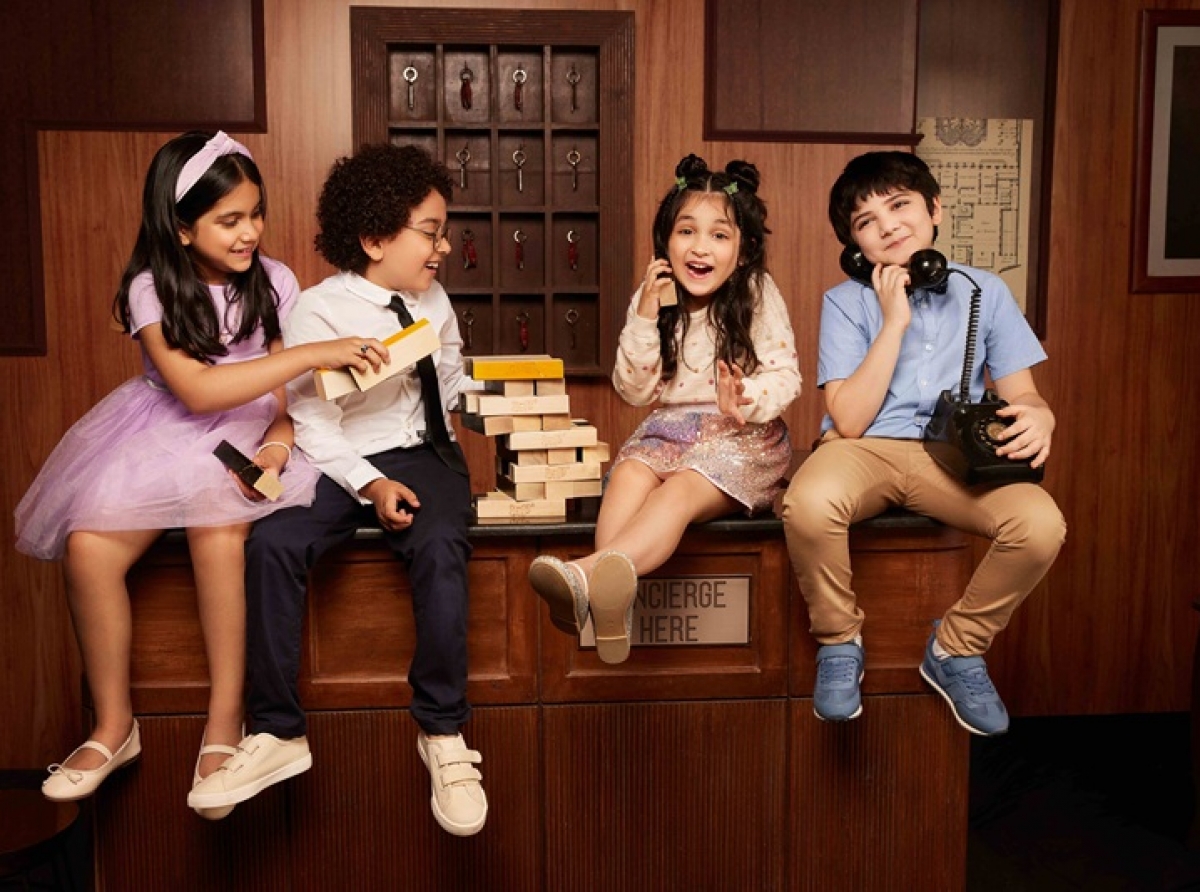
India’s children’s apparel sector, once regarded as a purely functional category dominated by school uniforms and basic essentials, has changed considerably.
What was earlier a low-involvement retail segment has now turned into one of the fastest-growing fashion frontiers in the country.
A new IMARC Group report captures this shift with striking clarity: the Indian kidswear market, valued at $10.60 billion in 2024, is set to reach $16.60 billion by 2033. This growth, at 5.11 per cent CAGR between 2025 and 2033, signals not only a demographic dividend at play, but also a New Aage consumerism driven by aspirational, brand-savvy parents.
Read our latest issue
The shift is best captured in the numbers. While broader children’s wear that includes footwear stood at $22.1 billion in 2024, growing to $27.1 billion by 2033 at a modest 2.17 per cent CAGR, the kidswear-only apparel category is growing more than twice as fast. This difference shows that parents are increasingly prioritizing clothing over ancillary categories, with apparel emerging as the most expressive, style-led purchase for children in urban and semi-urban households.
A market redefined by demographics
The IMARC projections not only highlight topline market expansion but also offer granular insights into consumption volume and per capita buying behaviour. The report estimates that Indian consumers bought an average of 10.2 pieces of kidswear per person in 2024, a figure that aligns with the sharp increase in nuclear families and dual-income urban households.
By 2029, total apparel volume for kidswear is projected to reach 16.9 billion pieces, even as 2025 is expected to see a temporary 3 per cent dip due to a shift toward higher-value garments and premiumisation.
Table: The numbers behind the rise
|
Metric |
Value (2024) |
Forecast (2033) |
CAGR (2025-33) |
|
Market Size |
$10.60 Billion |
$16.60 Billion |
5.11% |
|
Volume Growth (2025) |
- |
3.00% |
- |
|
Projected Volume (2029) |
- |
16.9 Billion pieces |
- |
|
Average Volume per Person (2024) |
10.2 pieces |
- |
- |
The table underscores three clear realities. First, value is rising faster than volume, indicating a decisive shift toward branded, well-designed, and premium apparel. Second, the plateauing of unit consumption suggests maturing buying behaviour, where parents prefer fewer but better garments. Third, the long-term rise in per-child spending is sustaining market value even in years of flatter unit growth.
The architect of the kidswear boom
The heart of this transformation lies in India’s changing household economics. With per capita disposable income touching approximately Rs 2.14 lakh in FY24, discretionary spending patterns have changed. Clothing for children, once a purchase relegated to birthdays and festivals, has now become a quarterly, and in many cases, monthly shopping cycle. Urban parents, often exposed to global baby and kidswear trends through social media, are treating children’s fashion as a lifestyle extension of their own aesthetic choices.
Social media platforms like Instagram and YouTube have increased the visibility of kidswear content, from DIY styling to influencer-driven baby fashion hauls. This has fuelled a shift where brand reputation, fabric quality, comfort, and safety have begun to outweigh price sensitivity.
For nuclear families with one or two children, the emotional justification for premium spending is even stronger. The generational shift is unmistakable: millennial parents want children’s outfits that are stylish, photogenic, and reflective of contemporary design trends.
Digital commerce and the rise of category specialists
The kidswear boom is inseparable from the e-commerce revolution. Online marketplaces and Direct-to-Consumer (D2C) brands have democratised access to styles, sizes, and price ranges that were once confined to urban malls.
Tier II and III cities, in particular, have emerged as massive growth engines for the category.
Logistics optimisation, easy returns, and trend-responsive digital catalogues have expanded consumption in cities where branded kidswear previously had limited physical retail presence.
The category’s evolution is also marked by the emergence of dedicated kidswear innovators. Some brands lean into high-velocity design cycles, while others commit to sustainable and chemical-free garments.
This diversification is signalling a maturing market with varied consumer needs, from fashion-first families to eco-conscious parents.
Trends rewriting the wardrobe
Kidswear in India is no longer split between uniforms and casual basics. Parents are increasingly gravitating toward categories like premium dresses, fusion ethnic wear, gender-neutral clothing, and even smart-infused apparel. Ethnic wear, in particular, has gained a seasonal spike around festivals and the wedding calendar, driving short-term premiumisation.
Simultaneously, sustainable fabrics organic cotton, bamboo blends, hemp, and naturally dyed textiles are seeing growing adoption. This trend reflects both health concerns and environmental awareness. Younger parents are conscious about allergens, synthetic dyes, and microplastics, and they prefer brands whose supply chains reflect clean, ethical production.
How brands are capturing share
Hopscotch: Velocity-driven digital innovator
Hopscotch has rewritten the e-commerce playbook for Indian kidswear. Operating as one of India’s largest digital-first brands, it creates hundreds of new designs daily and uses sophisticated algorithms to predict emerging global trends. Its supply chain compresses the time from design to purchase, enabling parents to access international-style garments at speed and scale. With annual revenues touching Rs 220 crore (about $25.7 million) in FY24, Hopscotch stands as a case study in how fashion technology can unlock mass-market demand.
Nino Bambino: Sustainability-led specialist
Nino Bambino reflects the surging consumer interest in chemical-free and eco-conscious fabrics. Its brand ethos is built entirely on organic certified materials, safe dyes, and transparent production practices.
The company’s success lies in winning trust among health-conscious parents seeking essential wear onesies, rompers, everyday basics without compromising on safety or sustainability. Its niche is small but fiercely loyal, signalling the rise of conscious consumption even in babywear.
Cantabil Retail: Value-driven integrated player
Cantabil Retail India Ltd. offers a contrasting, yet equally compelling, strategy. With an integrated model spanning design, production, and retail, Cantabil maintains tight control over both quality and cost.
The kidswear line appeals directly to India’s growing middle and upper-middle class, largely due to comfortable fits, price accessibility, and an aspirational fashion aesthetic. Its presence in smaller towns allows it to harness demand beyond metros, giving the brand a pan-India competitive edge.
Moving beyond utility to lifestyle expression
What emerges from the IMARC findings is a market firmly transitioning away from necessity-based buying. Kidswear in India is now a dynamic consumer fashion category, shaped as much by parental identity as by children’s needs.
The interplay of rising incomes, urban aspirations, digital accessibility, and brand-led innovation is propelling it into one of the most lucrative apparel segments in the country.
With the market poised to reach $16.60 billion by 2033, India’s kidswear economy is entering a defining decade one where fashion, technology, and conscious consumerism will jointly sculpt the wardrobe of an entirely new generation.










 Get in Touch!
