
Uniqlo's Rs 60 cr store model challenges India's scale-first fashion retail
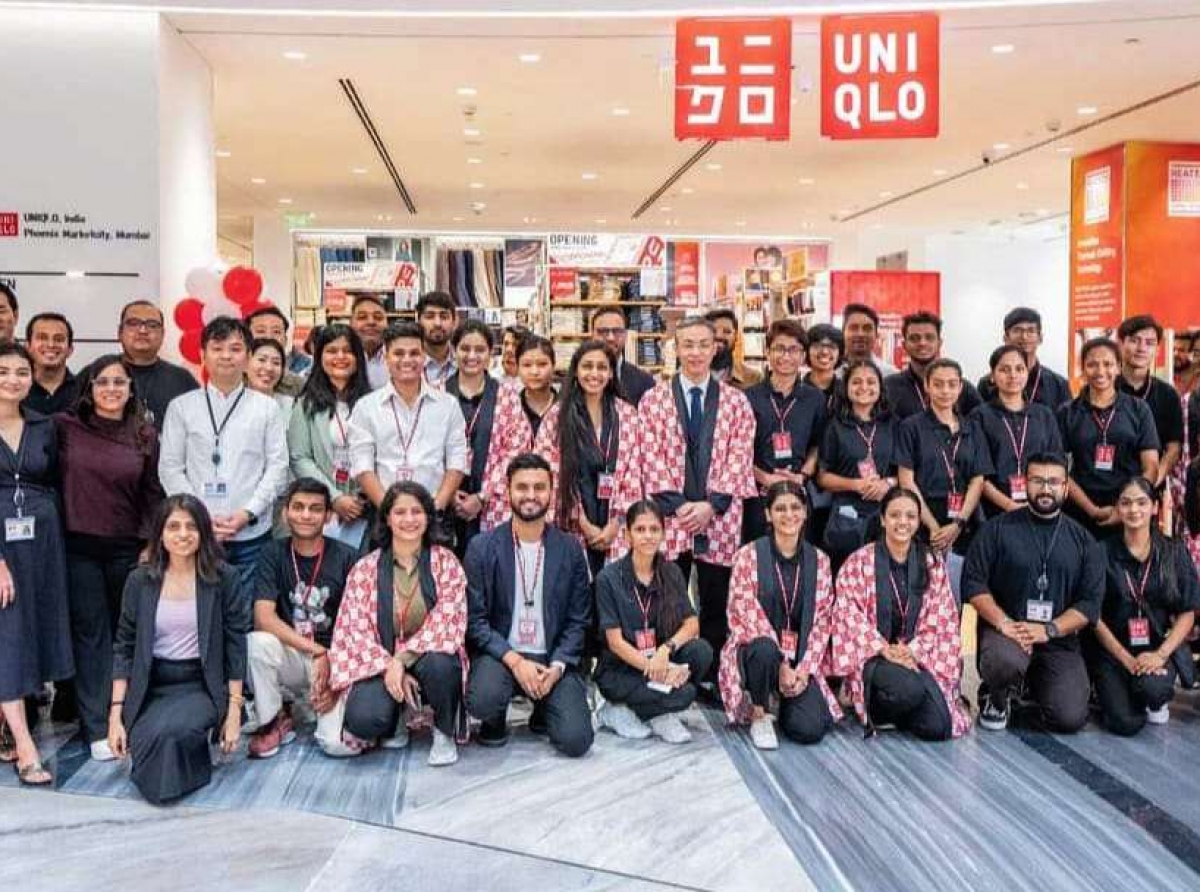
India’s apparel retail market has entered a phase where store productivity has emerged as an equally important growth factor as physical expansion. FY25 financial disclosures of global fashion retailers show very different approaches to scaling in India: Uniqlo generated nearly Rs 1,193 crore from 20 stores, H&M recorded about Rs 3,595 crore from 60 outlets, while Inditex-owned Zara posted Rs 2,782 crore from roughly 23 stores.
The numbers underline a growing difference in retail models. Uniqlo’s approximately Rs 59.6 crore annual revenue per store, achieved while boosting revenue by around 45 per cent, highlights how functional products, higher basket values and disciplined expansion can deliver scale without a sprawling store network.
Productivity takes centre stage
The comparison also shows that store productivity cannot be viewed through revenue alone. Zara continues to generate significantly higher estimated revenue per outlet, reflecting its premium positioning and concentration in large flagship locations. Its India revenue remained broadly stable in FY25, but net profit rose 23 per cent to Rs 299.47 crore, pointing to the importance of price realization, markdown discipline and operating efficiency. H&M has a broader-volume model, using a substantially larger store network and frequent fashion rotations to reach consumers across established and emerging urban markets. Uniqlo works between these approaches, using relatively fewer stores while concentrating on high-volume wardrobe essentials.
Table: Brands annual India revenue and value proposition
|
Brand |
Parent company |
FY25 India revenue (Rs cr) |
YoY top-line growth |
Store count |
Est. annual revenue per store (Rs cr) |
Value proposition |
|
Uniqlo |
Fast Retailing |
1,193 |
45% |
20 |
59.6 |
Utilitarian daily wear, technical fabrics |
|
H&M |
H&M Group |
3,595 |
9% |
60 |
59.9 |
Trend-led, high-volume fast fashion |
|
Zara |
Inditex (ITRIPL JV) |
2,782 |
0.5% |
23 |
120.9 |
High-fashion runway adaptation, premium pricing |
Three routes to scale
H&M's model depends on breadth, rapid product rotation and a large physical footprint. Its expansion across Tier-I, II cities gives the brand access to a wider youth-fashion consumer base, while promotional activity helps maintain inventory velocity. Zara follows a more concentrated strategy. Its flagship stores are largely located in premium shopping destinations, where the brand can support higher price points through fashion differentiation and rapid adaptation of global runway trends.
Uniqlo's proposition is fundamentally different. Its ‘LifeWear’ model is built around everyday products and proprietary fabric technologies such as AIRism, HeatTech and Ultra Light Down. The merchandise is designed to remain relevant across seasons rather than depend on short-lived fashion cycles. That difference has implications for working capital. Core products can remain on shelves for longer periods, reducing dependence on aggressive end-of-season discounting and making demand forecasting more predictable.
The ‘LifeWear’ strategy
Uniqlo's model is particularly relevant as Indian consumers trade up from unbranded apparel towards quality and functionality. Core T-shirts, trousers and seasonal cooling or thermal layers can be replenished across multiple quarters. Neutral colours and repeat purchases also support larger baskets, while the reduced dependence on rapidly changing styles can limit markdown exposure. This approach is reflected in Uniqlo India's FY25 performance. Profit after tax more than doubled to Rs 178.4 crore, translating into a net margin of roughly 15 per cent. The model does not eliminates the need for scale. Rather, it changes the definition of scale from the number of doors opened to the amount of revenue and profit generated from each location.
Local sourcing adds value
The next phase of competition is also moving upstream. India's branded apparel market is projected to approach $120 billion by 2030, while international retailers are seeking to deepen local sourcing as part of broader China-plus-one strategies. Uniqlo is targeting a domestic sourcing ratio of around 30 per cent and is developing manufacturing partnerships in southern textile clusters for products and materials including linen and technical knits.
Greater local sourcing can reduce import-duty exposure, provide a hedge against currency movements and shorten supply chains. For retailers seeking to expand store productivity, these benefits can be as important as incremental store additions. Retail strategist point out urban consumer is showing greater preference for durable and functional apparel. For global brands entering their second phase of expansion, he argued, the focus is increasingly shifting towards capital efficiency, sales density and localized supply chains.
Small city expansion tests the model
The productivity-first approach, however, faces limits outside India's largest metros. Premium grade-A mall space remains constrained in several emerging markets, while the price elasticity of functional apparel becomes more pronounced beyond affluent urban catchments.
Domestic value retailers such as Zudio and Reliance Retail formats have established strong positions in everyday apparel, creating a difficult environment for international brands attempting to replicate metropolitan pricing and store economics.
For Uniqlo, the next challenge will therefore be maintaining its productivity advantage while broadening its geographical reach. Its stated ambition of reaching around 100 stores by 2031 will require a careful balance between physical expansion, digital distribution, localized pricing and supply-chain integration.
The larger lesson for India's apparel market is clear: the next retail race may not be won simply by whoever opens the most stores. Increasingly, the critical metrics will be revenue density, inventory productivity, margins and the ability to make each physical outlet work harder.









 Get in Touch!
