
Luxury malls bet on experience as India’s affluent consumer base grows
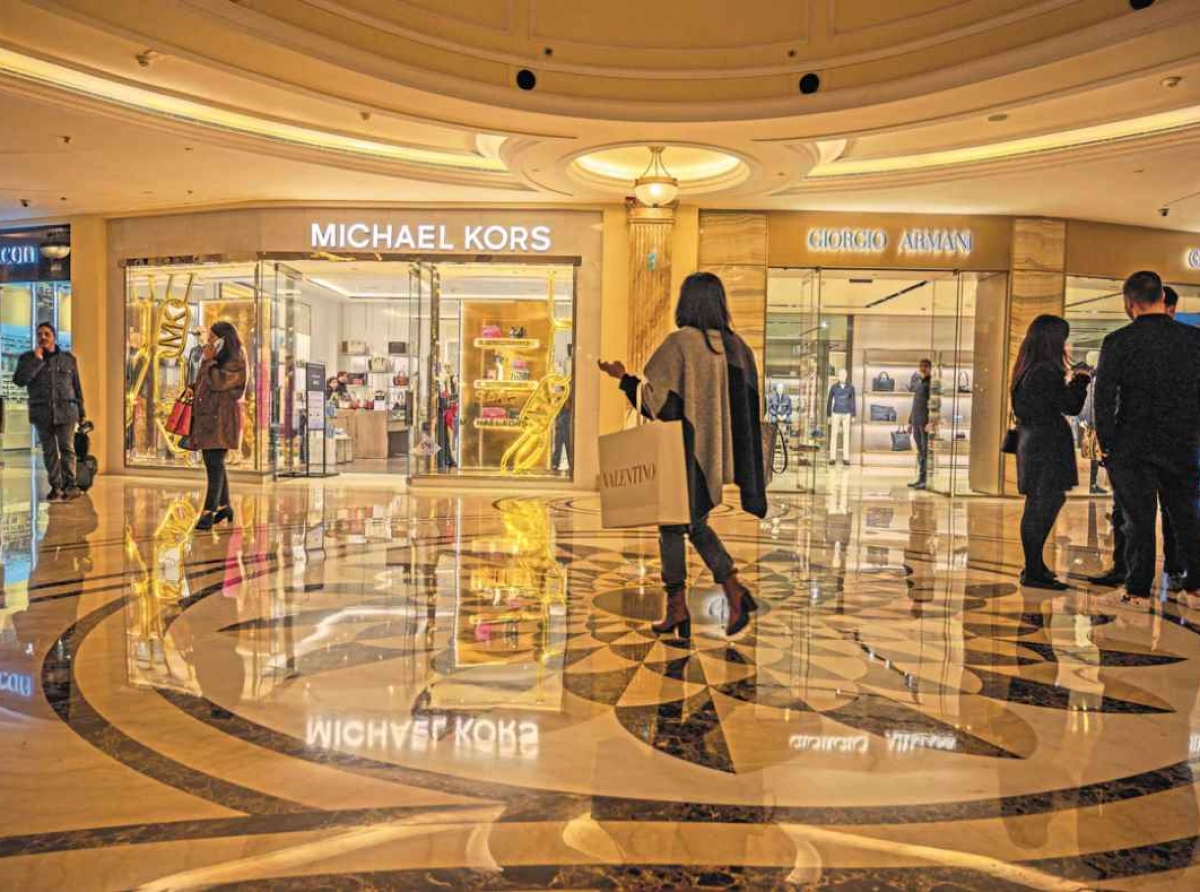
Quality of consumption is becoming as important as quantity of footfall in Indian retail today. Luxury mall developers are designing properties not as conventional shopping centres but as curated ecosystems combining fashion, hospitality, dining, entertainment, art and high-touch services.
The shift is being supported by increasing disposable incomes, urbanisation and a growing affluent consumer base. IMARC Group estimates that India’s luxury goods market has reached about $10.6 billion and could grow to $18.8 billion by 2034, implying a 6.17 per cent CAGR. At the same time, organised retail is growing rapidly, creating an opportunity for landlords to optimise revenues through higher-value tenants and stronger spending per square foot.
The economics are favouring destination assets over undifferentiated retail space.
|
Market Metric |
Baseline |
Current level |
Forecast |
|
India Luxury Goods Market Size |
$10.6 bn (2025) |
$11.25 bn |
$18.8 bn (2034) |
|
Organized Retail Market Share |
$120 bn |
$230 bn |
$320 bn |
|
Grade A Mall Vacancy Rate |
21.5% (2011) |
5.0% - 6.7% |
Below 4.5% |
|
Dominant Metro Leasing Share |
52% (NCR & Mumbai) |
64% (NCR, Mumbai, Hyd) |
70% |
From malls to overall experiences
The fundamental change is architectural as much as commercial.
Traditional malls were built around anchor stores, large common areas and maximising visitor volumes. Luxury developments reverse that equation. Private salons, concierge services, valet-to-boutique access, premium restaurants, art installations and event spaces are becoming part of the retail proposition. The objective is to increase dwell time and spending intensity rather than simply visitor numbers.
This matters because luxury customers have different economics from mass-market shoppers. A consumer who spends several hours within a destination combining fashion, jewellery, food and entertainment has more opportunities for multiple transactions.
Cushman & Wakefield data points to this difference. Global luxury retailers allocate nearly 76 per cent of their physical leasing to institutionally managed Grade A malls, where climate control, security, design standards and tenant curation are more closely aligned with global brand requirements. Domestic retailers, by contrast, remain substantially more dependent on high streets, which account for more than half of their presence.
This is creating a two-speed retail property market: main streets continue to deliver visibility, while premium malls deliver brand control and higher-value consumption.
Flagships become experience centres
Luxury brands are also demanding larger spaces. The flagship store is no longer simply an inventory-led outlet. It has become a physical manifestation of the brand, requiring room for private appointments, hospitality, immersive displays, product storytelling and events.
That is altering the economics of mall leasing. A larger store may generate lower sales density than a conventional shop if measured purely by merchandise per square foot, but it can strengthen brand visibility, customer acquisition and high-value conversion.
For developers, the implication is equally significant. A luxury mall cannot be leased on a purely transactional basis. Tenant adjacency becomes an asset. A jewellery house wants to sit alongside other luxury brands rather than an unrelated mass retailer, while premium fashion labels benefit from proximity to fine dining, hotels and cultural venues. The mall therefore becomes a curated commercial ecosystem rather than a collection of independent tenants.
Jio World Plaza sets the template
Jio World Plaza is a model. Located within Mumbai’s Bandra Kurla Complex, the 750,000-sq. ft. development spans four levels and houses 66 flagship stores representing international luxury groups and brands.
Louis Vuitton, Cartier and Dior operate alongside premium hospitality concepts including Armani Caffè and Ladurée. The combination is deliberate: luxury shopping is integrated with dining, leisure and social experiences. The development also incorporates concierge-led services, personal styling and private-event infrastructure, reducing friction for affluent consumers. The significance goes beyond a single mall. Such projects demonstrate how India’s luxury retail market is moving towards destination consumption, where the property itself becomes part of the luxury proposition.
Scarcity is strengthening landlords
The biggest constraint, however, may not be consumer demand but the shortage of suitable real estate. According to Anarock data, retailers leased around 4.1 million sq. ft. of Grade A mall space across India’s seven largest cities during the first half of the year, compared with only 0.9 million sq. ft. of new supply.
|
Retail real estate component |
Gross absorption / leasing |
Fresh completions / supply |
Demand-to-supply ratio |
|
Grade A Malls (H1 Performance) |
4.10 mn sq. ft. |
0.90 mn sq. ft. |
4.55 : 1 |
|
Main Streets (Q2 Occupancy) |
1.17 mn sq. ft. |
N/A (Continuous Infill) |
High Demand |
|
Full Year 2025 Realized Totals |
13.00 mn sq. ft. |
5.20 mn sq. ft. |
2.50 : 1 |
The imbalance is pushing vacancy rates toward historic lows and strengthening landlords' pricing power.
But creating premium supply is difficult. High land prices in established corridors, lengthy approvals, elevated construction costs and stringent specifications imposed by international brands increase project gestation and capital requirements.
Luxury malls also cannot maximise occupancy in the traditional sense. Filling a vacant unit with a lower-tier retailer may weaken the positioning of the entire property.
That makes tenant curation a financial strategy, not merely a branding decision.
High streets remain relevant
The rise of luxury malls does not mean high streets are disappearing.
Prime high streets accounted for 48.7 per cent of Q2 leasing volume, highlighting their continued importance for brands seeking visibility and street-level presence. For emerging luxury labels, a prestigious high-street address can also function as a relatively efficient marketing platform.
The emerging model is therefore complementary rather than substitutive. Established international brands may favour destination malls for flagship experiences, while high streets remain attractive for visibility, smaller formats and market testing.
The next growth frontier
India’s luxury retail opportunity is also moving beyond the traditional metro markets. Cities such as Chandigarh, Ahmedabad, Jaipur and Vadodara are developing deeper pools of affluent consumers, while digital commerce has pushed up awareness of international brands beyond metros.
Luxury companies are likely to respond with a combination of pop-ups, exhibitions, smaller-format stores and omnichannel fulfilment rather than immediately replicating Mumbai- or Delhi-scale flagships.
Sustainability could become another differentiator. Demand for ethically sourced products and environmentally certified retail environments is rising, encouraging developers to incorporate green building standards and energy-efficient infrastructure into premium projects.
Reliance raises the stakes
The scale of Reliance Retail adds another dimension to the transformation. With more than 20,000 stores spanning approximately 77.4 million sq. ft, Reliance has the scale to connect mass retail, premium fashion and luxury into a broader physical and digital network.
Its investments in assets such as Jio World Plaza point to a larger strategic shift: India's retail leaders are increasingly competing not just for customers, but for control over the environments in which high-value consumption takes place.
That is the real change underway in Indian retail real estate. The next generation of luxury malls will not be judged simply by how many people enter them. Their value will be determined by how effectively they convert affluent footfall into longer dwell times, higher transaction values, stronger brand equity and recurring consumption.










 Get in Touch!
