All Stories

Zilo redefines 'Instant' fashion, adds lifestyle to 60-Minute promise

18 November 2025, Mumbai 

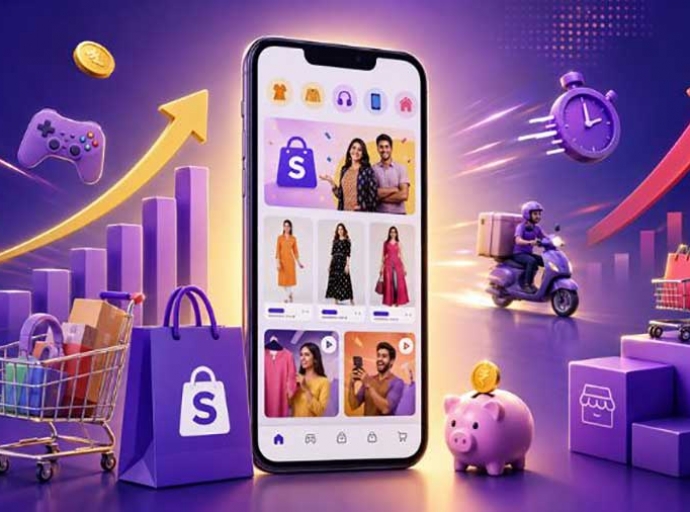
Zilo, the fashion quick-commerce platform, is strategically shifting the speed narrative from apparel-only to a full lifestyle ensemble. The opening of its second dark store in Mumbai within three months of its June 2025 launch solidifies its hybrid retail initiative and marks a rapid category expansion.

Know More

Accessory-led growth

The core update is Zilo’s foray into non-apparel categories, now offering accessories, footwear, bags, watches, and fashion jewellery from premium brands like Puma, Titan, and Lavie. This expansion, facilitated by the new dark store, is designed to capture the 'instant look completion' market. "Consumers are increasingly looking for speed and selection across every aspect of fashion—not just clothing," says Co-Founder & CEO, Padmakumar Pal.

Read our latest issue

Hybrid model & financial rigor

Zilo, founded by former Flipkart and Myntra executives, operates on a hybrid supply model, combining hyper-local dark stores with direct brand partnerships to ensure 60-minute delivery and a superior customer experience, including scheduled home trials and instant returns. This model aims to counter the high return rates (often 25-30% in online fashion).

Fashion Guru

The company secured $4.5 million in seed funding (led by Info Edge Ventures and Chiratae Ventures) to scale this execution-heavy business. By broadening its high-margin SKU base to include accessories,

Zilo is better positioned to strengthen unit economics and meet its goal of expanding to 10-11 cities over the next two years, moving beyond its initial focus on urban, mass-premium shoppers. The challenge remains in maintaining inventory accuracy and speed across the complex colour-size-style matrix of the fashion category.

LATEST FASHION NEWS

Zilo

Meesho's ‘Value-Led Apparel’ surge fuels 'Bharat' e-retail growth

17 November 2025, Mumbai 

New reports solidify Meesho's dominance in India's value-commerce segment, driven largely by the massive growth in the fashion and apparel category. As the overall e-retail market expects over 20% CAGR growth, Meesho is strategically channeling this expansion by catering to the affordability-driven demand from non-metro markets.

Know More

Tier-2+ Towns dictate fashion trends

The platform’s user base surge—hitting 175 million annual transacting users in 2024, up 25%, is predominantly fueled by Tier 4 and smaller towns.

Categories like fashion, beauty, and personal care saw a cumulative 70% year-on-year order growth in 2024.

Fashion Guru

This trend signals that "Bharat" (small-town India) prioritizes value-driven, low-priced fashion, a segment Meesho targets with its zero-commission model for sellers.

The company, founded in 2015, began as a social commerce reseller model but has evolved into a direct marketplace, recording 1.83 billion placed orders in FY25, the highest in India.

 Join our group

Operational Efficiency: The 'Everyday Low Price' engine

Meesho's asset-light model and proprietary logistics arm, Valmo, are crucial for maintaining its "everyday low prices" strategy, a key differentiator against rivals like Amazon and Flipkart.

Average order value (AOV) has declined to ₹274 in FY25, yet cost efficiency has been achieved, with fulfillment cost per shipped order dropping to ₹43.08 in the same period.

Join our community

This scale-driven efficiency is vital, particularly with challenges like high Cash-on-Delivery (CoD) rates (around 75% of shipped orders in Q1 FY26) which increase operational friction.

This focus on cost and scale is positioning Meesho, which achieved positive free cash flow of ₹1,032 crore in FY25, for a prospective IPO.The company is planning to raise an estimated ₹4,250 crore via fresh issue.

LATEST FASHION NEWS

 Meesho

Aditya Birla's $35 Billion Bet: Galeries Lafayette's grand debut

18 November 2025, Mumbai 

The recent inauguration of the first Indian flagship store for French luxury icon Galeries Lafayette in Mumbai—developed in an exclusive partnership with Aditya Birla Fashion and Retail Limited (ABFRL) marks a significant, yet highly ambitious, commitment to India’s high-end fashion and apparel market. The store, spanning 90,000 sq. ft. across five levels in the historic Kala Ghoda district, is a critical test case for global luxury retail.

Know More

Market potential vs. Retail reality

The launch comes amid forecasts that India's luxury market, valued at $11 billion in 2024, is set to triple to $35 billion by 2030. This growth is fueled by one of the world's fastest-growing affluent populations.

Read our latest issue

However, the operational hurdles are significant: high customs duties, which can make a French luxury handbag 30-40% cheaper in Dubai, and the lack of top-tier, large-scale retail infrastructure.

ABFRL, a dominant player with over 1,168 stores and 7.1 Mn sqft of retail space as of March 31, 2025, provides the necessary local expertise and real estate leverage for the French retailer.

Fashion Guru

The cultural adaptation imperative

For the 250+ luxury and designer brands housed in the new store, the key challenge remains cultural assimilation in the apparel segment.

While menswear has largely adopted Western silhouettes, women's special occasion wear is dominated by traditional attire like saris and bespoke Indian designer labels such as Sabyasachi.

 Join our group

Galeries Lafayette's strategy, which includes a planned second flagship in New Delhi by 2029-2030, is less about simply importing Parisian chic and more about creating an experiential destination that blends French Art de Vivre with Indian inventiveness, as noted by Aditya Birla Group Chairman Kumar Mangalam Birla.

Success hinges on a delicate balance: retaining global prestige while adapting the fashion playbook to the unique, localized, and value-conscious preferences of the Indian elite.

LATEST FASHION NEWS-

AdityaBirla

The Style Multiplier: How personal shoppers are powering India’s fashion boom

17 November 2025, Mumbai 

Indian consumers are reshaping the country’s fashion retail experience turning shopping from a transaction into a relationship. At the centre of this change is the personal shopper, a professional stylist who doesn’t just sell apparel but curates looks, builds wardrobes, and elevates brand loyalty. Once seen as a luxury reserved for hi-end boutiques, personal styling is now emerging as a mainstream retail growth engine especially in India’s booming wedding, festive, and luxury markets.

The business of personal shopping

The business for personal shoppers is compelling. Retailers are discovering that when customers shop with a stylist, they spend more, stay longer, and return often. Shoppers Stop for example, the leading multi-brand retail chain, which offers personalized shopping experiences across stores. Internal data for the June 2025 quarter reveals an interesting picture.

Table: Shoppers Stop June quarter sales

Metric

June 2025 quarter

Insight

Average Transaction Value (ATV) with a personal shopper

Rs 15,500 (approx.)

Significantly higher than regular sales.

Revenue from Personal Shopper Service

Rs 273.5 crore

A major contributor to total sales.

Contribution to Total Sales

25% of the total Rs 1,094 crore revenue

Increased by 7 percentage points from the previous year.

This table underscores the service’s direct impact on business performance. The Rs 273.5 crore generated through personalized shopping alone accounts for one-fourth of the retailer’s total sales. Importantly, this contribution grew sharply year-on-year, showing that consumers increasingly prefer guided, stylist-led purchases over self-service browsing. Encouraged by these numbers, Shoppers Stop plans to expand its personal shopper team from 300 to 500 stylists. The retailer understands these professionals not only lift average transaction values (ATVs) but also drive customer loyalty, especially in categories like premium ethnic wear, luxury accessories, and occasion-driven apparel.

Luxury learns the lesson as malls go personal

High-end shopping destinations are taking the concept further. DLF Luxury Malls, the operator behind DLF Emporio and The Chanakya in Delhi, pioneered personal styling services back in 2017. Their appointment-only model blends luxury with personalization: clients receive pre-styled options before arrival, private trial rooms, and on-demand access to brand specialists. The results have been equally rewarding, mall data shows the service now drives 5-7 per cent of total sales, while also improving repeat footfall and ticket size.

In a market increasingly dominated by digital discovery, these curated, physical touchpoints offer something the internet cannot: humanized, sensory-driven retail.

The twin tailwinds of weddings, premiumisation

The personal shopping boom doesn’t exist in isolation it’s being powered by two major macroeconomic shifts: India’s massive wedding economy and a consumer drift toward premiumisation.

The wedding wallet effect: Weddings remain India’s most recession-proof spending category. Valued at Rs 10 lakh crore ($130 billion) in FY25, the Indian wedding industry is the second-largest consumption sector after food and grocery. With 8-10 million weddings annually and a projected CAGR of 14 per cent till 2030, this segment fuels surging demand for styling, trousseau planning, and curated fashion experiences. Personal shoppers find their peak season here helping clients select attire for multi-day ceremonies, honeymoon wardrobes, and family ensembles. This ecosystem now extends beyond clothing to jewellery, watches, beauty, and accessories, further amplifying the value per transaction.

The rise of the premium consumer: Equally transformative is the premiumisation wave reshaping India’s consumption landscape. Consumers are upgrading from value for money to value for experience. A recent FMCG industry study highlights that premium products account for 42 per cent of total value growth, even though they represent just 27 per cent of total sales volume a clear sign of the willingness to pay more for perceived quality and exclusivity.

Similarly, a Deloitte India survey found that 64 per cent of consumers now make apparel and footwear choices based on occasions and trends, a behavioral shift that aligns perfectly with stylist-led retail. This shift is further reinforced by supportive macroeconomics: easing inflation, lower interest rates, and rising discretionary income. Together, these factors have created a fertile environment for experience-led consumption, especially among millennials and Gen Z, who crave personalization and storytelling in every purchase.

The new style economy

The organized retail success story has also inspired a thriving ecosystem of independent stylists and online platforms catering to aspirational, urban consumers. Two notable examples illustrate the range of emerging business models.

Table: The independent stylist ecosystem

Platform

Model

Details

Style Buddy

Full-service consulting

Offers personal shopping, wardrobe management, and consulting. Charges clients Rs 5,000 to 20,000 per session. Partners with brands like Manyavar, training staff and deploying stylists.

Shop-In

Freelance model

Hyderabad-based platform where shoppers are booked online. Customers pay Rs 195 reservation fee and 15 per cent of the total purchase value.

These platforms are democratizing access to professional styling while creating new income streams for trained fashion professionals. In cities like Hyderabad, Pune, and Ahmedabad, freelancers report monthly earnings comparable to mid-level retail executives, depending on client volume.

The future of experiential retail

India’s retail evolution now hinges on one principle: experience over expansion. As consumers become more discerning, fashion and lifestyle brands are shifting focus from adding square footage to maximizing per-customer value through curated interactions. Personal shoppers are central to this reimagining. They embody a hybrid model of equal parts sales strategist, stylist, and brand ambassador driving profits in a segment where differentiation often depends on human connection. From DLF’s luxury salons to Shoppers Stop’s in-store stylists and independent digital consultants, this model points to the next phase of India’s fashion retail: a market where personalization isn’t a perk it’s the product.

LATEST FASHION NEWS

The Style Multiplier: How personal shoppers are powering India’s fashion boom

Premium mall squeeze threatens Lifestyle's aggressive India store rollout

16 November 2025, Mumbai 

Retail expansion in India's booming lifestyle segment faces a sudden bottleneck, with department store giant Lifestyle International Pvt. Ltd. warning that its aggressive store opening plans for the next year could be "hit." Chief Executive Officer Devarajan Iyer attributes the potential slowdown not to consumer demand, but to a critical shortage of premium, large-format retail spaces.

Lifestyle, the renowned department store chain under the Dubai-based Landmark Group, currently operates 125 stores across India and aims to launch 12 to 14 new locations annually. However, the company, which prefers large (40,000+ sq ft) spaces in top-tier malls, is struggling to find suitable properties. "Class-A mall developers are not creating these kinds of malls now," Iyer noted, citing an absence of upcoming new projects from major developers like Phoenix and DLF in the immediate pipeline for the following year.

The challenge is strategic for Lifestyle, whose total revenue recently rose 5.7% to ₹12,031 crore (Fiscal 2025), with profit surging 42% to ₹415 crore. To counter the mall space crunch, the company is now adopting a proactive, partnership-based approach, working directly with developers to co-identify and secure spots, a strategy where the Landmark Group's combined formats (Lifestyle, Max, Home Center, etc.) can occupy up to 100,000 sq ft in a single major development.

Lifestyle is a leading mid-to-premium segment department store focusing on fashion, beauty, footwear, and accessories. Its strategy involves maintaining a strong offline presence, with only 6% of sales currently coming from its growing e-commerce channel (which is targeted to reach 10% soon and is growing at 20%). The company is also focusing expansion heavily on Tier-1 and Tier-2 cities, where consumer experience in brick-and-mortar stores is showing higher traction, reinforcing the need for quality physical retail infrastructure.

LATEST FASHION NEWS
Premium mall squeeze threatens Lifestyle's aggressive India store rollout

India’s wedding season becomes fashion’s growth engine in Q3 FY26

18 November 2025, Mumbai 

India’s fashion and textile industry is preparing for what analysts are calling a ‘wedding-led recovery’ in the third quarter of fiscal year 2026 (Q3 FY26). As the country transitions from an exuberant festive season into an equally intense round of winter weddings, the industry expects a surge in apparel sales, designer collections, and fabric demand particularly in ethnic and premium wear categories.

Know More

As per trade projections, the combined festive and wedding season turnover could cross Rs 7 lakh crore, with Rs 4.5-5 lakh crore attributed solely to wedding-related expenditure.

For the apparel and textile sector, which has weathered a cautious first half of the year, this represents not just a rebound, but a redefinition of its growth trajectory.

Read our latest issue

The wedding season multiplier

The synergy between festive shopping and matrimonial spending is creating what industry observers call a ‘double demand wave’. With auspicious wedding dates clustered between November and December, this period becomes a liquidity engine for consumer markets.

Fashion Guru

Table: Indian wedding market forecast for FY25 vs. FY26

Category

FY25 estimate (approx.)

FY26 estimate (approx.)

YoY growth indication

Total Weddings (Season)

48 lakh

46 lakh

Marginal decline in count, but focus on higher spending

Total Trade Volume (Rs.)

Rs 5.9 lakh cr

Rs 6.5 lakh cr

10% Increase

Apparel & Sarees Share

Rs 5,900 cr

Rs 6,500 cr

Driven by higher average spend per wedding

 Join our group

Figures based on 10% of the total wedding trade volume estimate.

While the number of weddings is expected to slightly decline, the spending intensity per event is sharply rising. The 10 per cent growth in trade volume suggests that families are prioritizing premium experiences and personalized fashion over sheer quantity of celebrations. This shift aligns with India’s larger consumption pattern quality over quantity, aspiration over affordability. The apparel and sari segment’s estimated Rs 6,500 crore share underscores how fashion remains the emotional and aesthetic centerpiece of Indian weddings, sustaining the livelihoods of weavers, designers, and retailers alike.

SUSTAINABILITY

Where the demand is coming from

The wedding economy is not homogenous, it’s driving parallel growth in multiple segments of India’s apparel ecosystem.

Ethnic and occasion wear: Traditional attire continues to dominate. Lehenga-cholis, sherwanis, and kurta sets are benefiting from renewed consumer enthusiasm for Indian craftsmanship. Yet, there’s a noticeable pivot destination weddings and cross-cultural celebrations are driving demand for lightweight Indo-Western fusion wear, suitable for both travel and style versatility.

VIEW

Premium and luxury segments: The rise of affluent and aspirational consumers is leading to luxury diffusion effect with designer boutiques witnessing record footfalls. Brands that once catered primarily to metro audiences are expanding into Tier-II, III 3 cities, where affordable luxury now defines the modern wedding wardrobe.

India Ratings and Research (Ind-Ra) projects that FY26 will mark a turnaround year for premium retail, led by higher discretionary spending and urban-rural convergence in fashion trends.

DFU Profile

Vocal for local’ impact: In a significant structural shift, over 70 per cent of wedding purchases are now sourced from Indian-made goods, according to the Confederation of All India Traders (CAIT). This has revitalized domestic textile clusters such as Indore (garments), Bhagalpur (silk), and Surat (synthetics). Artisans and small-scale manufacturers are witnessing direct demand from organized retail channels, a sign of deeper localization in the supply chain.

The bifurcation of demand between mass-ethnic and premium-luxury reveals how India’s fashion market is becoming both more inclusive and more segmented. On one end, traditional clusters thrive through local sourcing; on the other, luxury brands capture aspirational consumers. The result is a synchronized growth model rarely seen before.

Publications portfolio

Q3 as the industry’s golden quarter

Traditionally, the November-February window (Q3) has been the strongest period for India’s fashion retailers. However, FY26 is expected to outperform both FY24 and FY25 due to a combination of pent-up social spending, export headwinds shifting focus to domestic sales, and an expanded luxury market base.

Table: Indian apparel exporter industry outlook

Metric

Q3 FY24 (Pre-wedding season)

Q3 FY25 (Previous season)

Q3 FY26 (forecast/guidance)

Apparel Exporter Revenue

Stable to Positive

Pressured by slow global demand

Expected domestic boost to offset export headwinds

Industry Outlook

Cautious Optimism

Subdued start to the year

Set for Recovery (Ind-Ra)

The apparel sector’s focus from export-led to domestic-driven growth marks a fundamental structural shift. As global orders remain uneven, the domestic wedding economy is acting as a demand stabilizer, cushioning the industry from international volatility. Ind-Ra’s ‘Set for Recovery’ outlook reinforces confidence that Q3 FY26 will be a profitability quarter, not just a revenue one.

Should refer

The wedding edit strategy

Major players like Raymond Lifestyle have reported strong traction in their ethnic and formalwear lines, explicitly crediting wedding-led demand.

The company’s ethnic wear Business anticipates good growth in Q3, with early indicators suggesting 18-20 per cent revenue increase across readymade garments and bespoke tailoring.

Similarly, Arvind Ltd. projects 18-20 per cent growth in its Apparel Manufacturing Division (AMD) in Q3 FY26, backed by both capacity expansion and the wedding season surge.

Visit for more

Across the sector, retailers are launching limited-edition ‘Wedding Edit’ collections, combining digital campaigns with physical store experiences to capture intent-driven shoppers.

These strategies reflect a marriage between retail agility and cultural timing.

By aligning product cycles with the wedding calendar, brands are ensuring that sentiment translates into sales a playbook that could define Indian retail’s seasonal rhythm going forward.

Fashion Guru

The wedding season as India’s economic stitch line

The Indian wedding, a mix of culture, consumption, and craftsmanship, continues to be the most resilient economic engine for fashion and textiles. The upcoming Q3 FY26 cycle will likely cement this tradition further transforming wedding celebrations into a macro demand multiplier.

What’s emerging is not just a recovery but a rebalancing of India’s apparel economy one driven increasingly by domestic sentiment, regional pride, and sartorial self-expression. As the wedding bells ring this winter, the hum of sewing machines across India’s textile hubs will echo a shared optimism that in the union of love and commerce, fashion finds its strongest fabric.

LATEST FASHION NEWS

WeddingWear

Homegrown brands drive 3.2M sq. ft. retail leasing surge in Q3

17 November 2025, Mumbai 

India's retail real estate sector exploded in Q3 2025, recording 3.2 million sq. ft. in gross leasing, a substantial 65% year-on-year jump. This massive surge is overwhelmingly powered by domestic retail groups, securing 76% of the leased space (2.6 million sq. ft.).

Know More

Leading the charge are categories like Fashion & Apparel (35% share) and Daily Needs & Grocery (11%), signaling strong consumer confidence in everyday spending.

The expansion is marked by an aggressive move into Tier-2/metro cities, blending physical stores with established online presence. For example, menswear brand.

Fashion Guru

The Bear House is strategically opening new 2,000 sq. ft. stores in key growth markets like Hyderabad to support robust online demand, using a 'click-and-mortar' model to enhance customer experience.

This focus on omnichannel strategy and local market understanding by Indian brands, particularly in high-growth corridors like Delhi-NCR (35% leasing share)—is the primary driver.

Despite challenges in competition and logistics, this strong domestic activity is expected to push India’s full-year retail leasing volume to a projected 10.5–11.5 million sq. ft.

LATEST FASHION NEWS

RetailLeasing

Dollar's strategic brand consolidation drives 183 BPS margin expansion

16 November 2025, Mumbai 

Hosiery giant Dollar Industries Limited's robust Q2 FY26 performance, which saw operating EBITDA surge 23.3% year-on-year to ₹60.31 crore, is a clear outcome of a major strategic consolidation.

The most impactful move is the proposed merger of nine promoter group companies, which will bring the ‘Dollar’ brand ownership directly under the listed entity.

Know More

This consolidation, which also includes manufacturing units and real estate, is designed to enhance governance and streamline operations, directly contributing to the 183 basis points (bps) expansion in operating margin to 12.8%. Profit After Tax (PAT) for the quarter jumped 32.7% to ₹35.17 crore on a total income of ₹473.29 crore, highlighting the brand's ability to drive profitability through operational leverage.

Read our latest issue

The financial success is buttressed by Dollar's aggressive retail and product strategies. The company, which holds an estimated 15% share in the branded hosiery market, saw its thermal segment revenues climb by 23.5% YoY, a case study of capturing seasonal demand supported by strong product availability.

Furthermore, the ‘Vision South India’ initiative is underway, aiming to lift the region's domestic revenue contribution from 8% to 20% by opening 50 new exclusive brand outlets over three years.

Fashion Guru

Digital channels are also scaling rapidly, with modern trade, e-commerce, and quick commerce collectively contributing 10.2% of sales.

Managing Directors Vinod Kumar Gupta and Binay Kumar Gupta affirmed the merger’s significance, stating, "The transfer of the 'Dollar' brand ownership directly to Dollar Industries Limited... will strengthen our market presence, drive product innovation, and deepen stakeholder trust."

 Join our group

This focus on profitable expansion and vertical integration positions Dollar Industries firmly towards its aspirational ₹2,000 crore revenue target.

LATEST FASHION NEWS

DollarIndustries

India's Luxury Barrier: High tariffs spur French fashion 'Shopping Tourism'

18 November 2025, Mumbai 

The Indian luxury market, projected to hit US$12.1 billion in 2025 and nearly triple to US$35 billion by 2030, presents immense potential but is fundamentally challenged by excessive customs duties on imported apparel and accessories.

Know More

The customs 'Leakage' and price arbitrage

Despite strategic market entries, such as Galeries Lafayette's Mumbai store (developed with the Aditya Birla Group and targeting €20 million in initial annual sales), high tariffs are causing a "leakage" of consumer spending.

The core issue is price arbitrage: a French luxury handbag can cost 30–40% less in Dubai.

Read our latest issue

This differential compels affluent Indian consumers to undertake "shopping tourism," making US$300 return trips to Dubai for purchases, a clear sign the current pricing structure is uncompetitive.

The conclusion of the stalled India-EU Free Trade Agreement is seen as critical, with experts noting it would deliver a "real boost" by potentially eliminating these duties.

Fashion Guru

Cultural adaptation and digital countermeasures

Beyond the fiscal barrier, French apparel brands must also tackle India's deep-rooted cultural identity, where traditional wear still dominates premium occasions.

This forces brands like Dior and Chanel into a hybrid strategy: they must adapt by collaborating with local designers and Bollywood influencers to integrate Indian aesthetics. Simultaneously, the digital channel offers a crucial countermeasure.

 Join our group

With the Digital Fashion & NFTs segment being the fastest-growing in the luxury fashion market, French labels are leveraging India's 900 million internet users to bypass physical retail constraints and directly engage consumers, even as they wait for tariff relief. The dual pressure of adapting products to local tastes while overcoming the cost hurdle remains the central challenge.

LATEST FASHION NEWS

AdityaBirla

Raymond Bets Big on Exports: Rs 497 cr Silver Spark Apparel Park anchors AP investment

17 November 2025, Mumbai 

The diversified Raymond Group is solidifying its position as a global apparel powerhouse by committing a majority of its new Andhra Pradesh investment to the garment sector. Chief Minister N.

Know More

Chandrababu Naidu virtually laid the foundation for three projects, with the Silver Spark Apparel Manufacturing Park in Anantapur commanding the largest share of the capital outlay at Rs 497 crore. This facility is the central pillar of a Rs 1,201 crore, multi-sector investment package in the state, directly linking the iconic Indian textile brand to the surging global demand for high-end ready-to-wear.

Read our latest issue

Capitalizing on the 'China Plus One' strategy

The Silver Spark Apparel unit is a dedicated subsidiary for Raymond’s garmenting business, which primarily caters to key international markets like the USA, Europe, and Japan, acting as a white-label supplier to over 50 leading global brands. The new park is a strategic move to aggressively leverage the global 'China Plus One' sourcing strategy, where international buyers diversify their supply chains away from China.

Publications portfolio

The plan projects third-largest suit manufacturer in the world

Raymond is already India's largest exporter of men's tailored garments, including suits, jackets, and trousers.

The Andhra Pradesh expansion is critical to the Group’s public goal of increasing its total garmenting capacity by approximately one-third—a boost that will position Raymond as the third-largest suit manufacturer in the world upon full commissioning.

 Join our group

The Rs 497 crore investment is expected to generate a substantial portion of the promised 6,500 jobs in the region, focusing on skill development in a high-value manufacturing segment.

SUSTAINABILITY

SSAL is a Green Factory

Silver Spark Apparel Ltd. (SSAL), established in 2000, is a 100% subsidiary of Raymond Lifestyle Limited (RLL). It has a strong track record of operational excellence, including having earned the prestigious "Best Green Factory" award for its sustainable practices.

In Q2 FY26, the overall Lifestyle segment, which includes SSAL, reported a strong performance, and the garmenting business, with its existing facilities in India and Ethiopia, consistently drives high export revenue.

DFU Profile

This new, large-scale facility in Andhra Pradesh reinforces Raymond's core competence in textiles and apparel, providing a direct, high-volume manufacturing base to capitalize on favorable global market shifts and robust demand for premium garments.

LATEST FASHION NEWS

RaymondFashion

Soch's Strategic Shift: E-commerce soars with significant growth amid profit-focused retail cleanup

14 November 2025, Mumbai 

India’s leading evening and occasion wear brand, Soch, has reported an impressive 65% year-on-year growth in its e-commerce business, showcasing the success of its 'Offline First, Digital Fast' omni-channel strategy.

Know More

The online division is on track to hit ₹90 crore this fiscal year, with a projected leap to ₹350 crore by FY30, and has notably transitioned from breakeven to a 10% profit margin.

Soch, primarily an offline-first ethnic wear brand for women, offers a wide range of designer apparel like sarees, salwar suits, kurtas, and lehengas, available across over 175 stores in India and internationally (Canada, Malaysia).

Read our latest issue

Simultaneously, the brand is executing a disciplined retail expansion strategy. Instead of rapid growth, the focus is on profitability—closing underperforming stores while strategically opening new outlets in high-potential markets.

This consolidation is expected to improve store-level EBITDA by over 2.5%. By blending strong offline credibility with aggressive, profitable digital scaling, Soch is building a resilient, future-ready retail model.

LATEST FASHION NEWS

SochApparels

Latest Publications

Image

Join Our Group

Join Our Group