
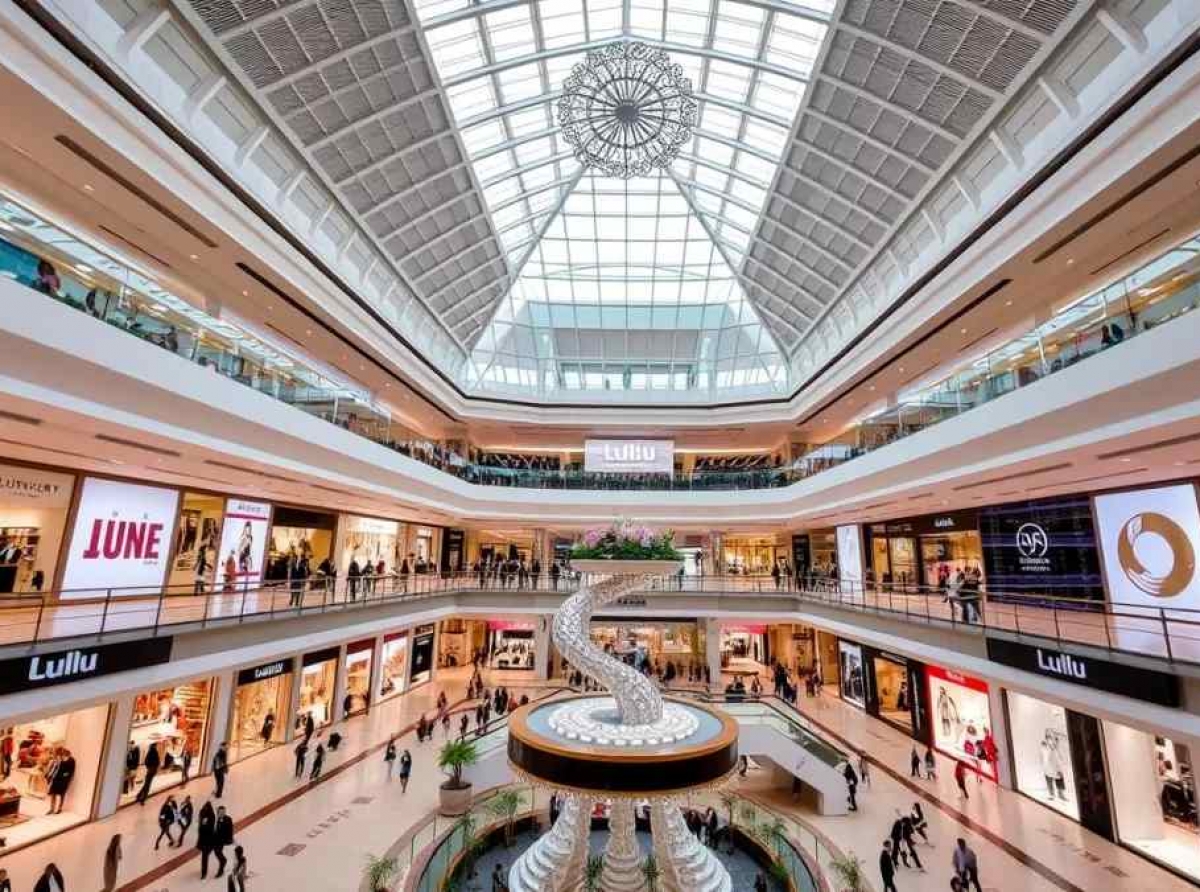
India’s retail real estate market is looking at a format reset. As urban congestion, digital discovery and quick commerce reshape shopping behaviour, developers are moving beyond the traditional million-square-foot destination mall to smaller, high-density lifestyle plazas embedded within residential catchments. The objective is not simply to generate footfall but to increase shopping frequency. By positioning apparel, dining, wellness and lifestyle services within a five-to-10-km radius, these assets seek to capture the weekday discretionary wallet that destination malls typically access only during planned visits.
DLF Retail’s recent expansion shows the strategy. Its 2.8-lakh-sq. ft. DLF Midtown Plaza in Moti Nagar, West Delhi, serves a catchment of about 2.5 million residents. The property opened with over 90 per cent operational occupancy and 95 per cent leased space, housing around 150 brands. This was followed by the 4.5 lakh sq. ft. DLF Summit Plaza in DLF5, Gurugram, planned for approximately 215 brands. As Pushpa Bector, Group Executive Director and Business Head, DLF Retail puts it, the proposition is to make customers visit a plaza twice a week rather than make an occasional trip to a destination mall.
Smaller stores, higher density
The economics of these properties are also changing the tenant equation. Traditional shopping centres often accommodate fashion stores of 2,500-3,000 sq. ft, while neighbourhood plazas can work with modular 250-500 sq. ft. units. That smaller footprint reduces fit-out requirements and lowers the entry barrier for emerging fashion labels and digital-first brands. For landlords, it creates greater tenant density and a more diversified rental base.
The shift is happening alongside strong leasing momentum. CBRE data shows retail leasing across major Indian cities increased 20 per cent year-on-year to 3.9 million sq. ft. in the first half of 2026, with Delhi-NCR accounting for 35 per cent of absorption. Fashion and apparel remained the largest demand category, contributing roughly 40-48 per cent of leased volume.
The composition of demand is equally significant. Homegrown and direct-to-consumer brands represented 28 per cent of retail leasing in early 2026, compared with 23 per cent a year earlier. Within digital-native brands, apparel and lifestyle products accounted for nearly 69 per cent of new space commitments.
D2C brands go physical
For online-first fashion companies, the neighbourhood store is becoming more than a sales outlet. It functions as a physical touchpoint for brand discovery, product trials, returns, styling and local fulfilment. Brands such as Suta and The Bear House exemplify this shift. Instead of committing capital to expensive high-street flagships, smaller stores can give a physical presence in affluent residential clusters while maintaining inventory centrally.
The model can improve sales productivity because the store does not need to carry the breadth of stock associated with a conventional flagship. Digital replenishment allows a compact unit to operate as a styling and fulfilment node, connecting online demand with offline conversion. This is particularly relevant as digital customer acquisition becomes more expensive. A physical store can reduce dependence on paid online discovery while improving consumer confidence and potentially lowering return rates.
Experience replaces commodity
The tenant mix is also revealing where developers expect future retail margins to emerge. The proliferation of quick commerce is reducing the importance of large commodity-led grocery formats, encouraging developers to favour boutique supermarkets, premium activewear, wellness services, restaurants and entertainment. The result is a more curated neighbourhood proposition. Instead of competing directly with quick-commerce platforms on speed, these plazas compete on immediacy combined with experience.
This distinction matters for fashion. Consumers may order basic products online within minutes, but apparel remains an experiential category where touch, fit, authenticity and styling can influence purchase decisions.
Spending beats footfall
The stronger argument for the format comes from consumer economics rather than visitor numbers alone. Across DLF’s retail portfolio, tenant sales have grown 11-12 per cent annually, while operational retail consumption rose 13.5-14 per cent year-on-year in the first quarter of FY27. The difference between footfall and spending is particularly important. While traffic increased about 5 per cent, tenant billing across core properties grew at a double-digit pace. This suggests that retailers are monetising fewer but more purposeful visits more effectively. Gen Z and millennials are central to this change. Their shopping journeys begin online, with consumers researching products, prices and reviews before entering a physical store. The store therefore becomes the final stage of a digitally initiated purchase journey rather than the starting point.
Two formats, one strategy
The rise of neighbourhood plazas does not signal the death of destination malls. Instead, India’s retail real estate market appears to be moving towards a dual-format model. Developers are continuing to invest in large regional assets for high-value shopping, entertainment and weekend consumption while deploying smaller community properties to capture frequent local spending.
More than Rs 30,000 crore is expected to be deployed across Indian retail assets over the coming years, underlining institutional confidence in the sector. DLF, for instance, is developing the 2 million sq. ft. Mall of India in Gurugram alongside neighbourhood properties. Its planned 7 lakh sq. ft. DLF Promenade in Panjim further expands the portfolio. The company expects its new retail additions to lift total retail revenue by 20-22 per cent.
The message is clear: India’s next retail growth phase may not be defined by bigger malls, but by a denser network of smaller ones. As digital commerce takes care of convenience and quick commerce compresses delivery times, physical retail must increasingly win on frequency, proximity and experience. The neighbourhood plaza is emerging as the format designed to do exactly that.










 Get in Touch!
