
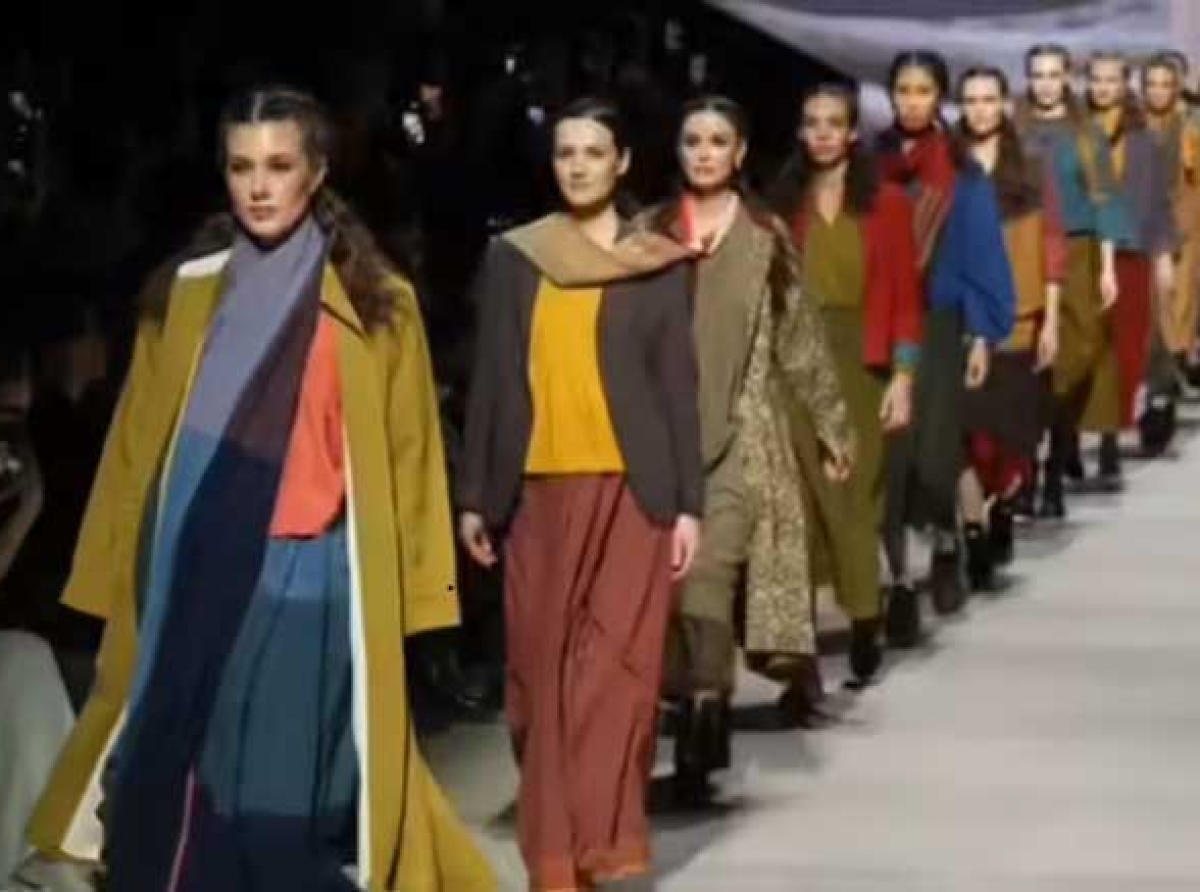
Being held from March 14-19, 2026, the Moscow Fashion Week has evolved into a strategic nexus for cross-border creative exchange, highlighting a distinct trend toward the fusion of traditional craftsmanship with contemporary international silhouettes. While the event hosts over 200 designers from countries including Spain, China, Turkey, and Armenia, the participation of labels deeply rooted in Indian production methods underscores a growing global appetite for garments that balance heritage techniques with modern luxury.
Cultural synthesis in contemporary design
A focal point of this season’s showcase is the Spanish label Madame & Mister Sibarita, which utilizes the event to emphasize its decade-long operational reliance on Kolkata-based manufacturing. The brand’s collection serves as a case study in the intersection of Mediterranean design sensibilities and Indian textile traditions. By pairing architectural corsetry and oversized kaftans with intricate hand-applied gold embroidery and sequins on heavy cotton and organza, designer Patricia Emma Fernandez Ortiz aims to bridge the gap between regional craftsmanship and Western high fashion. For emerging labels, this visibility in the Russian market represents a calculated move to capture audiences that value artisanal provenance and the luxury narrative inherent in cross-cultural design.
Regional dialogues and symbolic aesthetics
Beyond the specific focus on Indian motifs, the runway is functioning as a platform for deeper explorations of East-West synthesis. Several participating collections are currently prioritizing the modernization of traditional iconography to appeal to a globalized consumer base. For instance, the Big Brooch label is channeling Buddhist philosophy from the Buryatia region, integrating sacred symbolism - such as infinity motifs and golden fish patterns—into modern silhouettes. This trend reflects a broader industry shift toward "story-driven" fashion, where the provenance and philosophical underpinnings of a design are as marketable as the garment’s technical construction.
Expanding market access through collaborative platforms
The event has moved beyond traditional runway presentations to function as a commercial incubator, incorporating showrooms and pop-up retail spaces to facilitate direct industry networking. The presence of brands like Za_Za, which has previously navigated the Indian market via the Lakmé Fashion Week X FDCI partnership, illustrates the increasing fluidity of fashion distribution between emerging economies. For global designers, the objective is to leverage Moscow’s established infrastructure for international dialogue to secure partnerships and gain a foothold in new regional markets. As the event continues, the focus remains on whether these aesthetic dialogues can successfully convert into long-term commercial integration between traditional textile hubs and the evolving European fashion landscape.









 Get in Touch!
