
Working women, wealth, wardrobes, three forces shaping India’s next retail era
17 March 2026, Mumbai
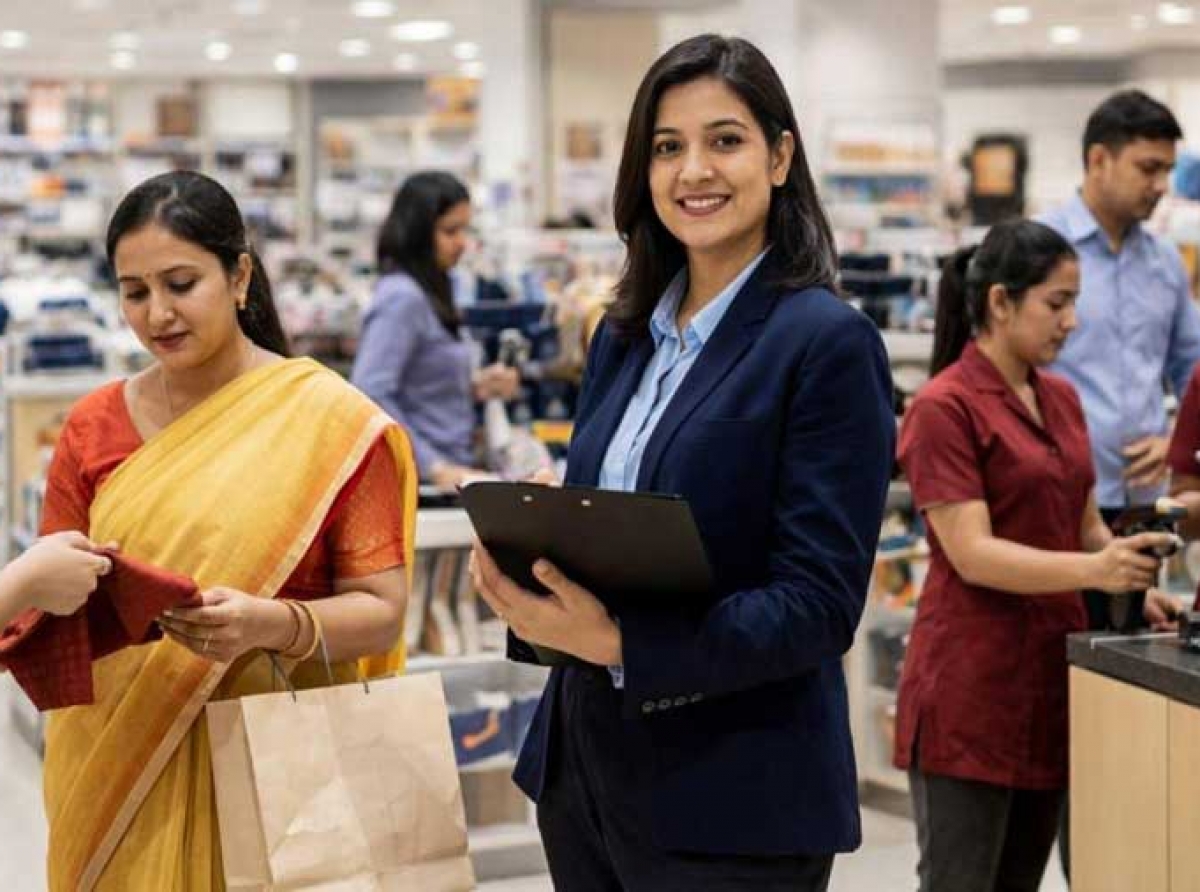
India’s move towards a trillion-dollar retail economy is being pushed not only by rising incomes but also by a shift in workforce demographics, particularly the rise of women entering professional spheres. These dual engines of wealth accumulation and female labor force participation are reshaping how apparel and lifestyle brands engage consumers, shifting focus from volume-driven footfalls to value-driven purchases.
The per capita catalyst
The traditional logic of Indian retail, which equated growth with growing population and store counts, is being overtaken by a new one: individual purchasing power. Sumit Dhingra, CEO & Country Director of Bestseller India, underscores that while footfall remains a commonly cited indicator, it is the disposable income of those visitors that determines long-term brand loyalty and retail profitability.
The Economic Survey 2025-26 reinforces this shift. With India’s GDP projected to grow at 7.4 per cent and per capita income reaching approximately $2,552 by 2026, the market for discretionary goods including fashion, footwear, and lifestyle accessories is growing rapidly. This trend is particularly advantageous for international fast-fashion players and premium domestic labels, who now have access to a middle class with both the financial capacity and the appetite to explore style choices beyond necessity.
Table: India’s economic indicators
|
Economic indicator |
Actual 2024 |
Projection 2026 |
|
GDP Per Capita ($) |
$2,396 |
$2,552 |
|
Private Consumption Growth |
6.50% |
7.90% |
|
Women’s Apparel Market Size |
$53.1 bn |
$61.2 bn (Est.) |
The table highlights the path of income-driven consumption. GDP per capita growth, although incremental in absolute dollar terms, indicates a substantial shift in discretionary purchasing power across India’s 1.4 billion population. Simultaneously, private consumption is expected to grow to nearly 8 per cent, reflecting rising confidence and liquidity among households, with the women’s apparel segment positioned to benefit directly from these structural shifts.
Women’s rising economic influence
The most disruptive factor reshaping Indian retail is the rapid increase in female labor force participation. From 23 per cent in 2018, the proportion of working women has increased to 40 per cent today. This evolution is more than a social milestone; it is a commercial shift, redefining consumption patterns across apparel, footwear, and lifestyle categories. Rajneet Kohli, Executive Director-Foods at HUL, looks at it as the emergence of a “time-starved” consumer, one whose spending prioritizes convenience, personal expression, and professional requirements.
In practical terms, this has transformed the apparel market. The rise of the work-to-evening wardrobe has created a direct correlation between female employment and demand for professional and semi-formal attire. Women are investing in blazers, trousers, structured shirts, and high-quality footwear, moving away from purchases solely oriented toward domestic or ceremonial occasions. This trend is increased by lifestyle shifts: nearly 68 per cent of women now actively seek to minimize time spent on traditional household chores, freeing both time and disposable income for self-directed consumption.
Bridging the continental divide
The narrative of a homogeneous Indian consumer is increasingly obsolete. Retail demand is now understood as structurally diverse, with region-specific preferences influenced by climate, cultural norms, and income distribution. Tier-II, III cities, collectively accounting for over 36 per cent of urban consumption, are emerging as growth hotspots, led by female workforce participation and rising per capita income.
For brands, this requires a dual strategy: increasing consumer reach while simultaneously increasing spending from existing customers. This ‘and’ approach, combining new market acquisition with deeper penetration in established segments, is increasingly viewed as the only pathway to achieving the $2 trillion retail target.
The professional wardrobe effect
One mid-premium western wear brand exemplifies this trend. The company reported a 35 per cent year-on-year growth in its structured office wear segment, particularly in cities like Bengaluru, Pune, and Hyderabad. This growth mirrors local employment trends in tech and services sectors, reflecting the clear linkage between female workforce participation and retail demand. While casual weekend wear previously dominated inventory, structured formal wear now occupies nearly half of store space, revealing a direct response to the professional needs of working women.
Bestseller India, operating brands such as Jack & Jones, Vero Moda, and Only, illustrates the convergence of rising wealth and working women on retail strategy. With over 800 shop-in-shops and 200 exclusive stores, the company has leveraged high per capita growth and growing female participation to achieve double-digit revenue gains. Its focus on Tier-II markets underscores the importance of localizing assortments and positioning premium fashion offerings where demand is growing fastest. Originally a European conglomerate, Bestseller India now drives trend-setting decisions locally, reflecting a business model tailored to India’s new retail architecture.
Focus on value over volume
India’s retail evolution is no longer about adding more consumers; it is about engaging existing ones with greater purchasing power and time autonomy. The twin engines of wealth accumulation and women’s workforce integration are creating a retail landscape defined by strategic value capture rather than mass footfall. Brands that align product offerings with professional aspirations, hyper-local preferences, and disposable income trends will lead the next phase of India’s trillion-dollar retail economy.
The implication for investors and market strategists is clear: understanding the interplay of income, gender, and urban geography is now critical to identifying profitable growth corridors. For India’s fashion and lifestyle brands, the era of volume-led expansion has given way to a nuanced, insight-driven value revolution, one measured in both economic metrics and the evolving aspirations of working women.






 Get in Touch!
