
Saree 2.0: How digital-first brands are transforming India’s ethnicwear sector
20 March 2026, Mumbai
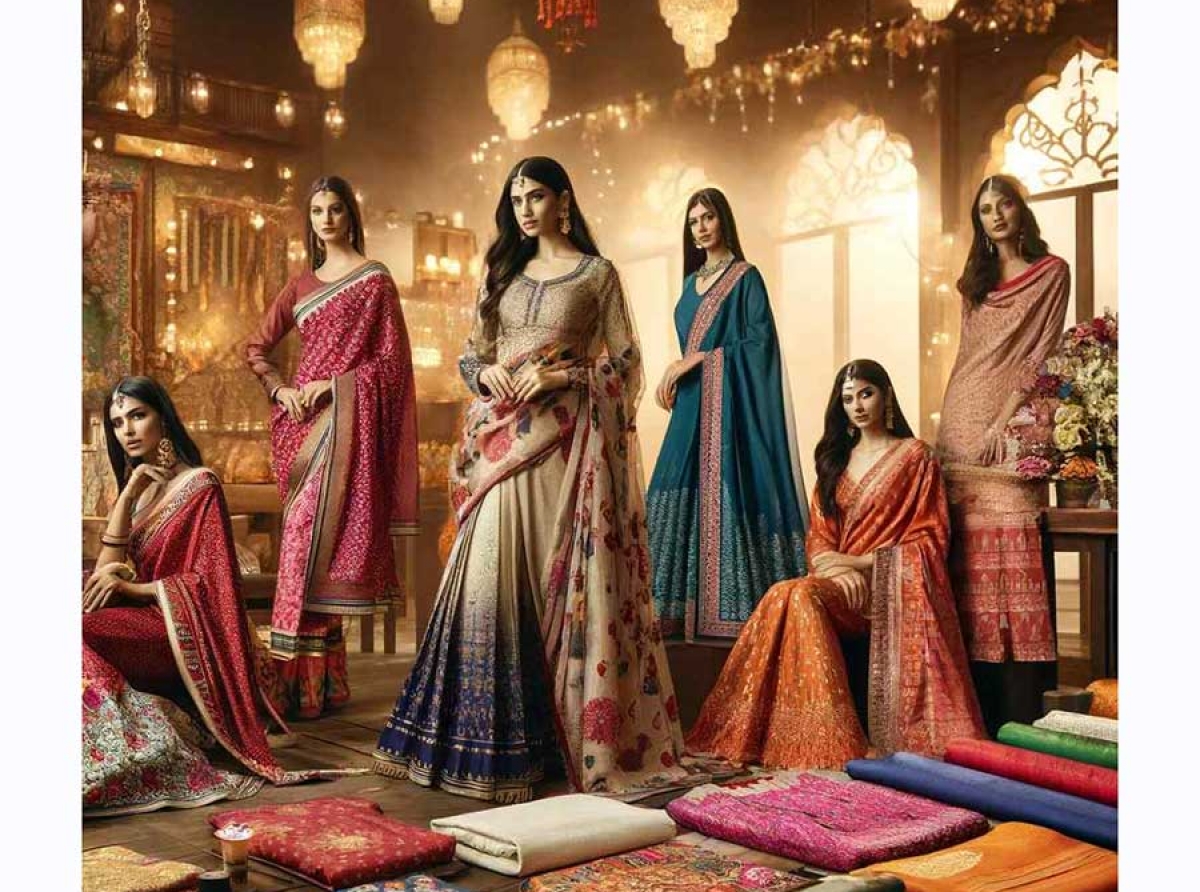
A new generation of digitally native direct-to-consumer (D2C) companies is rapidly reshaping the saree category, reimagining it not as a ceremonial relic but as a versatile, contemporary fashion product. These brands are using technology, design innovation, and social commerce to unlock a market estimated at Rs 80,000 crore. In doing so, they are bringing structure, venture capital, and new consumer narratives to one of India’s oldest apparel segments.
Saree for the digital generation
Historically, the saree’s biggest commercial constraint was not demand but usability. Draping complexity, perceived lack of versatility, and the garment’s association with weddings or formal occasions limited its appeal among younger urban consumers.
D2C brands have addressed this barrier through product innovation. Contemporary labels such as Suta, Sudathi, and Kalki Fashion are redesigning the saree around modern lifestyles. Their product strategies focus on lightweight fabrics, simplified draping techniques, and versatile silhouettes that allow the garment to function as officewear, casual attire, or occasion dressing.
These engineered garments retain the visual elegance of traditional drapes while eliminating the technical complexity associated with pleating and tucking. For first-time users particularly Gen Z consumers entering the workforcethis innovation lowers the adoption barrier.
Fabric choices have also evolved. Instead of heavy silks traditionally associated with weddings, brands are increasingly deploying breathable materials such as linen, organza, mul cotton, and lightweight Chanderi. These textiles allow the saree to function as a day-to-day garment rather than a special-occasion costume.
This shift reflects a deeper cultural repositioning. Rather than presenting the saree as a symbol of tradition alone, D2C brands are marketing it as a canvas for individual style. Social media storytelling, influencer-led styling tutorials, and workplace fashion narratives have collectively reframed the saree as a form of self-expression rather than obligation.
Quick commerce and the rise of instant ethnicwear
Perhaps the most unexpected development in the sector has been the emergence of quick-commerce distribution models.
Surat-based Sudathi has pioneered a strategy that merges ethnicwear with instant delivery platforms. By integrating with apps such as Blinkit and Swiggy Instamart, the company has effectively introduced a fast fashion paradigm into the saree segment.
The results have been striking. Within just four months of launching on quick-commerce platforms, Sudathi sold over 15,000 sarees through these channels, at one point reaching a peak of 1,000 units in a single day. Such numbers would have been inconceivable for a category traditionally reliant on planned retail purchases.
The model is built around behavioral insights. Festive events, weddings, office celebrations, and last-minute social gatherings often trigger urgent clothing purchases. In effect, sarees are entering the same instant gratification ecosystem that powers food delivery and convenience retail. The implications for inventory management, warehousing, and SKU planning are profound, as brands adapt their supply chains to accommodate hyperlocal fulfillment.
Capital flows signal institutional confidence
The rapid modernization of the saree category has drawn attention from venture investors and private equity firms eager to tap into India’s ethnicwear economy. In one of the sector’s most significant funding events, Kalki Fashion secured a Rs 225 crore Series A investment led by Lighthouse Funds. The capital is earmarked for international expansion, product diversification, and the deployment of artificial intelligence tools capable of predicting style trends and recommending personalized looks.
Meanwhile, Suta reported a 33 per cent increase in revenue during FY24, reaching approximately Rs 75 crore. Yet even as revenues increased, the company’s financial results reflect a challenge common across the D2C ecosystem: rising customer acquisition costs.
Digital advertising particularly on platforms operated by Meta has become more expensive. In some cases, cost-per-click rates have risen nearly 60 per cent over the past two years, forcing brands to rethink growth strategies that once relied heavily on performance marketing.
Consequently, profit is emerging as the next battleground. Companies are increasingly focusing on repeat purchases, community-driven engagement, and offline retail experiences to reduce dependence on digital advertising.
Organized vs. unorganized trade
Despite the increase in digital brands and institutional capital, the saree industry remains overwhelmingly unorganized. The vast majority of sales continue to occur through small retailers, regional wholesalers, and independent weavers. However, the balance is gradually shifting as branded players expand their presence.
Table: Market dynamics organized vs. unorganized (2024-26)
|
Metric |
2024 (Actuals) |
2026 (Projected) |
Impact Factor |
|
Market Size |
Rs 70,000 cr |
Rs 85,000 cr |
Higher per-capita spend on branded silk/designer wear |
|
Organized Share |
28% |
33% |
Expansion of D2C labels and national retail chains |
|
Digital Contribution |
8–10% |
15% |
Growth of social commerce and mobile-first shopping |
|
Quick Commerce Sales |
Negligible |
Rs 150–200 cr |
Last-minute festive and event-driven purchases |
The data reveals several important shifts underway in the sector. First, the overall market itself is expanding. Rising disposable incomes and renewed interest in ethnic fashion are pushing the saree economy toward an estimated Rs 85,000 crore valuation by 2026. A growing segment of consumers is also trading up to branded silks, designer drapes, and curated collections.
Second, the organized sector is slowly gaining ground. Branded chains, digital-first startups, and omnichannel retailers are increasing their share of the market, moving it from roughly 28 per cent in 2024 toward a projected 33 per cent within two years. While still modest compared with western apparel categories, this shift highlights evolution for a historically informal industry.
Third, digital commerce is becoming an increasingly important sales channel. Social commerce particularly through platforms like Instagram and WhatsApp is playing a critical role in product discovery and direct sales. Small boutique labels, independent designers, and handloom collectives are using these platforms to bypass traditional distribution networks.
Finally, the emergence of quick commerce introduces an entirely new demand category. While currently small, analysts estimate that instant-delivery saree sales could reach Rs 150-200 crore annually as logistics networks expand across major cities.
The phygital playbook of Taneira
Among large institutional players, the most ambitious effort to modernize the saree retail experience is being led by Taneira.
The brand, launched by the Tata Group, has pursued a phygital strategy that blends immersive physical retail with strong digital infrastructure.
In just three years, Taneira has expanded from roughly 20 stores in FY22 to approximately 80 outlets across 40 Indian cities. These stores are not traditional textile shops. Instead, they function as experiential retail spaces, typically spanning around 5,000 sq. ft. and designed to showcase India’s diverse weaving traditions. Customers can explore curated collections ranging from Banarasi and Kanjeevaram silks to regional cotton weaves.
At the same time, the brand’s e-commerce platform has recorded approximately 50 per cent year-on-year growth, demonstrating the power of integrated omnichannel retail. Customers frequently discover products online before completing purchases in-store, or vice versa.
Taneira’s pricing strategy is equally strategic. Entry-level cotton sarees priced around Rs 1,200 attract younger consumers and first-time buyers, while premium silk collections priced above Rs 7,000 maintain the brand’s aspirational positioning. This tiered structure allows the company to build long-term customer relationships while preserving margins on high-end products.
The hidden economics of D2C fashion
Behind the growth narratives lies a complex operational reality. D2C apparel brands face several cost pressures that can erode profits if not carefully managed. Customer acquisition cost is the most visible challenge. As advertising prices on major digital platforms continue to rise, brands must find alternative methods to maintain growth. Community building, loyalty programs, and offline events are increasingly being used to improve retention.
Repeat purchase rates have therefore become a critical metric. Brands such as Sudathi report repeat customer rates of roughly 15-20 per cent, an encouraging figure for a category traditionally associated with occasional purchases.
Logistics presents another hurdle. Cash-on-delivery remains popular in many small cities, but it introduces working-capital constraints. High return rates can significantly disrupt inventory planning and cash flows. Supply chain complexity also remains significant. Sarees are often produced through decentralized networks of weavers, dyeing units, and finishing facilities spread across states such as Gujarat, Tamil Nadu, and West Bengal. Scaling production while maintaining quality and authenticity requires careful coordination between artisans and modern retail systems.
India’s online saree ecosystem now includes more than 50 digital-first brands targeting consumers between the ages of 18 and 45. Many operate hybrid models that combine social commerce, e-commerce marketplaces, and offline pop-up stores.
Industry estimates suggest that the segment could sustain annual growth rates of approximately 25 per cent over the next several years as the category becomes increasingly formalized. Venture capital participation from firms such as Accel, Blume Ventures, and 3 Peaks Ventures further underscores investor confidence in the sector’s long-term potential.
The broader implications extend beyond fashion retail. As organized players expand, they are also building new supply chains that integrate artisans, weavers, and textile clusters into digital marketplaces. In doing so, they may provide a scalable economic bridge between India’s heritage craft industries and the country’s rapidly evolving consumer economy.










 Get in Touch!
