
From Mumbai to Dubai, Indian fashion brands redefine global retail expansion
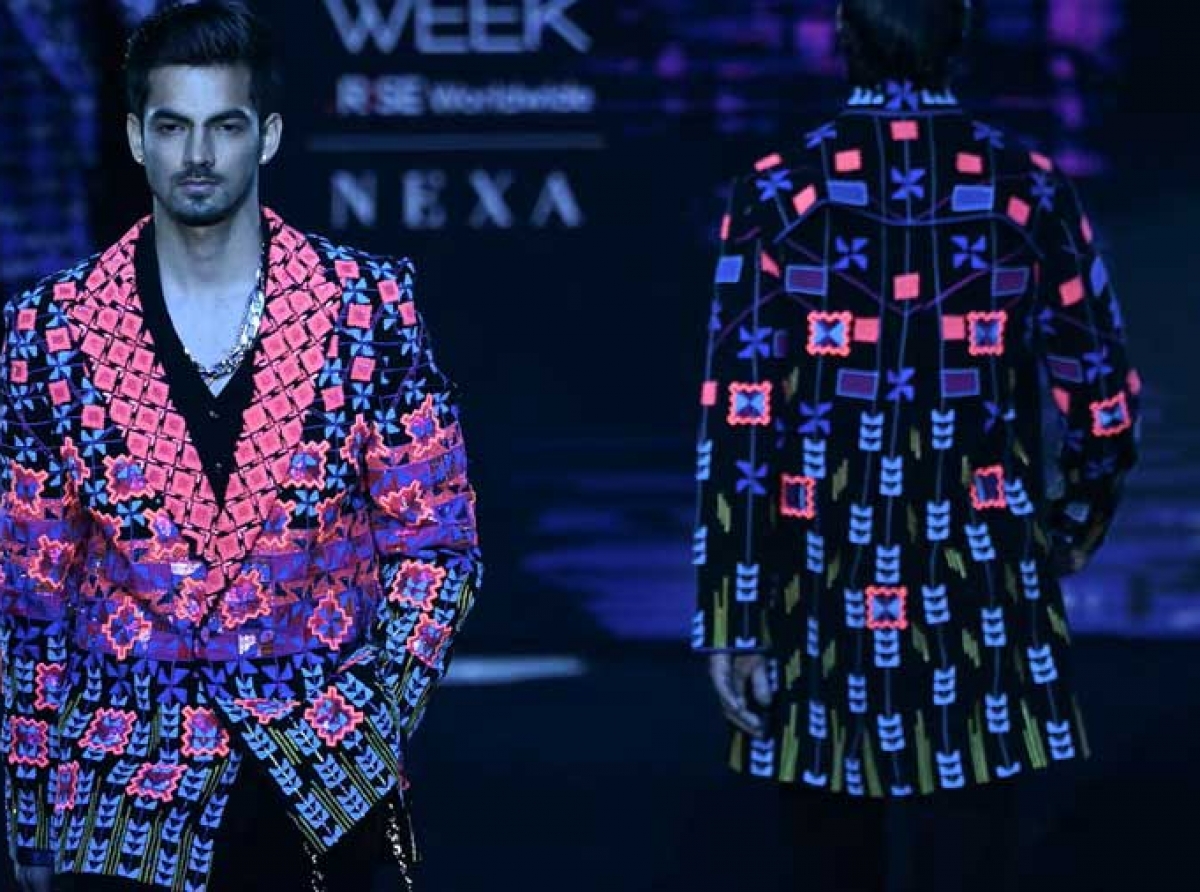
19 March 2026, Mumbai
The Gulf’s retail economy is entering a new phase of consolidation and sophistication, and Indian fashion brands are no longer content to participate from the margins. What began a decade ago as sporadic exports and festival-season pop-ups has matured into a deliberate, capital-backed expansion strategy that treats the United Arab Emirates as both a profit center and a global showcase.
The shift is visible not just in store openings, but in the way Indian labels are architecting market entry, pairing flagship stores with digital marketplaces, blending diaspora familiarity with global styling, and using Dubai as a reputational springboard for the wider GCC and Europe.
From occasional exports to institutional expansion
The latest entrant, menswear disruptor Snitch, debuted in February 2026 with a purely digital-first play, aligning with regional e-commerce leaders Noon and Namshi. Instead of locking up capital in high-rent mall leases on day one, the company is testing demand at scale online, reducing customer acquisition cycles and reading data before committing to brick-and-mortar. This approach signals how Indian brands now view the Gulf: not as an experimental export market, but as a structured, analytics-led growth territory.
Digital aggression is complemented by physical retail. Casual menswear label The Bear House opened its first international flagship at Al Ghurair Centre, treating the store less as a sales counter and more as a brand embassy. The logic is straightforward.
In a market where mall culture remains dominant and shopping is social, physical presence confers credibility that pure-play e-commerce still struggles to match. For many consumers, especially families and tourists, the tactile reassurance of fabric, fit and finish remains decisive.
Mapping two decades of market entry
The broader pattern becomes clear when the timeline of Indian brands in the UAE is mapped chronologically. What emerges is not a sudden rush, but a layered build-up that has accelerated sharply in the past three years.
Table: Indian brands in UAE outreach and timeline
|
Brand |
Launch month |
Year |
Primary channel |
Estimated UAE outreach/ retail spread |
|
Fabindia |
July |
2004 |
Offline |
3+ Stores (Dubai: Mankhool, Jumeirah; Sharjah/Abu Dhabi expansion) |
|
Raymond |
Legacy |
— |
Offline |
10+ Stores (Dubai: Bur Dubai, Al Karama, Burjuman Mall; Sharjah, Abu Dhabi) |
|
Manyavar & Mohey |
Legacy |
— |
Offline |
8+ Stores (Dubai: Meena Bazar, Al Karama, Al Qusais; Abu Dhabi, Sharjah) |
|
Titan Eyeplus |
Legacy |
— |
Offline |
7+ Stores (Dubai: Al Ghurair, Burjuman; Sharjah: Sahara Centre, City Centre) |
|
Lenskart |
Early |
2021 |
Omnichannel |
20+ Stores (Dubai Mall, Dubai Hills, Ibn Battuta, Festival City, Sharjah) |
|
Anita Dongre |
March |
2023 |
Offline |
Flagship (Dubai International Financial Centre - DIFC) |
|
Manish Malhotra |
December |
2023 |
Offline |
Flagship (Dubai Mall - Fashion Avenue) |
|
Being Human |
October |
2024 |
Offline |
2+ Stores (Dubai: City Centre Deira, Burjuman Mall) |
|
Zudio |
November |
2024 |
Offline |
2+ Stores (Dubai: Silicon Central, Sharjah) |
|
Beyoung |
November |
2024 |
Online |
UAE-wide (D2C and marketplace presence) |
|
Allen Solly |
June |
2025 |
Offline |
2+ Stores (Dubai Mall, Mall of the Emirates) |
|
Go Colors |
June |
2025 |
Offline |
3+ Stores (Dubai, Sharjah, Abu Dhabi) |
|
Highlander / Tokyo Talkies |
August |
2025 |
Offline |
2 Stores (Dubai: Al Ghurair Centre, Bur Dubai) |
|
Bonkers Corner |
August |
2025 |
Online |
UAE-wide (Strategic D2C focus) |
|
The Bear House |
November |
2025 |
Offline |
Flagship (Dubai: Al Ghurair Centre) |
|
Snitch |
February |
2026 |
Online |
UAE-wide (Via Noon & Namshi partnership) |
Read as a business narrative rather than a list, the data traces three distinct waves. The first wave, led by Fabindia and Raymond, established early credibility through traditional offline retail, largely serving the Indian expatriate base. The second wave, between 2021 and 2024, introduced experiential and designer-led flagships that repositioned Indian fashion as premium and occasion-worthy rather than purely ethnic. The third and current wave is unmistakably omnichannel, dominated by digital-native brands that treat physical stores as optional accelerators rather than prerequisites.
The store as embassy, not inventory dump
This evolution mirrors broader structural changes in the UAE retail economy. E-commerce penetration has deepened rapidly, fashion remains among the highest-converting categories, and consumers increasingly oscillate between online discovery and offline purchase. For Indian entrants, this hybrid behavior lowers risk. Online channels validate demand with limited capital expenditure, while selective mall locations deliver brand stature and higher-ticket conversions.
No case illustrates this better than Lenskart. Since entering in 2021, the eyewear specialist has built over 20 outlets across destination malls such as Dubai Mall and Dubai Hills, layering them over a strong digital backbone. Its free eye tests, aggressive pricing and buy one, get one offers reframed the mid-market eyewear proposition in a region long dominated by premium international chains. The result is a playbook that many fashion labels now seek to emulate: use technology and value engineering, not just ethnic affinity, to compete head-on with global incumbents.
Demographics increases the opportunity. The Indian diaspora, estimated at over three million is a ready-made base of early adopters who already trust homegrown labels. Yet the customer mix is no longer narrowly South Asian. Designers report a rising share of Arab, European and tourist buyers, drawn by contemporary silhouettes, occasion wear and price-value arbitrage relative to Western luxury brands. What begins as diaspora retail increasingly morphs into cross-cultural consumption.
Economics, logistics and the Dubai advantage
Operationally, Dubai offers further advantages. Tax efficiencies, world-class logistics and its role as a re-export hub help protect margins that are often squeezed by domestic freight and inventory costs in India. For many brands, inventory routed through Dubai can serve the broader GCC, reducing working capital intensity and shortening replenishment cycles. In effect, the emirate functions as both storefront and supply-chain node.
None of this eliminates friction. Prime mall rents continue to escalate, competition from European fast fashion remains fierce, and compliance requirements from free-zone licensing to mainland regulations add complexity. These pressures explain why newer entrants prefer the leaner marketplace route before committing to long-term leases. The omnichannel model is not just strategic sophistication; it is also financial prudence. Taken together, the data signals a decisive inflection. Indian fashion companies are no longer testing international waters they are building permanent outposts. Legacy players laid the foundation, but the momentum now belongs to digitally fluent, D2C-born labels that think in terms of cross-border commerce from inception. Dubai, with its concentrated consumer spending and global visibility, has become their proving ground.
If this pattern holds, the Gulf will not merely be an export destination. It will be the stage on which Indian brands refine their global identity, learning to compete on design, speed, and experience rather than price alone before pushing into Europe and beyond. In that sense, the desert capital is evolving into something larger: a launchpad for India’s next generation of fashion multinationals.










 Get in Touch!
