
The Anti-Discount Revolution: Littlebox shows fast fashion can be full-price profitable
31 March 2026, Mumbai
The Indian apparel market is projected to reach $109.5 billion by 2025, yet beneath the surface of this growth lies a persistent challenge: unsold inventory rates between 15 to 30 per cent that force retailers into cyclical discounting. Defying this trend is Guwahati-based direct-to-consumer (D2C) Littlebox India. The brand has utilized vertical integration and tech-driven operations to achieve exceptional profits. By maintaining near-zero dead stock, the company reported 318 per cent increase in net profit for FY25, rising to Rs 2.3 crore from Rs 55 lakh the previous year.
Shortening inventory cycle from 120 to 15 days
While global fast-fashion giants typically operate on 60-to-120-day inventory cycles, Littlebox India has reduced its design-to-door timeline to just 15-25 days. This fast cycle is not only a logistical advantage but also a financial safeguard by monitoring inventory aging at 90 days, far more stringent than the industry-standard 365-day definition of dead stock.
Table: Comparative inventory cycles
|
Metric |
Industry average |
Littlebox India |
|
Unsold Inventory |
15- 30% |
<0.1% (2,500 of 2.5M pieces) |
|
Inventory Cycle |
60-120 Days |
15 – 25 Days |
|
Inventory Aging Focus |
365 Days |
90 Days |
|
Revenue Growth (YoY) |
10.5% (Projected FY26) |
104% (FY25 Actual) |
Every 50 per cent off tag seen at a traditional retailer is a failure in demand forecasting. Littlebox eliminates this planning gap through a proprietary demand-forecasting algorithm, aligning production strictly with real-time customer intent.
Building manufacturing stregth
One of the critical bottlenecks in Indian fashion retail is the coordination gap, where product launches are delayed not due to a lack of creativity but due to fabric shortages or misaligned production schedules. Littlebox reduced this risk by establishing a 100 per cent in-house manufacturing model within a 40,000-square-foot facility in Noida.
This vertical integration allows the brand to bypass the rigid Minimum Order Quantities (MOQs) and long lead times of third-party vendors. Operational discipline remains a priority: Littlebox recently declined a 1.5x growth opportunity because seasonal labor migration in Bihar and Uttar Pradesh would have jeopardized quality if production were pushed beyond capacity. This disciplined approach has kept their manufacturing damage rate at an impressively lean 1.2 per cent.
The all Shark growth engine
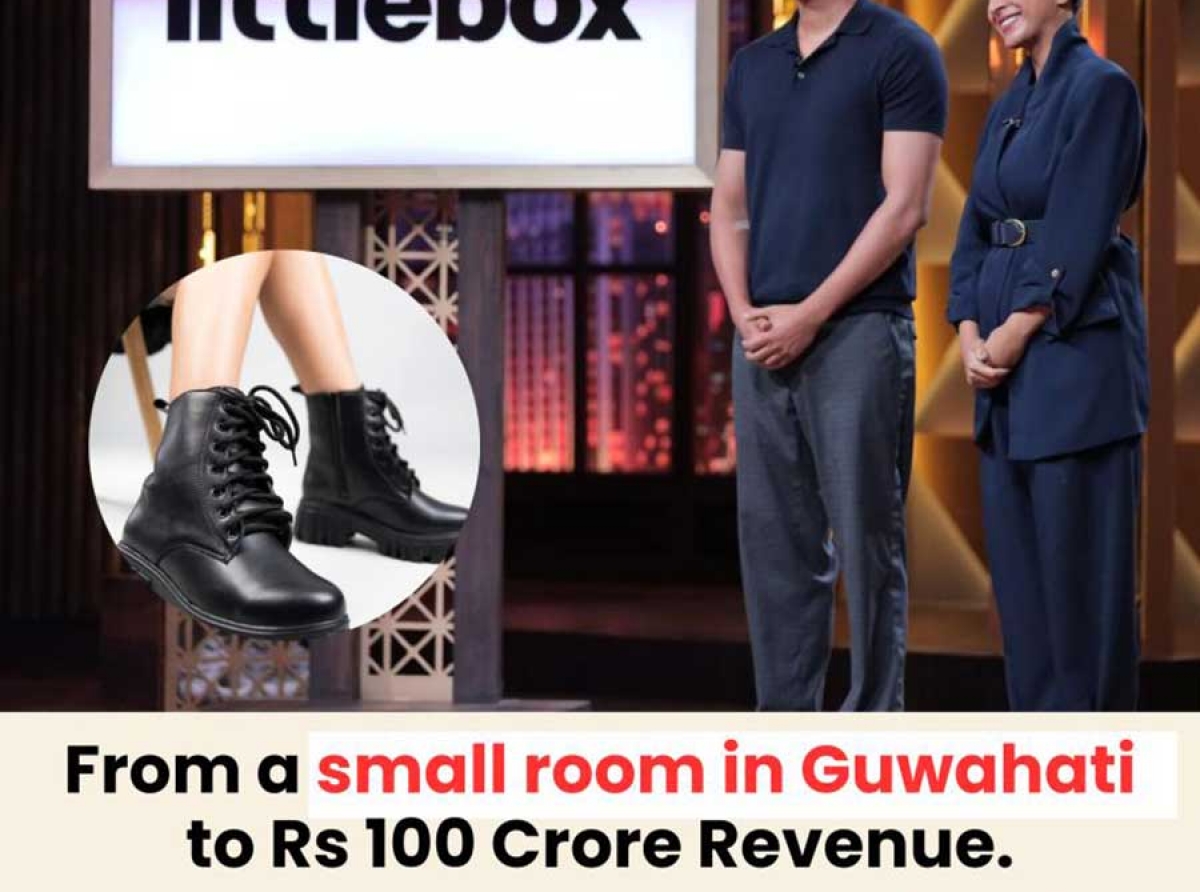
Littlebox India’s growth received a major boost from its appearance on Shark Tank India (Season 3). Securing Rs 75 lakh for 2.5 per cent equity, the brand moved from a bootstrapped operation to a venture-backed scale-up. By July 2025, Littlebox raised Rs 17.5 crore in seed funding co-led by Huddle Ventures and Prath Ventures. says CEO Rimjim Deka opines there roots in Guwahati taught them to build lean and move fast. This funding is a growth engine, not a lifeline. “We are building for the next decade, not the next quarter,” she says.
The capital is strategically deployed across three areas. First, category expansion into footwear and the high-growth men’s segment; second, infrastructure enhancements to stabilize supply during labor-sensitive seasons; third, advanced tech integration, including AI-driven recommendation systems that influence 65 per cent of Gen Z purchase decisions.
Gen Z consumption and the zero-waste imperative
Gen Z is projected to drive nearly 50 per cent of India’s consumption by FY30, with preferences for authenticity and value-for-money products reshaping retail strategies. Surveys indicate that 93 per cent of this demographic research products online to secure full-value purchases, making traditional discounting less relevant. Brands like Littlebox that can deliver full-price freshness without resorting to sales promotions are gaining significant brand equity. The company’s FY26 revenue target of Rs 100 crore reflects this shift and underscores a broader trend: the future of Indian retail lies in tech-enabled, agile supply chains that embrace zero-waste principles.
From Guwahati to nationwide footprint
Founded in 2021 by Rimjim Deka and Partha Kakati, Littlebox India began as a D2C fashion brand targeting Gen Z. The company quickly distinguished itself through an ultra-fast, in-house manufacturing model. After its Shark Tank India appearance, the brand touched Rs 55 crore in revenue in FY25 and is now scaling nationally, aiming for Rs 100 crore in FY26.
Littlebox India exemplifies a new paradigm in Indian apparel: one that prizes operational precision, agile supply chains, and tech-enabled insights over traditional discount-driven growth. Its anti-discount strategy may well signal the next frontier for high-growth, sustainable fashion in the country.











 Get in Touch!
