All Stories

Myntra to diversify revenue streams with international expansion

03 December 2025, Mumbai 

Walmart-owned fashion e-commerce giant in India, Myntra is preparing for a major international expansion, with plans to launch operations in Malaysia, the United Arab Emirates (UAE), and Australia.

KNOW MORE

This strategic expansion aims to diversify revenue streams and cement Myntra’s ambition of becoming a global brand.

The company's global business is managed through its dedicated website, Myntraglobal, which processes orders from outside India. Shipments are dispatched directly from India and fulfilled in the destination regions through local partnerships.

Read our latest issue

Myntra is expected to follow this lean, asset-light model, similar to its existing approach in Singapore, without establishing dedicated on-ground teams.

The company is slated to launch Malaysia operations within the next few months while UAE and Australia are a few months further out. This international foray will be a key focus for Myntra.

Publications portfolio

This initiative marks Myntra’s second attempt to enter the UAE market, following a paused partnership with Emaar Group's e-commerce platforms, Noon and Namshi, in 2020. The strategy this time focuses on utilizing the same selection and inventory from India to serve diaspora consumers.

LATEST FASHION NEWS

MyntraPlatform

New-Era Khadi introduces Navyug Khadi

03 December 2025, Mumbai 

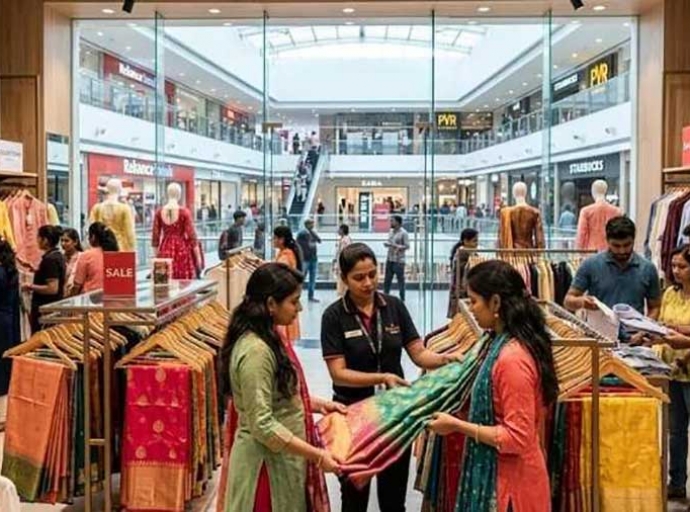
Co-organized by the Khadi and Village Industries Commission (KVIC), the Centre of Excellence for Khadi (CoEK), the National Institute of Fashion Technology (NIFT), and the Fashion Design Council of India (FDCI), New-Era Khadi, a major event celebrating Khadi recently highlighted the textile’s modern evolution.

KNOW MORE

The event introduced Navyug Khadi, marking a significant step toward making Khadi more contemporary and future-ready.

For the first time, a dedicated designer team curated a comprehensive display of products made by Khadi institutions nationwide, including sarees, garments, and yardages; accessories and home décor products.

Read our latest issue

The exhibition brought together a diverse array of regional crafts, embodying the Prime Minister’s vision of a ‘New Khadi for New India.’

Highlights included Ikat from Odisha, Eri silk from Assam, Tangaliya from Gujarat, Silk from Karnataka, Cotton from Bengal, and traditional weaves from Telangana and Bihar, presenting Khadi as a modern, inclusive, and globally relevant textile heritage.

Publications portfolio

A diverse range of Khadi apparel was showcased on the ramp, earning wide appreciation. A particularly inspiring moment occurred when representatives of Khadi institutions and artisans from across India walked the ramp.

Inaugurated on November 28th, the exhibition also featured the launch of the Khadi Knowledge Portal (Volume II).

DFU Profile

To run until December 3, 2025, the event includes exhibitions and sales counters, engaging workshops on hand spinning, natural dyeing, and sari draping, offering visitors a first-hand interactive experience with khadi.

Manoj Kumar, Chairman, KVIC, emphasized, New-Era Khadi embodies a powerful synergy of design, technology, and tradition. Khadi has become the preferred choice of the younger generation, intrinsically linked to job creation, environmental sustainability, and India's journey toward self-reliance, he noted.

LATEST FASHION NEWS

NavyugKhadi

3rd NIGF 2025 concludes on a successful note with over 2,800 buyers

01 December 2025, Mumbai 

Hosted by the Clothing Manufacturers Association of India (CMAI), the 3rd North India Garment Fair (NIGF 2025) concluded on a highly successful note at the Yashobhoomi New Delhi Exhibition Centre from November 25-27, 2025.

Read our latest issue

The event surpassed expectations, bringing together more than 125 exhibitors showcasing a wide range of menswear, womenswear, and kidswear.

NIGF 2025 proved to be a critical platform for boosting market access for MSMEs (Micro, Small, and Medium Enterprises), helping them launch new collections ahead of the important festive season and forge new business collaborations.

Know More

The fair successfully attracted leading garment manufacturers and brands from major apparel hubs nationwide, including Mumbai, Surat, Tirupur, and the Delhi/NCR region.

A significant highlight was the attendance of over 2,800 trade buyers during the three-day event. For the first time, a dedicated pavilion featured select manufacturers from Tirupur, whose participation received an outstanding response.

DFU Profile

This inclusion underscored the increasing collaboration between North and South Indian garment centers, reflecting current shifts in domestic sourcing and distribution patterns.

Santosh Katariya, President, CMAI, stated, the successful conclusion of the 3rd NIGF highlights the association’s objective to increase the footprint of domestic garment manufacturers in the Northern region and strengthen retail supply networks.

Visit for more

By addressing market demand through such focused events, the association remains committed to supporting MSME businesses with growth opportunities in unexplored markets.

Uday Desai, Director, HDR Import Export (Mumbai), noted a ‘very encouraging response’ from North Indian customers, securing good business through distributors and wholesalers. Avsar Sarvaiya, Director, Mohilya Couture (Surat), reported achieving 10 times more business than anticipated, including securing export orders.

LATEST FASHION NEWS

CMAINIGF

Decathlon guarantees 10-minute delivery of yoga mats, fitness essentials in Q-Commerce disruption

29 November 2025, Mumbai 

Decathlon, the global sports retail giant, has announced a radical shift in its distribution strategy, leveraging partnerships with key Q-commerce aggregators to offer ultra-rapid delivery of essential fitness gear.

KNOW MORE

This move, officially rolled out across major metropolitan hubs starting December 5, 2025, across pilot cities including London (UK), Paris (France), New York (US), and Mumbai (India), positions Decathlon as a major disruptor in the sports goods sector, challenging the traditional reliance on large-format store pickups.

The core of this "Q-Commerce Blitz" is a guaranteed 10-minute delivery promise for high-demand, non-bulky items. This includes everyday fitness essentials like yoga mats, resistance bands, small weights, and running accessories, directly addressing the modern consumer's need for instant gratification in their wellness routines.

Read our latest issue

By integrating its inventory directly with the aggregators' hyper-local fulfillment centers, Decathlon is effectively transforming its most popular products into instantly accessible staples.

This strategic pivot, which also includes a broader 2-hour express delivery service for bulkier or specialized items, is designed to capture market share from impulse buyers and those with last-minute needs, bypassing the need to visit sprawling out-of-town stores.

Publications portfolio

The partnership model ensures Decathlon maintains quality control and inventory visibility while relying on the technological and logistical expertise of the Q-commerce platforms for last-mile speed.

"The way people approach fitness is immediate; they decide to start a workout now, not tomorrow," commented Arnaud Dubois, Head of Digital Transformation at Decathlon.

Fashion Guru

"Our 10-minute delivery promise for items like resistance bands and yoga mats is not just a logistical improvement; it's a commitment to meeting our community exactly where they are—at the exact moment they need us.

This Q-commerce blitz is set to redefine how sporting goods are consumed."

LATEST FASHION NEWS

Decathlon

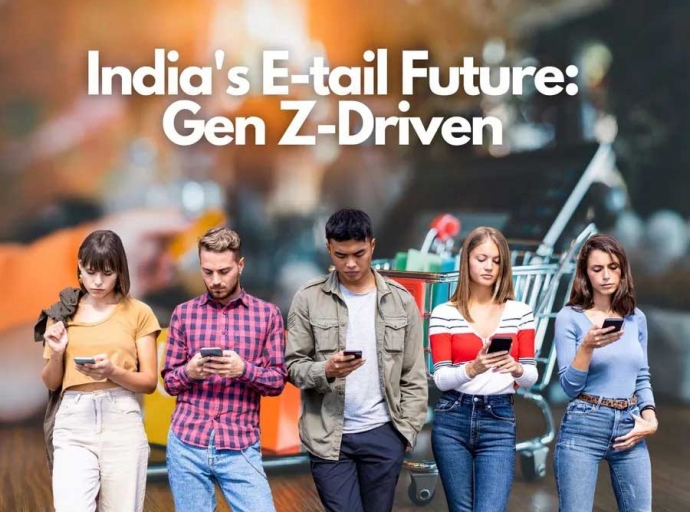
Reverse Consumption: How Gen Z is now dressing the entire Indian household

01 December 2025, Mumbai 

India’s consumption engine is facing one of the most important generational shift in decades, as GenZ emerges not just as a consumption cohort but as the primary decision-maker for household spending. Findings from the latest Fireside Ventures report reveal that Gen Z and Gen Alpha together are expected to influence over $1 trillion in consumption by 2030, fundamentally reversing traditional decision hierarchies within families. The ‘Reverse Generation’, as analysts increasingly call them, has replaced parents as the nucleus of consumer discovery, especially in fashion, a space where identity, aspiration, affordability, and digital immersion converge powerfully.

This shift marks the end of the trickle-down influence era, during which parents typically filtered trends and validated purchases. Today, the validation moves bottom-up. A teen’s preferred creator, trending audio, or UGC reel can steer not only their wardrobe but also the choices of siblings, cousins, and even parents. In the modern Indian household, especially in urban and semi-urban markets, what the youngest sees is increasingly what the family buys.

The algorithm is the new showroom

The nucleus of India’s apparel market has moved decisively into the algorithm. Fashion discovery today begins not on high streets or in mall windows but on short-form video grids designed to anticipate, surface, and nudge individual preferences at scale. For Gen Z, whose digital fluency is unmatched, social media is not a recommendation tool it is the default search engine for lifestyle choices.

Over 80 per cent of Gen Z consumers now discover fashion products through influencers and micro-creators rather than traditional celebrities. This is reshaping the economics of marketing for brands that once poured capital into glossy campaigns but now find relevance dictated by creators who film out of dorm rooms and metro stations.

To illustrate the strength of this shift, one leading Indian e-commerce platform revealed that its social-commerce-originated conversions are 28 per cent higher than its platform average. Video try-ons, fit reviews, and style challenges act not as entertainment but as real-time persuasion engines. The implication for legacy apparel companies is stark: the Fireside report estimates that up to half of incumbent brands risk cultural invisibility by 2035 if they fail to adapt to the authenticity-first digital dialect spoken by young consumers.

Table: Gen Z discovery channels and conversion impact

Discovery Channel Share of Gen Z users Impact on conversion behavior Micro-creators / Influencers 80%+ Drives impulse and trend-led purchases; highest CTR (Click-Through Rate). Social commerce (UGC + video) 65% 28% higher conversion vs. platform average. Friends & peer groups 52% Strongest validator; influences family buying decisions. Traditional celebrity campaigns 19% Low trust; minimal conversion uplift. In-store discovery 14% Used mainly for trial; purchasing decisions occur online.

The table highlights the fall of traditional celebrity-led brand influence and the parallel rise of micro-creators as the most trusted source of product discovery. With two-thirds of Gen Z relying on social commerce ecosystems, the future of apparel retail sits squarely within algorithmic feeds and UGC-led narratives that drive both immediacy and credibility.

Tier II is the new style capital

The Gen Z influence wave is not restricted to metros. In fact, its cultural impact is most pronounced in Tier II, III cities —classified as India I and India II markets—where digital aspiration exceeds physical retail access. For many in cities like Indore, Kochi, Jaipur, Surat, Jalandhar, Bhubaneswar, and Coimbatore, a teen’s digital worldview often becomes the family’s fashion compass.

Parents are increasingly outsourcing style decisions to their digitally confident children. A mother purchasing a festive kurta, a father upgrading denim fits, or a sibling selecting sneakers each of these decisions is increasingly shaped by the ‘Zoomer approval filter’. Yet Gen Z’s choices remain paradoxical. They are intensely aspirational but extremely value-conscious. Their favorite behavior is ‘spaving’ which means spending to save where buying more during a sale or bundle is framed as financial intelligence, not indulgence. They demand sustainability and ethics but simultaneously embrace fast fashion when the price-value equation is compelling.

Table: Gen Z’s fashion behavior traits (India 2025)

Trait Description Implication for brands Spaving (Spending to Save) Purchases driven by sales, bundles, and coupons. Requires constant, transparent discounting architectures and value propositions. Fast-fashion experimentation Buys trend-led pieces with short usage cycles. Needs shorter design-to-shelf cycles; focus on micro-drops or weekly refreshes. Ethical consciousness Prefers sustainable narratives but not at high premiums. Must position sustainability as accessible, not a luxury premium. Digital-first validation Decisions shaped by UGC (User-Generated Content), reviews, and peer duets. Requires heavy investment in creator ecosystems and active UGC feedback loops. Multigenerational purchase influence A Gen Z purchase often dictates overall household buying decisions. Calls for family-oriented curation and multi-age styling in product strategy.

This data distills the contradictions inherent in Gen Z behavior, simultaneously frugal and experiential, experimental yet ethically aware. For brands, this means designing agile supply chains and pricing structures flexible enough to maintain trend velocity while ensuring affordability and transparency.

Family fashion is now youth-curated

The most profound manifestation of reverse consumption appears in wardrobe buying patterns. The days of parents selecting ethnicwear for festivals or deciding formalwear for family functions are fading. Instead, young consumers backed by creator feeds, AI-led fit tools, and group chats are curating complete family looks. A 17-year-old may introduce cargos as a wardrobe essential for an older brother, recommend oversized shirts for their father, or encourage their mother to try coordinated sets inspired by viral reels.

The aesthetic flows from youth to the household, turning Gen Z into brand evangelists within their family units. New wardrobes often originate from digital carts shared on WhatsApp or Instagram DMs. Entire households browse haul videos before placing collective orders. In this ecosystem, Gen Z isn’t simply shopping they are onboarding their families onto a new visual culture.

The D2C playbook

No segment understands and capitalizes on this shift better than India’s new-age Direct-to-Consumer (D2C) fashion brands. Labels like Freakins and Savana have pioneered a creator-first, chaos-embracing marketing philosophy that rejects gloss in favor of relatability. Authenticity is their currency; community is their distribution engine.

Puneet Sehgal, CMO of Freakins, explains the ethos “Gen Z has reshaped advertising. They prefer conversations to monologues.” Freakins’ ‘Get Ready With Me’ videos featuring young Indians recording in metros, hostel rooms, and cluttered bedrooms carry far more influence than polished studio shoots. These brands intentionally use real people, real contexts, and real language, turning everyday life into the set for their campaigns. This approach yields remarkable efficiency. D2C brands, unburdened by legacy overheads, operate on tighter cycles, often launching new micro-collections weekly. AI-driven recommendation engines guide fit, style, and size predictions, reducing returns and increasing customer stickiness. By building tight-knit, identity-driven communities, these brands often achieve margins healthier than brick-and-mortar incumbents.

Table: Why D2C brands win with Gen Z

Competitive lever D2C strength Impact on Gen Z purchasing behavior Authentic content & UGC Real creators, relatable settings. Builds trust; significantly reduces purchase hesitation. Speed & agility 2-3 week design-to-drop cycles. Matches the fast trend churn and desire for newness. AI-driven personalization Fit prediction, style curation. Lowers the rate of product returns; increases purchasing confidence. Community-first branding Peer-driven storytelling and interaction. Strengthens repeat purchases and facilitates family spillover buying. Capital-efficient economics Lean operations, higher gross margins. Allows for competitive pricing without diluting perceived quality.

The table highlights specific strategic levers that give D2C brands an edge in Gen Z-led consumption systems. Their ability to blend speed, authenticity, and digital community-building enables them to speak the visual language of a generation that demands transparency, relevance, and peer alignment.

A new cultural economy built by ‘zoomers’

The rise of the ‘Reverse Generation’ is not merely a consumption trend; it highlights a cultural and economic restructuring of Indian households. Gen Z’s tastes increasingly shape family aesthetics, brand loyalties, and purchase values. Their influence is measurable not just in what they buy for themselves but in how they steer the buying behavior of every adult in their home.

This influence also signals a broader shift in Indian retail: the collision of affordability culture with identity-driven buying; the democratization of fashion through digital feeds; and the blurring of age boundaries in styling preferences. By 2030, as Gen Z and Gen Alpha collectively steer over a trillion dollars in spending, the brands that survive will be those that understand that the youth are no longer one segment of the consumer base they are the axis around which the entire family wallet rotates.

LATEST FASHION NEWS

Reverse Consumption: How Gen Z is now dressing the entire Indian household

CMAI’s 3rd North India Garment Fair concludes with record attendance, deepening North-South sector collaboration

29 November 2025, Mumbai 

The 3rd North India Garment Fair (NIGF 2025), organised by the Clothing Manufacturers Association of India (CMAI), concluded on a "highly successful note" at the Yashobhoomi New Delhi, exceeding all expectations.

KNOW MORE

The three-day event, held from November 25 to 27, served as a crucial annual meet-point for industry networking and facilitated the launch of new collections ahead of the important festive season.

The fair successfully brought together more than 125 exhibitors presenting a wide range of menswear, womenswear, and kidswear. This year’s event attracted over 2,800 trade buyers from across the country, with leading retail outlets such as Gupta Creations and Narang Garments from Delhi in attendance.

Read our latest issue

Manufacturers and brands from major apparel hubs including Mumbai, Surat, Jaipur, Ahmedabad, and Ludhiana were present.

A key highlight of this year’s NIGF was the dedicated Tirupur manufacturers' pavilion, an initiative specifically designed to deepen North-South collaboration within India’s vast garment sector. This move reflects a strategic effort to support current shifts in domestic sourcing and distribution patterns.

Publications portfolio

The CMAI reiterated its mission to empower Micro, Small, and Medium Enterprises (MSMEs) by providing access to new business opportunities and fostering essential industry collaborations.

The association emphasized that its continued focus ensures that the NIGF will remain a vital platform for driving sustained growth for the apparel sector in India.

LATEST FASHION NEWS

CMAINIGF

Ethnix by Raymond, Shaadi.com collaborate to launch new campaign

01 December 2025, Mumbai 

Ethnix by Raymond and Shaadi.com have partnered to launch one of the most talked-about outdoor campaigns of the year. Conceptualized and executed by MOMS Outdoor, the campaign features a visually striking billboard innovation designed to capture consumer attention.

The centerpiece is a dramatic 40x20 ft billboard designed to creatively symbolize the idea of ‘tying the knot’ between the two brands. The installation is engineered to look like two distinct pieces uniting in the center, visually representing the core idea of connection and marriage. This compelling storytelling, combined with the high-visibility placement, has already set a new standard for collaborative brand experiences in the outdoor advertising space.

Vipul Mathur, Chief Business Officer, Ethnix by Raymond, The campaign, says, a collaboration with Shaadi.com allows the brand to showcase heritage in a fresh, innovative way - engaging today’s youth through a vibrant outdoor experience that celebrates modern relationships with Ethnix by Raymond’s signature elegance through ready-to-wear men’s ethnic wear.

Priyanka Biswas, Associate Manager – Strategy & Creative, Shaadi.com, emphasizes, Ethnix by Raymond brings a sense of timeless style, and the story of meaningful relationships. Putting these two worlds together on one outdoor canvas felt honest and instinctive. This isn't just a creative installation for the brand; it’s a moment that brings together culture, craft, and connection in a way that feels real and memorable.

Ramesh Bhaskaran, Chief Creative Officer, Madison OOH, highlights, this collaboration is a reminder that smart creativity isn’t about speaking the loudest, it’s about knowing who to speak with. The campaign reinforces the truth that outdoor advertising remains a powerful space for ideas that demand visibility.

LATEST FASHION NEWS

Ethnix by Raymond, Shaadi.com collaborate to launch new campaign

Mufti launches new concept store in Bangalore, pushes premium image

29 November 2025, Mumbai 

The inauguration of Mufti's new Exclusive Brand Outlet (EBO) at Lulu Mall, Bangalore, is a key maneuver in the brand’s aggressive repositioning strategy, dubbed "MUFTI 2.0."

KNOW MORE

The move signals a major investment in retail experience aimed at shedding its conventional image and embracing a more premium, expressive, and sophisticated aesthetic. This store opening is directly linked to a broader initiative by its parent company, Credo Brands Marketing Ltd., which has significantly increased branding and advertising spends (by ₹8.3 crores in Q3 FY24 YoY) to communicate this new avtar to consumers.

Read our latest issue

The challenge of elevating brand perception for growth

While the company reported a 15% year-on-year revenue growth in Q3 FY24, it is actively managing muted industry-wide demand. The launch of these premium flagship stores in high-traffic locations like Lulu Mall, a hub already crowded,is critical.

Publications portfolio

The challenge lies in ensuring that the elevated in-store experience and new merchandise architecture translate into a sustainable Same Store Sales Growth (SSSG), which was noted at 1.4% for EBOs in Q3 FY24. The strategy is clear: use flagship openings to solidify the premium positioning and increase the brand’s share of the customer's wallet in key metro markets.

Fashion Guru

From denim pioneer to lifestyle brand

Founded in 1998 by Kamal Khushlani, Mufti pioneered the concept of "alternative dressing" in Indian menswear, moving beyond traditional formal wear to focus on bold, comfortable casuals like stretch jeans and unique silhouettes. Operating on an asset-light, outsourced manufacturing model, the brand has grown to a pan-India presence through over 400 EBOs and extensive multi-brand outlets (MBOs).

SUSTAINABILITY

The Bangalore store format is designed to align with the refreshed brand identity, which emphasizes Mumbai’s free-spirited, creative energy and aims to evolve Mufti into a 360° men's lifestyle brand, now offering everything from relaxed holiday casuals to urban work attire.

LATEST FASHION NEWS

Mufti

Latest Publications

Image

Join Our Group

Join Our Group