All Stories

CCI evaluates anti-trust complaint against Flipkart

India’s e-commerce landscape is facing renewed regulatory tension as the Competition Commission of India (CCI) evaluates a fresh antitrust complaint against the Walmart-owned platform, Flipkart. Filed in July 2026 by the Forum for Internet Retailers, Sellers, and Traders (FIRST), the petition alleges that the e-commerce giant leverages a self-replenishing subsidy pool - reportedly valued at approximately Rs 3,000 crore - to facilitate deep discounting. The grievance contends that these financial structures allow a select cohort of 33 preferred sellers to undercut broader market prices, thereby creating an uneven playing field for over 1.4 million independent merchants operating on the platform. The complaint specifically posits that Flipkart functions as an inventory-led business model in substance, despite its formal registration as a neutral marketplace.


The shift to seller-inclusive incentives

This regulatory friction arrives as Flipkart simultaneously broadens its seller-centric initiatives to bolster ecosystem participation. The platform recently expanded its zero-commission policy to encompass all fashion product categories, removing previous price-point caps. According to corporate statements, this policy adjustment is designed to assist nearly 90,000 sellers, including MSMEs and direct-to-consumer labels, by improving profit retention. While Flipkart maintains that its operations adhere to all legal mandates and that it remains committed to fostering long-term value for its stakeholders, the CCI probe highlights a critical sector-wide struggle: balancing aggressive consumer-facing price wars with the equitable treatment of the digital supply chain.


Flipkart is a premier Indian e-commerce platform offering a diverse range of products, including electronics, fashion, and home goods. Key categories include apparel, lifestyle, and consumer durables. The company focuses on scaling its seller ecosystem through digital infrastructure while expanding its logistics footprint, maintaining a dominant position in India's competitive retail market.

CCI evaluates anti-trust complaint against Flipkart

Shift focus to operational excellence, new report urges retailers

As India prepares for the upcoming festive season, retailers are being urged to recalibrate their strategies, shifting focus from aggressive discounting to operational excellence. According to the ‘Festive Readiness Report 2026’ by AI-native retail technology firm Fynd, the most successful brands this year will be those that prioritize early planning and agile execution rather than relying on margin-eroding price cuts. The report, which analyzed market data through June 2026, highlights that success is increasingly determined before the first sale event goes live.

Strategizing for emerging demand hubs

The report identifies Tier-III cities as a significant growth engine, contributing 46 per cent of festive demand in the 2025 season- surpassing both Tier-I and Tier-II markets. To capture this segment, brands are advised to optimize their inventory allocation and delivery promises specifically for smaller urban centers. Furthermore, the reliance on marketplace channels remains heavy, with platforms like Myntra, JioMart, and Flipkart accounting for nearly 80 per cent of demand. Consequently, an effective festive strategy now requires a unified operating layer that provides real-time stock visibility across these platforms to prevent stockouts during peak shopping windows.

Operational agility as a competitive lever

Fulfilment speed has emerged as a primary factor in margin protection, with data indicating that 77 per cent of returns are linked to deliveries exceeding three days. Brands are increasingly turning to store-led fulfilment, which grew to 51 per cent of orders in 2025, to bypass warehouse bottlenecks. This "ship-from-store" approach, combined with a prepaid-first checkout strategy, is becoming essential to reduce high return-to-origin rates associated with cash-on-delivery transactions. As consumer preference shifts toward value-led pricing and experiential shopping, the brands that can integrate inventory, pricing, and fulfilment into a single, cohesive framework will be best positioned to capitalize on the festive momentum.

An  AI-native retail technology company backed by Reliance Retail Ventures, Fynd provides a comprehensive platform for marketplace integration, unified inventory management, store-led fulfilment, and demand intelligence. The company empowers fashion and lifestyle brands to optimize their retail operations and enhance consumer engagement across digital and physical touchpoints.

Shift focus to operational excellence, new report urges retailers

XY Retail enhances global infrastructure with new leadership appointment

The purpose-built operating system for global luxury and specialty brands, XY Retail has appointed Vivek Veeramani as Vice President-Ecosystem and Delivery. This strategic move is designed to fortify the company’s partner network as it accelerates its international footprint. A former executive at ThoughtWorks, Veeramani brings over 25 years of experience in enterprise technology and business transformation across diverse global markets, including India, Africa, and Southeast Asia. His mandate focuses on establishing repeatable delivery frameworks that enable retailers to deploy the XY platform with greater consistency and speed, a critical requirement as the firm manages operations for brands like the Giorgio Armani Group and Golden Goose across more than 50 countries.

Bridging technology and operational excellence

The appointment follows a period of aggressive expansion for the retail-tech provider, which has recently secured contracts with brands such as Moleskine and Damiani. By formalizing a more robust ecosystem strategy, XY Retail aims to solve the industry-wide challenge of fragmented commerce infrastructure. The company’s success is increasingly tethered to the strength of the ecosystem surrounding their platform, notes Susan Jeffers, CEO, XY Retail. Veeramani’s role will involve transforming partners into an extension of the brand's value delivery mechanism, ensuring that technical integrations do not compromise the seamless omnichannel experiences demanded by modern luxury consumers. This leadership addition arrives at a juncture where luxury retailers are prioritizing high-performance, cloud-native systems to unify physical boutiques with digital fulfillment.

Integrating order management into single system

XY Retail provides a unified cloud-native operating system for luxury, fashion, and specialty retail. The platform integrates point-of-sale, order management, and clienteling into a single system. Supporting over 1,500 stores globally, the company’s growth is driven by its "Retail Continuum" strategy, consistently securing major global brand partnerships.

XY Retail enhances global infrastructure with new leadership appointment

Flipkart to strengthen market position with focus on seller retention

Flipkart aims to strengthen its market position by prioritizing seller retention. The e-commerce company has extended its zero-commission policy to the entire fashion category to enable approximately 90,000 transacting sellers to retain their full margins across every fashion segment. This strategic decision serves as a significant capital injection for the merchant ecosystem, allowing homegrown brands, micro, small, and medium enterprises (MSMEs), and direct-to-consumer (D2C) labels to reinvest revenue into product innovation, inventory expansion, and brand development. By prioritizing seller retention, the platform aims to strengthen its competitive positioning against regional retail rivals while catering to a rapidly evolving consumer base.

Data-driven retail empowerment

The initiative is deeply integrated with the platform’s advanced seller dashboard, which now provides merchants with AI-powered demand insights and trend analytics. This technological support is particularly vital as Gen Z consumers, who currently constitute nearly half of the platform’s fashion audience, drive a shift toward fast-changing lifestyle trends. By extending this seller-first initiative across the entire fashion category, we are making a long-term investment in our sellers so they can invest more confidently in innovation, assortment expansion, and brand building, notes Kapil Thirani, Vice President, Flipkart Fashion. This ecosystem approach ensures that merchants can respond to localized demand fluctuations with greater agility, ultimately providing consumers with a more diversified and premium product selection.

Supporting a vast network of sellers

Founded in 2007, Flipkart is a leading Indian e-commerce marketplace serving over 500 million registered users. The platform supports a vast network of 1.4 million sellers across categories including fashion, electronics, and home essentials. Current initiatives prioritize digital empowerment for MSMEs, quick commerce expansion, and sustainable supply chain growth.

Flipkart to strengthen market position with focus on seller retention

Sabhyata blends contemporary design with rich heritage in new Jammu & Kashmir store

A major player in the Indian ethnic fashion landscape, Sabhyata enhances its North India presence with its store launch at City Mall in Srinagar, Jammu & Kashmir. In this store the brand integrates its contemporary design philosophy with the rich cultural heritage of the Kashmir Valley. The store enables the brand to serve a growing demographic that increasingly favors the fusion of traditional craftsmanship with modern functional aesthetics.

Capitalizing on regional consumer sentiment

The decision to open a flagship-style store in Srinagar reflects a broader industry trend where retailers are prioritizing deep-rooted engagement in Tier-II and Tier-III markets over sheer metropolitan saturation. Sabhyata’s focus remains on delivering versatile apparel  - ranging from everyday office wear to curated festive collections - that addresses the needs of the modern Indian woman. The brand’s expansion into Srinagar is not merely about increasing their store count; it is about becoming an integral part of the local lifestyle by offering garments that resonate with the cultural pulse of the Valley, remarks a company official. The brand’s ability to maintain a consistent price-value proposition while navigating the logistical complexities of Himalayan retail underscores its mature supply chain capabilities and operational resilience.

Strategic scalability and market penetration

As the brand continues its aggressive growth trajectory, it maintains a lean and efficient operational model that allows for rapid store rollouts. With a robust portfolio exceeding 120 exclusive brand outlets across the country, Sabhyata leverages a mix of company-owned stores and strategic franchise partnerships to drive revenue. By emphasizing high-footfall shopping destinations like City Mall, the brand ensures maximum visibility and accessibility for its target audience. Looking ahead, this move signifies a proactive effort to solidify its market share in the North, ensuring that local consumers have direct access to its evolving collections without the dependence on secondary or online-only channels.

For women seeking affordable traditional clothing

Founded in 2003 by Anil Arora and Pankaj Anand, Sabhyata is a prominent Indian ethnic wear brand offering kurtas, salwar suits, and fusion apparel. Headquartered in Noida, the brand caters to modern women seeking affordable, high-quality traditional clothing. Sabhyata currently operates over 120 exclusive outlets nationwide and continues to expand its physical footprint through a calculated franchise and company-owned store model.

Sabhyata blends contemporary design with rich heritage in new Jammu & Kashmir store

Style Union strengthens Mumbai presence with second store at Inorbit Vashi

The rapidly scaling value-fashion retailer under Apparel Group India, Style Union has reinforced its footprint in the Mumbai metropolitan region with the inauguration of its second store at Inorbit Mall, Vashi. This latest addition represents a calculated maneuver to secure high-visibility space in established suburban retail hubs, shifting the brand’s focus toward affluent micro-markets that demand immediate access to current trends. By securing a premium location on the second floor, the brand aims to capture high-intent footfall, positioning itself as a primary destination for consumers seeking affordable, trend-led apparel and accessories.

Data-driven replenishment drives velocity

To counter the inventory stagnation that often plagues the value-retail sector, Style Union is leveraging a high-velocity replenishment model. The brand introduces over 150 fresh styles every week across its menswear, womenswear, and kidswear lines. This agility is underpinned by a technology-first supply chain architecture, which integrates real-time inventory tracking to ensure high sell-through rates. By maintaining this rapid product refresh cycle, the company effectively mitigates the risks associated with fashion obsolescence. As noted by a company spokesperson, the Vashi store serves not merely as a point of sale but as an integral node in the brand's broader ‘phygital’ infrastructure, harmonizing its expansive e-commerce operations with a tactile, in-store discovery experience.

Offering trend-focused clothing for the entire clothing

Launched in 2022, Style Union is a fast-growing fashion retailer specializing in affordable, trend-focused clothing for the entire family. The brand operates a hybrid model across 140+ stores and digital platforms. With a focus on fast-fashion cycles and tech-enabled logistics, it reported a Rs 1,400 crore business scale recently.

Style Union strengthens Mumbai presence with second store at Inorbit Vashi

Baazar Style Retail accelerates expansion following strong Q1 performance

Baazar Style Retail has maintained its growth trajectory into the new fiscal year, reporting a 29 per cent Y-o-Y rise in standalone revenue to Rs 486 crore for Q1, FY26 ended June 30, 2026. This performance, underpinned by a 7 per cent same-store sales growth (SSSG), demonstrates the company’s ability to retain consumer interest in an increasingly competitive value fashion landscape. The Kolkata-based retailer ended the quarter with 276 operational stores, following a net addition of 13 outlets, effectively increasing its total retail footprint to 25.80 lakh sq ft.

Operational efficiency drives market gains

The company’s expansion strategy is increasingly characterized by a focus on ‘densification’ -strengthening its presence within existing geographic clusters to capture a larger share of the organized retail market. Beyond physical expansion, Baazar Style Retail is refining its supply chain efficiency to support its ambitious target of reaching 450–500 stores by 2029. By leveraging data-backed inventory management and a growing portfolio of private labels, which currently contribute over 50 per cent to its revenue mix, the company is successfully insulating its margins from external pricing pressures. Our ability to scale rapidly while maintaining positive same-store metrics validates our value-focused, family-oriented retail model, noted a senior company executive during recent investor disclosures.

Navigating strategic diversification

While apparel remains the primary revenue driver, contributing roughly 87 per cent of sales, the retailer is actively diversifying its assortment. The strategic infusion of capital through its recent partnership with Cupid Limited is currently being deployed to strengthen the balance sheet and facilitate a move into personal care and wellness products. This integration is designed to increase footfall and average transaction value (ATV) across its store network. As the company continues to invest in SAP-led digital infrastructure and advanced warehouse management, it is positioning itself to outperform regional competitors by improving stock turnover and responsiveness to seasonal demand shifts.

Baazar Style Retail is a prominent value fashion retailer established in 2013, headquartered in Kolkata. It offers apparel and lifestyle products for families across Tier II and Tier III cities. With over 276 stores, the company targets 25 per cent annual revenue growth and aims to reach 500 stores by 2029.

Baazar Style Retail accelerates expansion following strong Q1 performance

D’Cot by Donear accelerates Tier-II retail expansion

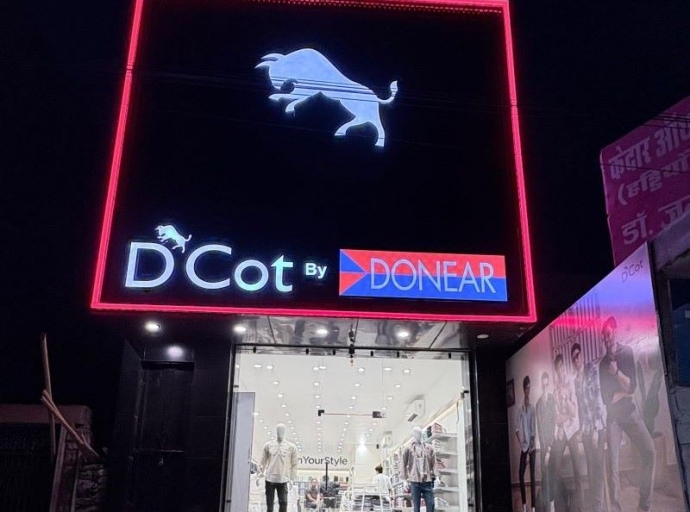
D’Cot by Donear is intensifying its physical retail footprint across India’s emerging urban hubs, most recently inaugurating a premium standalone outlet at the Surya Treasure Island Mall in Bhilai, Chhattisgarh. This store launch signals a tactical shift in the brand's distribution strategy, prioritizing high-visibility locations within regional malls to capture the rising fashion consciousness of Tier-II and Tier-III consumers. By shifting focus toward these high-growth corridors, the brand is effectively bypassing metropolitan saturation to secure a loyal customer base in geographies where demand for ‘affordable luxury’ menswear remains largely underserved by national retail giants.

Refer

Strengthening market share through accessibility

The push into Bhilai reflects D’Cot’s broader ambition to maintain its competitive edge in the value-added garment segment. As the retail arm of Donear Industries, the brand leverages the parent company’s robust textile manufacturing expertise to provide premium-grade cottons and synthetic blends at competitive price points. Retail analysts observe, by anchoring its expansion in structured regional malls, the brand optimizes inventory management and enhances local brand visibility. This ‘mall-centric’ approach is intended to drive higher transactional volume and repeat visits, providing a hedge against the volatility currently impacting India’s broader textile sector as the company navigates shifting raw material costs and consumer spending patterns.

Eyeing domestic expansion with franchise-led stores

D’Cot is the ready-to-wear retail division of Donear Industries Limited, a Mumbai-based textile conglomerate founded in 1977. The brand offers a diverse range of menswear, including formal and casual apparel. With a growing network of over 350 stores, the company’s strategic growth plan focuses on aggressive domestic expansion through franchise-led physical retail outlets, supported by the conglomerate's steady annual revenue of approximately 9.12 billion INR.

D’Cot by Donear accelerates Tier-II retail expansion

Raymond Group strengthens strategic communications role with new appointment

The Raymond Group has appointed communications veteran Shalini Singh as Group Head of Corporate Communications, a move signaling the conglomerate’s intent to fortify its brand equity during a period of rapid industrial diversification. Singh, who brings over 27 years of experience in reputation management and strategic advisory, will oversee internal and external messaging, crisis management, and stakeholder engagement. This appointment follows a series of high-profile leadership changes at the group, most notably the on-boarding of Bhanu Prakash Shrivastava, Former Chairman, Bharat Electronics as the new CEO of its burgeoning defence and aerospace business. Collectively, these strategic hires reflect Raymond’s transition from a legacy textile manufacturer into a multifaceted industrial powerhouse.

Aligning communications with diversification

As Raymond pivots toward high-margin sectors - including precision engineering and defence electronics - the group requires a robust narrative framework to manage evolving stakeholder perceptions. With the recent Rs 682 crore acquisition of Maini Precision Products and a strategic push into aerospace systems, the company’s corporate communications function is now tasked with effectively articulating this complex growth story to investors and regulators. According to industry analysts, the integration of seasoned leadership like Singh is instrumental in ensuring that the group’s identity remains cohesive as it balances its traditional lifestyle and retail dominance with its ambitious new manufacturing verticals.

Pursuing market-led growth

Raymond Group is a diversified conglomerate with a legacy in high-quality textiles and apparel. Beyond its core retail and lifestyle business, it is rapidly expanding into aerospace, defence, and precision engineering. The group is currently undergoing a structural transformation, focusing on market-led growth, technology-driven manufacturing, and enhanced institutional governance.

Latest Publications

Image

Join Our Group

Join Our Group