
Wedding season offers hope after mixed festive performance for apparel sector, CMAI survey
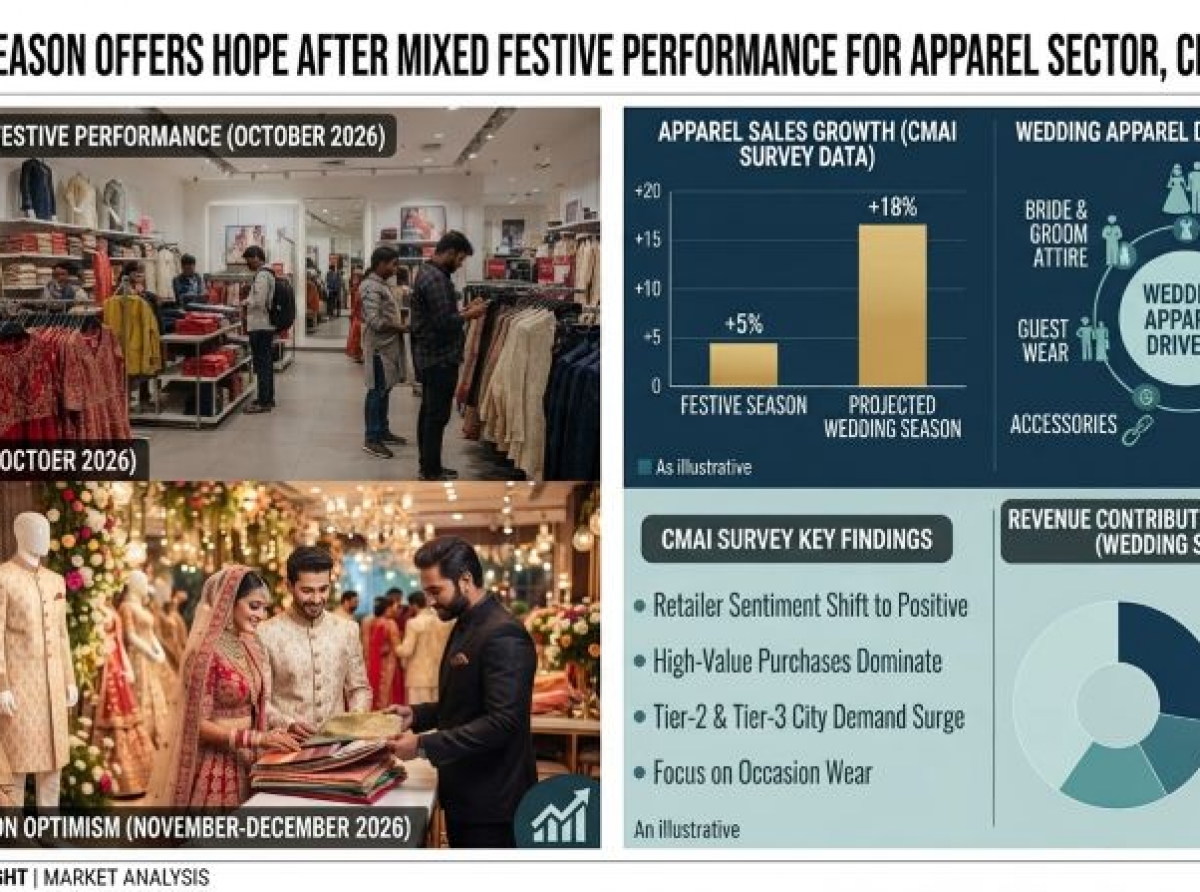
India’s apparel industry is looking to the wedding season for demand recovery after a mixed festive period in which higher prices failed to generate broad-based sales growth. The Clothing Manufacturers Association of India (CMAI)’s post-festive survey indicates, only 35 per cent of businesses reported higher sales during Navratri-Diwali, while an equal share recorded a decline and 30 per cent reported no change. The findings point to continued pressure on consumer demand and sales volumes. Despite widespread price increases, nearly two-thirds of surveyed businesses failed to report year-on-year sales growth. The survey covered manufacturers and retailers across metro and non-metro markets.
Price hikes fail to lift sales
As many as 73 per cent respondents reported higher apparel prices year-on-year. Another 21 per cent maintained existing prices, while 6 per cent reduced prices. However, the increase in selling prices did not translate into stronger sales. With 35 per cent reporting lower sales and another 30 per cent reporting stagnant performance, 65 per cent of businesses did not register year-on-year growth during the festive period. The difference highlights the gap between pricing and actual demand. Consumers continued to exercise caution, limiting the industry's ability to convert higher prices into revenue growth through increased sales.
Growth remains uneven
Among businesses that reported higher festive sales, 47 per cent recorded growth of 5-10 per cent, while 33 per cent registered an increase of 10-25 per cent. Another 15 per cent reported growth of 25-50 per cent. The decline was also significant among weaker performers. Of the businesses reporting lower sales, 58 per cent experienced a decline of 10-25 per cent. Another 17 per cent reported a fall of 5-10 per cent, while 14 per cent saw sales drop by 25-50 per cent. The figures indicate that the festive season produced sharply divided business outcomes. While some companies managed to grow, a substantial proportion of those reporting declines experienced double-digit contractions.
Wedding season raises expectations
The industry expects the upcoming wedding season to provide some relief. According to the survey, 45 per cent of respondents expect sales to increase year-on-year, while 22 per cent anticipate a decline. Another 32 per cent expect sales to remain unchanged. This represents net positive sentiment of 23 percentage points, calculated as the difference between respondents expecting higher and lower sales. The improved outlook reflects expectations of stronger occasion-wear demand during the wedding season. However, these figures represent business sentiment rather than confirmed sales performance. The extent of recovery will depend on consumers' willingness to spend, the competitiveness of product pricing and retailers' ability to align inventory with demand.
Pricing and inventory remain critical
Commenting on the findings, Santosh Katariya, President CMAI explains, higher prices had not translated into proportionate sales growth, indicating that demand and volumes remained areas of concern. He identified the wedding season as an opportunity for the industry to regain momentum but stressed the importance of monitoring demand trends, managing inventory and maintaining competitive pricing.
Rahul Mehta, Chief Mentor, CMAI says sustaining growth would depend on how effectively brands and retailers balance value-driven pricing with occasion-wear demand. He added that the survey provided an indicative picture of market sentiment and that CMAI would continue monitoring industry performance as the wedding season progresses.
The findings underline two challenges for India's apparel industry: converting price increases into actual sales growth and responding to increasingly cautious consumers. While the wedding season offers a potential demand opportunity, businesses will need to focus on pricing discipline, inventory management and product relevance to translate positive expectations into sales.
Table: Festive performance and pricing trends
|
Indicator |
Survey respondents |
|
Year-on-year festive sales |
|
|
Higher sales |
35% |
|
Lower sales |
35% |
|
Sales remained flat |
30% |
|
Year-on-year price movement |
|
|
Prices increased |
73% |
|
Prices remained unchanged |
21% |
|
Prices decreased |
6% |
The table highlights the disconnect between pricing and demand. Although nearly three-fourths of respondents increased prices, only 35 per cent reported higher festive sales. An equal proportion experienced a decline, indicating that price increases did not ensure improved market performance.
Table: Sales growth, decline and wedding-season outlook
|
Indicator |
Performance/ expectation |
Respondents |
|
Growth among higher-sales businesses |
5-10% growth |
47% |
|
10-25% growth |
33% |
|
|
25-50% growth |
15% |
|
|
Decline among lower-sales businesses |
5-10% decline |
17% |
|
10-25% decline |
58% |
|
|
25-50% decline |
14% |
|
|
Wedding-season expectations |
Higher sales |
45% |
|
Lower sales |
22% |
|
|
Unchanged sales |
32% |
The growth and decline percentages represent shares within their respective respondent groups, not the entire survey sample. The reported growth bands total 95 per cent, while the decline bands total 89 per cent; the survey release does not explain the remaining shares. Wedding-season expectations total 99 per cent because of rounding. The 23-percentage-point net positive sentiment reflects the difference between those expecting higher and lower sales.
The survey establishes that the festive market remained uneven and that demand pressures persisted despite price increases. Its findings also show that the industry is entering the wedding season with more positive expectations, although a sustained recovery remains dependent on actual consumer spending.










 Get in Touch!

