All Stories

Donear Group, an Indian textile company, has acquired Mayur Fabrics and the PV Suiting distribution network

1st Sep 2021, Mumbai:

Donear Group, a major textile company, has announced the acquisition of RSWM's global distribution network for Mayur Fabrics and PV Suiting. Donear Group's comprehensive product portfolio and global increased geographical reach will be strengthened as a result of the acquisition.

Financial specifics, on the other hand, have yet to be revealed. Donear Group, which has a significant presence in more than 30 countries, has made its third acquisition in less than three years, bolstering its conglomerate status with a large distribution and retail network. Kenneth Cole, Marks & Spencer, Perry Ellis, Ann Taylor, and H&M are just a few of the world's leading fashion labels that employ Mayur Fabric. 

Furthermore, the PV Suiting distribution network resulting from RSWM's presence in international markets will assist Donear in increasing its proportionate market share. Notably, RSWM's PV Suiting distribution network has made significant progress in the UK and the Middle East, paving the way for Donear Group to establish a major presence in these markets.  “Sabka Saath, Sabka Vikas is not only a motto for us, but it is also a way of life at Donear,” said Rajendra Agarwal, Promoter & MD of Donear Group in a statement. We've set a goal for ourselves of long-term/ growth, and we're working toward it as a team and as a family. Since I began doing business, I've had the opportunity to contact the LNJ family. I, too, am delighted to turn this firm off to Donear Group.” I'm overjoyed with the purchase. 


“It's quite exciting and inspiring for us to focus on our own businesses, which are yarn and fabrics, respectively,” said Rahul Rajendra Agarwal, Director, Donear Group. We are committed to building on the Mayur brand and making it an integral part of the Donear Group, with the goal of taking it to the next level of success.”  “We want to expand from strength to strength with Mayur and PV Suiting on our side, substantiating our vision of rising tall as a textile and apparel worldwide conglomerate,” he added. This highly scalable and long-term infusion will serve as our next major growth engine, allowing us to diversify our portfolio and increase our market share in branded fabrics.” 


“We have a large market share since we have other brands like GRADO and OCM working under our Group,” said Ajay Agarwal, ED, Donear Group. Having Mayur Fabrics and PV Suiting as part of our distribution network would position us as a textile and apparel behemoth, enabling both our clients and retailers.” “It is a matter of pride for us that the Mayur brand is now a part of the Donear Group,” said Riju Jhunjhunwala, Joint MD and CEO of RSWM Ltd. We couldn't have chosen a finer organization to leave our legacy to than Donear. I've seen how Donear has taken over other brands, how he's nurtured and helped other brands succeed in the past.”


Watch YouTube: https://www.youtube.com/channel/UCnQ6v9wBHyOlRPSDgJMsJaA

Donear Group, an Indian textile company, has acquired Mayur Fabrics and the PV Suiting distribution network

Denim's domestic downturn is mitigated by strong exports

23rd August 2021, Mumbai:

Despite a drop in domestic sales as a result of the second wave, the export market has provided a much-needed boost to denim fabric sales. Denim sales and production at Gujarat mills have increased as a result of continuous export demand.

Gujarat is justifiably known as the denim capital of the country since it houses around 60% of the country's total denim production capacity. "Demand from the foreign market, which includes nations such as the United States and Europe, has substantially improved, and orders have begun to stream in. Export orders, in fact, were a lifeline for denim manufacturers, as they helped compensate for a drop in domestic demand from April to June 2021, when the second wave of Covid-19 was at its peak and a slew of restrictions were imposed to keep the spread in check "Jindal Worldwide Limited's head of corporate finance and strategy, Gaurav Davida, stated.


Despite the fact that denim producers saw strong growth in the first quarter, owing to a low base from the previous fiscal year's same quarter, the output is gradually returning to pre-Covid levels. "Manufacturers are also seeing higher price realizations, which is helping to offset margin losses. This is due to a rise in demand, with merchants in major regions such as Europe, the United Kingdom, and the United States reporting a double-digit increase in both offline and online sales "a source in the sector stated. Clearly, major denim fabric manufacturers saw a significant increase in revenue in the first quarter of 2021-22.


https://www.linkedin.com/feed/update/urn:li:activity:6835573453257531392


Arvind Limited, for example, recorded a 186 percent rise in denim revenues in the first quarter, going from Rs 145 crore in the first quarter of 2020-21 to Rs 416 crore in the first quarter of 2021-22. Overall volumes increased 2.8-fold year over year, according to the company's investor presentation. "We achieved at least 80% of our pre-Covid level of revenues from denim sales in the April to June quarter of 2021-22," Davda continued, "thanks to the higher realization from exports, we registered a revenue of at least Rs 500 crore during this time." Manufacturers all around the globe have been searching for alternatives to China since the Covid-19 epidemic. 


Gujarat, as a denim manufacturing center, stands to benefit, according to denim manufacturers. According to P R Roy, a denim expert, "Given its huge manufacturing capacity, China is a major participant. However, following the recent US and European sanctions on China's Xijiang province - a textile manufacturing powerhouse – based on reports of human rights violations, companies have moved their focus to India, and specifically Gujarat, for denim sourcing." As a result, Gujarati denim manufacturers have begun to receive more export orders.

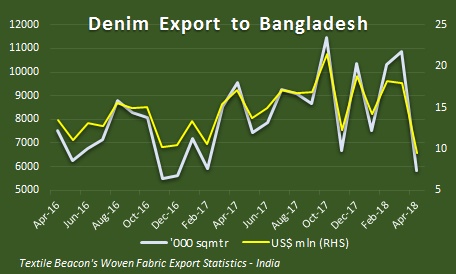
Denim fabric export slows down in April as Bangladesh imports lesser


TOP 5:

Denim's domestic downturn is mitigated by strong exports

Donear Industries signs agreement to buy RSWM assets

30th August 2021, Mumbai:

Donear Industries has signed an agreement with RSWM to purchase its current assets, intangible assets including distribution network, ancillary assets and trade receivables of the company’s synthetics fabric business. With three decades expertise in the textile industry, Donear is a reputed and fastt growing fashion fabric brand creating a wide variety of exotic suitings, trouser and shirting fabrics. The brand primarily caters to the middle and the premium segments with high quality apparel fabrics that are woven with natural fibres, synthetic fibers and its various blends.

On the other hand, a leader in the domestic and international textile industry, RSWM’s innovative mindset and visionary approach has blessed the company with associations across the globe. The company constantly execute strategies to produce high-quality yarns while at the same time reduces its carbon footprint. It produces a natural and beautiful array of hues, textures, blends and various other concoctions when it comes to yarn.


TOP 5:


Watch YouTube: https://www.youtube.com/channel/UCnQ6v9wBHyOlRPSDgJMsJaA

The e-SHRAM site is now available! The Indian government's attempt to keep a database of unorganized laborers

26th August 2021, Mumbai:

The Union Government is launching the e-SHRAM platform, which will serve as a database for unorganized employees. Workers will be given an e-SHRAM card with a 12-digit unique number as part of the project.

A nationwide toll-free hotline, 14434, will be established to help and answer questions from workers interested in registering on the site. The goal of the effort is to integrate the government's social security programs. State governments and agencies will also be given access to the workers' information.

The webpage would be launched tomorrow, according to Union Minister for Labour and Employment Bhupender Yadav (26 August). It's worth noting that the government wants to register 38 million unorganized employees, including those in the textile and clothing industry, construction, migrant workers, street sellers, and domestic workers, among others. A worker may register by providing his or her Aadhaar card number and bank account information, as well as other required information such as date of birth, hometown, cellphone number, and socioeconomic category. The majority of employees in India's domestic garment manufacturing business are in the unorganized sector, which means they are not eligible for most government benefits.

The Unorganised Employee's Co-operative Society Ltd.,


WATCH YouTube: https://www.youtube.com/channel/UCnQ6v9wBHyOlRPSDgJMsJaA

The e-SHRAM site is now available! The Indian government's attempt to keep a database of unorganized laborers

The government has formed a council to recommend measures to increase handloom production and exports

21th August 2021, Mumbai:

The government said on Friday that it has formed an eight-member committee to formulate a plan for tripling handloom output and quadrupling exports in next three years. Sunil Sethi, Chairman of the Fashion Design Council of India (FDCI), will lead the group, which will give its final report in 45 days.

The committee's mandate includes developing a strategy and policy framework for increasing output and enhancing the quality of handloom products, according to a statement from the textiles ministry. The panel would also recommend strategies for handloom weaver agencies to collaborate with designers, buyers, institutions, organizations, and exporters, as well as steps to double exports.


https://www.linkedin.com/feed/update/urn:li:activity:6834825797807730689


It would also recommend strategies to improve product marketing and input supplies (raw materials, credit, technological upgrades, skilling, and designs), according to the report. "The committee shall provide its preliminary recommendations within 30 days of its formation, and its final report within 45 days," it said. Handloom output must be quadrupled from its current level of about Rs 60,000 crore in three years, and exports must increase from Rs 2,500 crore to Rs 10,000 crore, according to Textiles Minister Piyush Goyal. 

Shameful, Indecent Language" Piyush Goyal Draws Flak for Targeting Tata  Group


TOP 5:

The government has formed a council to recommend measures to increase handloom production and exports

Indian clothing exporters are delighted about the positive momentum surrounding FTAs

21st August 2021, Mumbai:

The apparel industry is pleased with Minister of Commerce, Industry, and Textiles Piyush Goyal's announcement that there is "very positive momentum" in terms of FTAs with the United Kingdom, the European Union, Australia, Canada, the United Arab Emirates, Israel, and the Gulf Cooperation Council countries.


“We are delighted to hear that negotiations on FTAs with several countries are proceeding quickly,” said Dr. A. Sakthivel, Chairman of the Apparel Export Promotion Council (AEPC). We've been pleading with the government to expedite trade agreements.

In several areas, FTAs would eliminate tariff disadvantages for Indian clothing. Early Harvest Agreements with the United Kingdom and Australia may help India increase its clothing exports to these countries in the next three years.”

He stated that the government is making serious efforts to reach the objective of $400 billion in merchandise exports for the current fiscal year, with both the Prime Minister and the Commerce Minister taking the lead in having rapid meetings with Export Promotion Councils (EPCs).

“With the proactive leadership given by the present Government, we will not only meet the ambitious objective of US $ 400 billion this year, but we will also achieve the 2030 export target of US $ 2 trillion, with equal contributions from product and services exports,” he added.

Dr. A.Sakthivel also discussed the Interest Equalisation Scheme (IES), raw material export difficulties, the prolongation of the export requirement period till March 31, 2022, freight support, RoDTEP issues, FTAs, and banking challenges that garment exporters encounter.


Padma Shri Dr A Sakthivel takes over as the new Chairman of AEPC - Perfect  Sourcing — Latest Fashion, Apparel, Textile and Technology News


TOP 5:

Indian clothing exporters are delighted about the positive momentum surrounding FTAs

The webinar "the relevance of the sewing machine needle when processing clothing" by Groz-Beckert will take place on September 14, 21

27th August 2021, Mumbai:

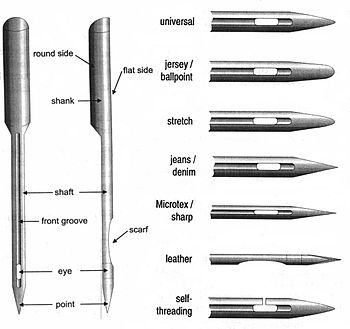
On September 14, 2021, Groz-Beckert will provide a webinar for the global clothing and textile sector on "The Importance of the Sewing Machine Needle When Processing Garments.

" The webinar will focus on how the sewing machine needle affects the quality of the stitched product, as needle-driven concerns in the garment manufacturing business have been a long-standing challenge for the industry. 

Groz-Beckert, a major German firm that provides industrial machine needles, precision parts and fine tools, as well as systems and services for the manufacture and joining of textile fabrics, will discuss common sewing difficulties and solutions. “We will also show distinct unique application needles that have been specifically developed for textile processing,” Groz-Beckert explained. The webinar will be held in both English and German, and attendees will have the opportunity to ask questions in the chat section.

Sewing machine needle - Wikipedia


Watch YouTube: https://www.youtube.com/channel/UCnQ6v9wBHyOlRPSDgJMsJaA

The webinar "the relevance of the sewing machine needle when processing clothing" by Groz-Beckert will take place on September 14, 21

In Coimbatore, the Tamil Nadu government has eased retail regulations

24th August 2021, Mumbai:

As the state prepares to reopen next month, the Tamil Nadu government has allowed stores and businesses in Coimbatore to stay open until 10 p.m.

Tamil Nadu is lifting its retail restrictions after months of lockdown due to high rates of coronavirus infections and fatalities, a decision that will be welcomed by shops and companies. The state administration in Coimbatore has declared that, in addition to increasing ordinary business hours, theatres and movie halls would be allowed to reopen at 50% occupancy on August 27 after being closed for over four months, according to the Press Trust of India.


https://www.linkedin.com/feed/update/urn:li:activity:6835857749474103296


The government has created 24-hour immunization centers at medical institutions and government hospitals in anticipation of looser retail restrictions and to reduce Covid-19 instances. According to the Times of India, the government stated on Monday that these centers, which are available at all hours of the day and night, are intended to boost the state's poor immunization rate. For the 11th day in a row, Covid-19 instances have been reported in Tamil Nadu. With nearly 34,700 deaths, the state has been one of the worst-hit by the epidemic in India.

Tamil Nadu Lockdown Extension | Tamil Nadu extends COVID-19 lockdown till  September 30 | Unlock 4.0 | Latest India news updates


YouTube Channel https://www.youtube.com/c/DFUPublications/videos


TOP 5:

In Coimbatore, the Tamil Nadu government has eased retail regulations

EPCs asks the Indian government to increase the tariffs under the RoDTEP plan

21st August 2021, Mumbai:

Piyush Goyal, Minister of Textiles, Commerce, and Industry, met with the Export Promotion Councils (EPCs). The conference was called to get feedback on the sectors' export performance as well as to get comments on a variety of topics.


This meeting was attended by the chairmen and heads of about 35 EPCs, commodity boards, and senior government officials. The problem of rate enhancements under the Remission of Duties and Taxes on Exported Products (RoDTEP) program was highlighted by Raj Kumar Malhotra, Chairman of EPCH.


They asked the Minister to intervene because handicrafts exporters, who previously received higher MEIS rates, now factor in the MEIS incentive in their pricing, and low RoDTEP rates will make their products uncompetitive. He emphasized the need of increasing RoDTEP rates for the handicrafts industry, citing the fact that the handicrafts sector employs 7 million craftsmen, and every rise or drop in exports has an impact on their livelihood.


He also brought up issues such as the reinstatement of duty-free imports of essential handicraft embellishments, trimmings, tools, and consumables; the reinstatement of MAI provisions for the opening of showrooms, warehouses, and marketing offices abroad, as well as display in international department stores; high container charges levied by shipping lines; and policy framework for B2B e-commerce, among others.


YouTube Channel https://www.youtube.com/c/DFUPublications/videos


Textile industry asks PM Modi for India shopping festival to uplift  consumer sentiment - The Economic Times


TOP 5:

EPCs asks the Indian government to increase the tariffs under the RoDTEP plan

Latest Publications

Image

Join Our Group

Join Our Group